
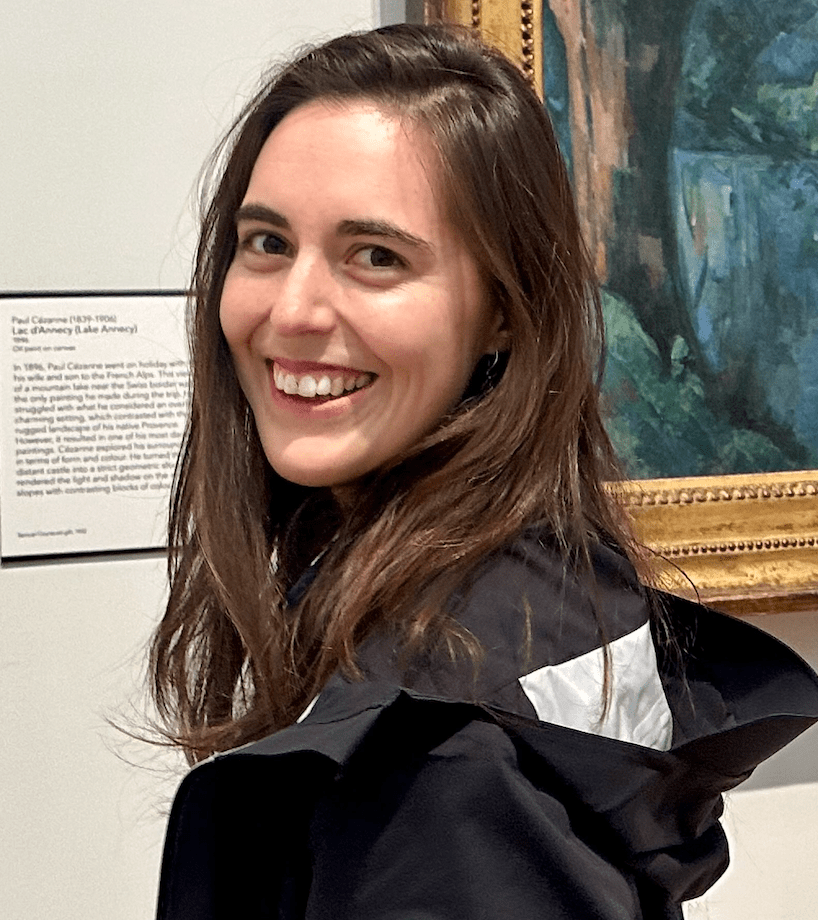
Lucia Lambarri Barberis is a visual artist from Cusco, Peru, whose practice is rooted in walking through the Andes. Her 2024 short film I Walk While Glaciers Melt is a personal meditation on time and place, and has played at festivals including Tampere Film Festival, Tricky Women Tricky Realities, and the Science New Wave. We talked to Lucia about her work, and the process of making the film.
Can you tell us a little about your practice?
My work explores the intersections of identity, body, landscape, water, and mountain, reflecting on tensions between notions of progress and the unmediated environment. Central themes include relational animism, Andean culture, flux, and transformation. My creative process spans drawing, sculpture, installation, site-specific interventions, photography, animation, and filmmaking. I Walk While Glaciers Melt marks my debut as a filmmaker, following my studies at the Royal College of Art’s MA Animation and a BA in Painting from the Pontifical Catholic University of Peru (PUCP) in Lima, Peru.
Where did the idea for the film come from?
It emerged from walking and the need to share the everyday experiences I had while wandering through the Andes of Cusco, as well as my concerns and anxiety about the melting glaciers and witnessing how the rural environments I cherish are being transformed into concrete monstrosities. This film is a search for answers to an environmental crisis that overwhelms me. I walk, draw, and create because I cannot change what is happening. These actions —which form the core of my practice and personal ethics— present themselves as the only possible response to this reality that surpasses me.
How did the visual style develop?
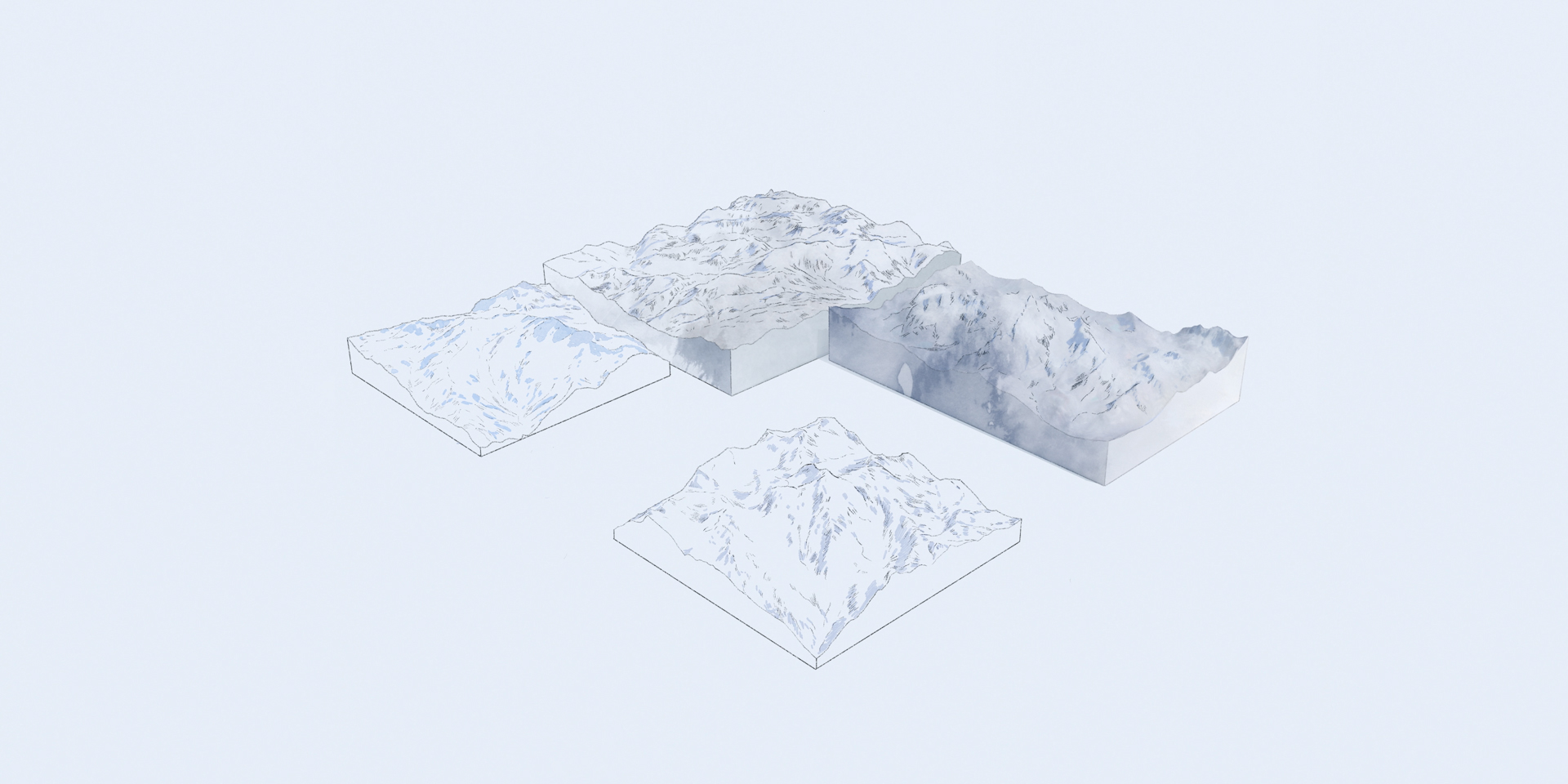
It began with photos and drawings, and a timeline that focused more on conveying the main ideas than on a fixed visual style. It felt like a puzzle—a completely process-based approach where one piece naturally led to the next. My process wasn’t linear; I didn’t follow the usual steps of storyboard, animatic, and final render. Instead, it was an ongoing conversation between footage, drawings, and texts. Initially, I planned to make a purely animated film, but as I assembled the timeline, I realized that some of the recorded footage felt complete on its own. This led me to create transitions between these two “languages” of live-action and animation, letting them coexist.
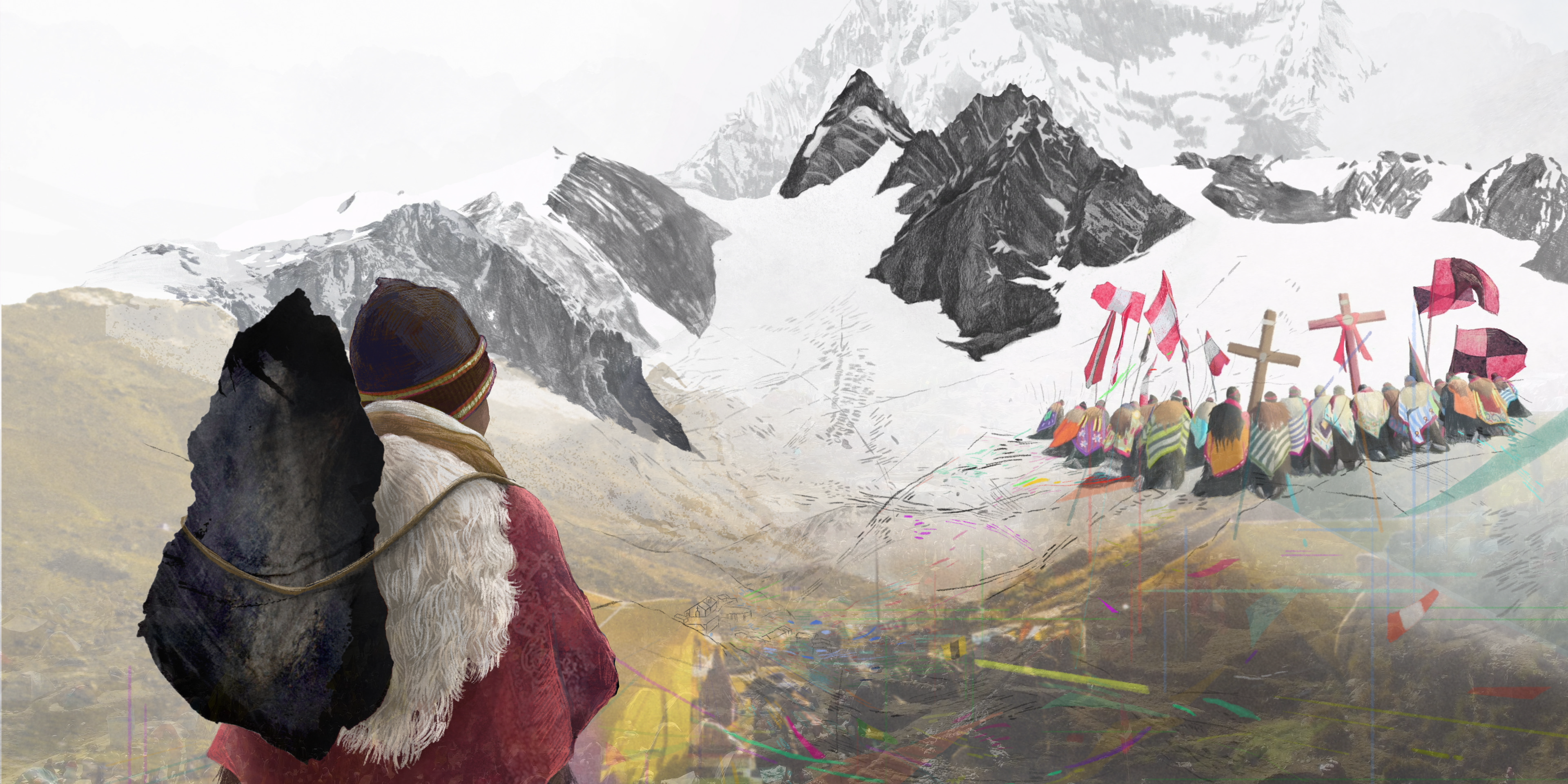
Visually, the film evolved through a fusion of mediums: live-action footage interweaves with hand-drawn animation, watercolor, 3D animation, and 3D scans. It became a kind of palimpsest, layering diverse techniques to explore a reality rich in meanings, layers, and interpretations. My process was organic, more like writing a poem than following a fixed script.
How has your painting practice informed your animation and filmmaking?
My background in painting and visual arts forms the foundation of my approach to animation and filmmaking. It’s the core of my practice, shaping not only my visual language but also my way of thinking and creating. Painting taught me to work organically, to embrace intuition, and to let each piece develop through a process of exploration and emotional response.
You describe the film as a ‘visual essay’; were you always planning to make a film in this form?
No, I didn’t plan it that way from the start. At first, I didn’t really know what I was making. The project slowly took shape on its own, and this form was simply the one that fit best. In addition to being a visual essay, I see it as an autoethnographic film—deeply connected to my personal experiences and to my relationship with the landscape and the collective. The essay form felt natural because it allows for experimentation and layers of meaning. I was inspired by filmmakers like Agnès Varda, who saw cinema as a way of wandering—both physically and mentally. Her work blends found objects, everyday moments, and a reflective gaze, creating structures that feel more like a conversation.
Structurally, my film unfolds as a journey upward and backward. It traces how Andean people have inhabited their territory—from cities to farmlands to nomadic herding routes—and ascends through the ecological layers of the Andes, from the Quechua valleys to the icy peaks of the Janca. At the same time, it looks back, drawing inspiration from the tradition of Andean miniatures: small representations of beings, objects, and everyday or ceremonial scenes that hold not only daily life, but also the deep symbolism of Andean thought and its evolving relationship with the land.

How did you approach working with ‘reality’ rather than a fictional subject matter?
I did a lot of research, but beyond that, one of my main intentions was to approach everything with respect—while also staying honest with myself. I kept asking why I was making each decision, trusting my intuition along the way. I also shared the film-in-progress with a range of people—some unfamiliar with the Andes, others more closely connected to the region. That feedback was essential to understand how the work resonated across different contexts, and especially whether it felt too abstract or difficult to grasp. Being in the MA environment enriched this process too; the diverse perspectives of peers and tutors helped me see the film from angles I hadn’t considered.
The film has screened at some great festivals. How has it been received?
I feel deeply honored by the way the film has been received. One of the most interesting things has been noticing the kinds of programmes it has been selected for. Each festival has its own focus and curatorial vision, so it’s fascinating to see which “families” of films it gets grouped with, and what elements they choose to highlight.
Curiously, most festivals have framed it as a documentary, and that’s where it’s found the most resonance. Audiences who connect with it often respond to the mixed-media approach, the poetic language, and its non-linear structure. The Q&As and discussions are my favorite part; people often ask about the rituals present in the film, the sound design, and the technique. It surprises me every time, and the festival world is a constant learning experience. It has also allowed me to meet incredible people. I loved attending the Tampere International Film Festival 2025 in Finland and Tricky Woman Tricky Realities 2025 in Austria—and it’s still a mystery to me what paths the film will take next.
What are you working on now?
I’ve returned to painting and the visual arts as a way to expand and deepen my exploration of the themes that move me, in parallel with in-depth theoretical research. I’m currently gathering stories for my next film, which will explore the “point of view” of Andean miniatures. The film will also engage with themes such as relational Andean animism, human perceptions of territory, and shifting notions of progress.
I Walk While Glaciers Melt can be seen at the upcoming Royal Anthropological Institute Film Festival in the UK. Lucia Lambarri Barberis’ work can be found on her website and Instagram.
Interview by Carla MacKinnon
 ANIMATED DOCS