
Tim Webb is a director and animator whose pioneering work in animated documentary continues to inspire new generations of filmmakers. He graduated from West Surrey College of Art and Design in 1986 and went onto make multi-award winning short films including A is for Autism (1992), Mr Price (2004), 15th February (1996), and Six of One (2000). He has worked as an animator commercially and has taught at a range of UK institutions. We talked to Tim about his seminal animated documentary A is for Autism, and his work as an animation director on the 1998 animated documentary Silence (dir. Sylvie Bringas & Orly Yadin).
Was A is for Autism the first documentary you made?
No. I made a film at Farnham in my third year called Smoke Ring. It was about the politics of smoking. How tobacco companies were sponsoring arts and sports events to give some kind of respectability to their products. It was based on a book by Peter Taylor called The Smoke Ring.
Was that quite an experimental documentary? Did it have a voiceover?
It had tiny bits of scripted voice I wrote based on empirical research from attending tobacco sponsored events. I suppose it’s technically not documentary, because of these scripting sentences from memory. I also made-up speeches in the house of commons, and I had an opera singer sing rewritten Gluck opera to sing about tobacco companies… so it was a mixture. Invention mixed with fact, and a lot of fact was based on Peter Taylor’s book, and on empirical research, and drawings and photographs. The intention was to be a diatribe against the hypocrisy of government and how the tobacco companies associated their projects with sport and art. I’d always thought it was an animation documentary but maybe it’s not.
How would you define documentary?
I think this is a big question, and papers and books have been written trying to define this. But I like the point Beyza Boyacioglu raised in her paper Animated Documentary: Representing Reality Through Imaginary, where she argues that animation, by its very nature of construction being contrived, is upfront about not being ‘real’, and therefore possibly a more honest form in retelling real stories. In the live action documentary The Thin Blue Line (dir. Errol Morris, 1988), re-creation of the real is upfront in a similar sort of way. In A is for Autism, one of the contributors didn’t want to read his own words, so I asked another person from the Autistic community to say his words. I do not state this in the film, and perhaps should have?
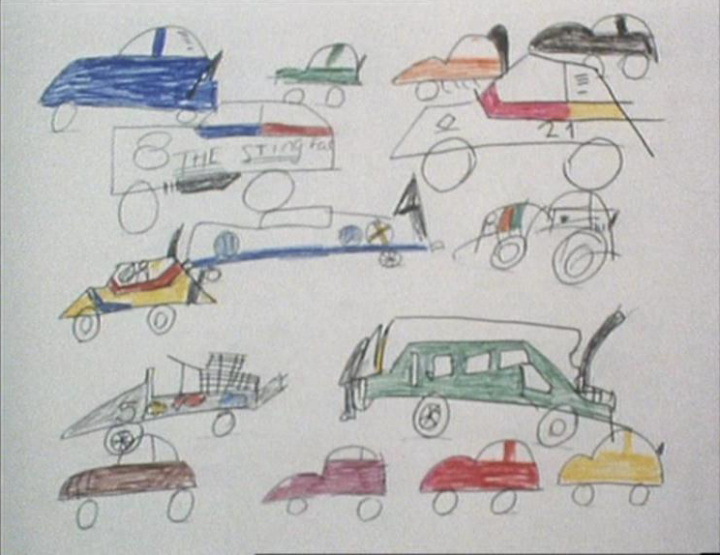
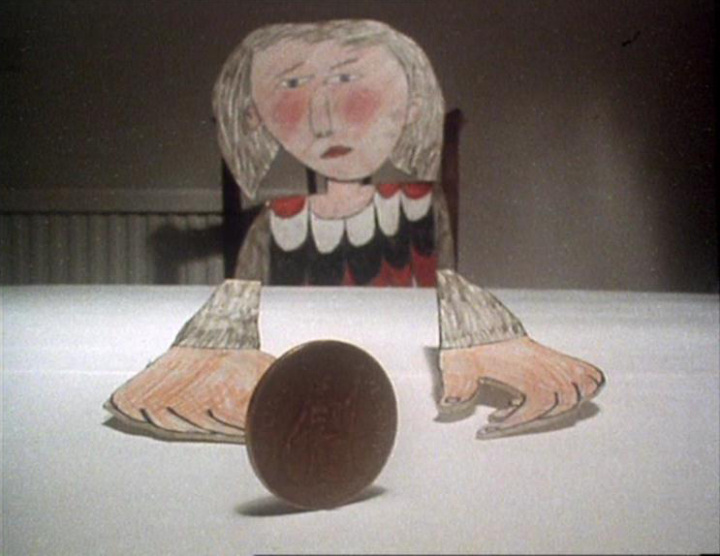

A is for Autism (dir. Webb, 1992)
Who was A is for Autism commissioned by?
Channel 4. Claire Kitson commissioned the film for a disability season a year ahead. I was lucky to have had this chance, as it was special time when terrestrial television commissioned independent animation shorts. Having made my BA film about the politics of smoking also helped in her decision, as I was aware she liked that film.
Who else worked on A is for Autism?
The producer, Dick Arnall was crucial. Animator Ron Macrae, who I went to college with and collaborated with there, and since. There was a small team of colouring artists – Jayne Bevitt, Sarah Strickett and Ian Wells did some of the colouring [full film credits are listed at the bottom of this article]. Daniel Sellers was the autistic animator – the nine-year-old. It was amazing because I was given so much freedom. I didn’t even have to do an animatic. It was based on a storyboard really.
What was the brief?
Well, I suppose the brief was to make an animated film about, and in collaboration with, people from the autistic community. Initially I pitched an idea for the Arts Council of England ‘Animate’ scheme, in its first year of the funding. I’d seen this BBC programme ‘QED’, based around four autistic people with genius qualities, and one of these people was Stephen Wiltshire. Stephen was nine years old at that time and the film showed him in London, looking at famous buildings, then showing him back in class, drawing these buildings from memory and in mirror form, expressive but also accurate. I was amazed by the sophistication and energy of the drawings, and I bought some prints of his, having watched this programme.
On wanting to apply for the ‘Animate’ fund, I discussed ideas with my partner (wife, ex-wife, friend) around a film about London, based on a collaboration with Stephen Wiltshire. She suggested I also make it about autism, I think, so I went to the library and got a couple of books. In one I found a list of ‘autistic traits’ some people may exhibit. I put something in for the deadline, last minute, a sort of storyboard. My idea included the intention to collaborate with Steven Wiltshire and aimed to try and link living in a large city, like London, and how we all display ‘autistic traits’ in daily interactions to cope with it. It was a bad idea. But the commission panel liked the idea of the collaboration, so they contacted me to investigate the possibility of a collaboration with Stephen. That’s when I met Dick Arnall who was crucial to the projects outcome and what it became. This initial idea got no further because Stephen Wiltshire now had a literary agent who taking care of his interests and was also taking him around the world and making a second book with him. She refused the idea. But this disappointment became my big break, as Claire Kitson from Channel 4 wrote to me and offered development money to search out a new idea – based in autism and collaboration – for possible inclusion in a disability season planned a year ahead. I then started to research the subject more and try to find collaborators. I was given six weeks. It took about twelve weeks to find a list of collaborators and to come with a new concept, based on lots of phoning and visiting different communities around the UK. Lots of research by Dick Arnall and myself, and contacts led to other contacts. Elizabeth Newson was crucial in linking me up to about half the contributors. So, my original idea was not a film about Autism, but it ended up being the film I am known for.
Do you think the fact that it was animated affected your relationship with the contributors? Do you think they were more open to it because you weren’t pointing a camera at them? Did they understand what you were trying to do with it?
I don’t know. I think it would have been very difficult doing it in live action because I wouldn’t have known much about how to do that. In fact, we did film Daniel. It was a big issue whether he was going to be in the film, because he was nine at the time and he was attending mainstream school. But he did decide he wanted to appear in the film, and I interviewed him, asking about his animation after it was complete. I used to take the animated line tests to show him on next visits. Also, we filmed him drawing, animating, to use in the cut. I should stress that he did animate all his own scenes and myself and Ron (the other main animator) were his inbetweeners.
How did you decide on a visual style?
I think this is the first time I had tried to mix live action with animation. My college BA film, though animated, was made more like live action documentary in that the structure mostly came in post-production. In A is for Autism all the drawings were based on other people’s drawings, so all the animation was based on other people’s drawings with the aim to be as authentic to these as is possible when animating. The live action was mainly recreation shots based on certain ‘common traits’; it wasn’t documented. I wanted to divide certain topics with these montage repetition sequences.
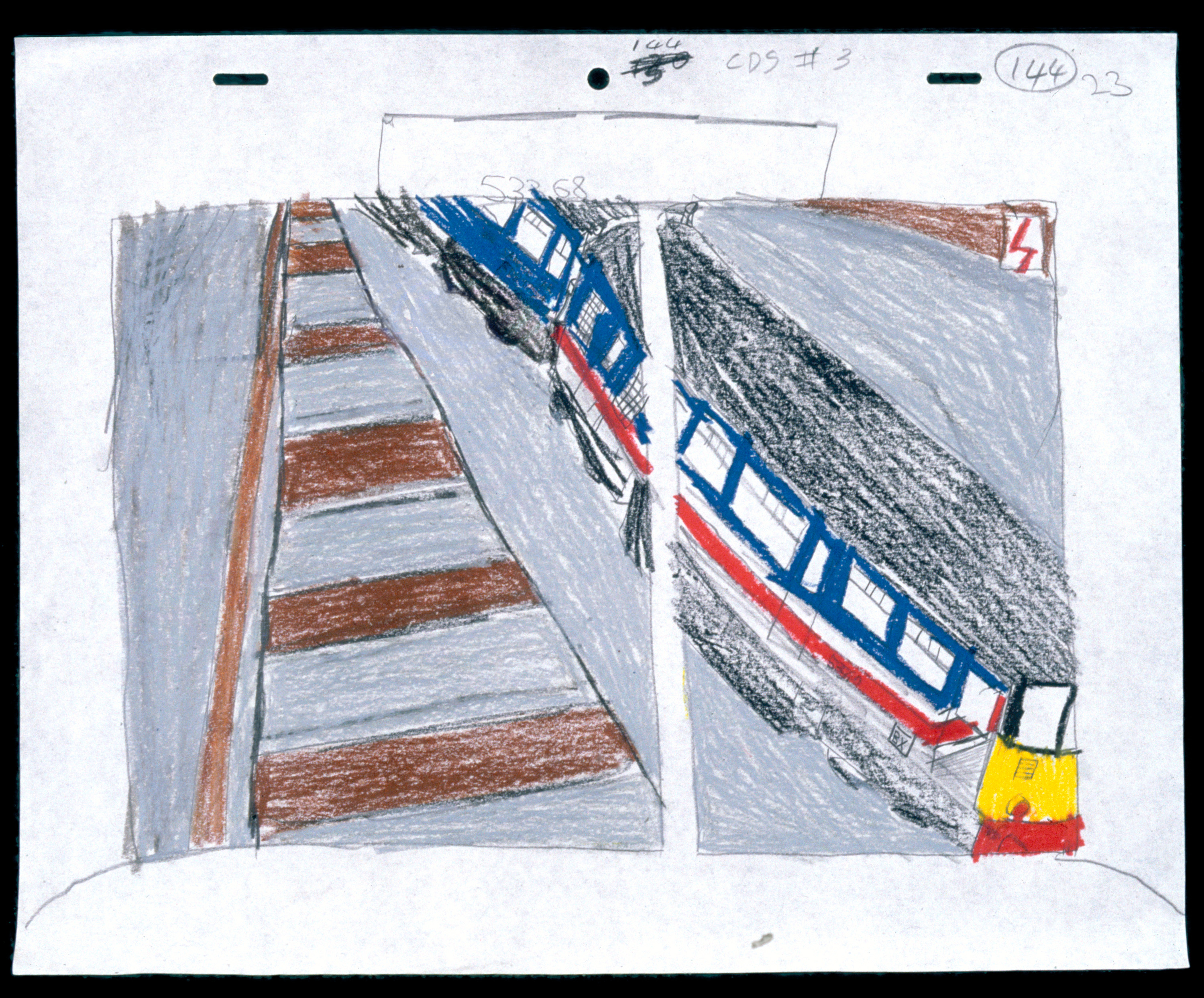
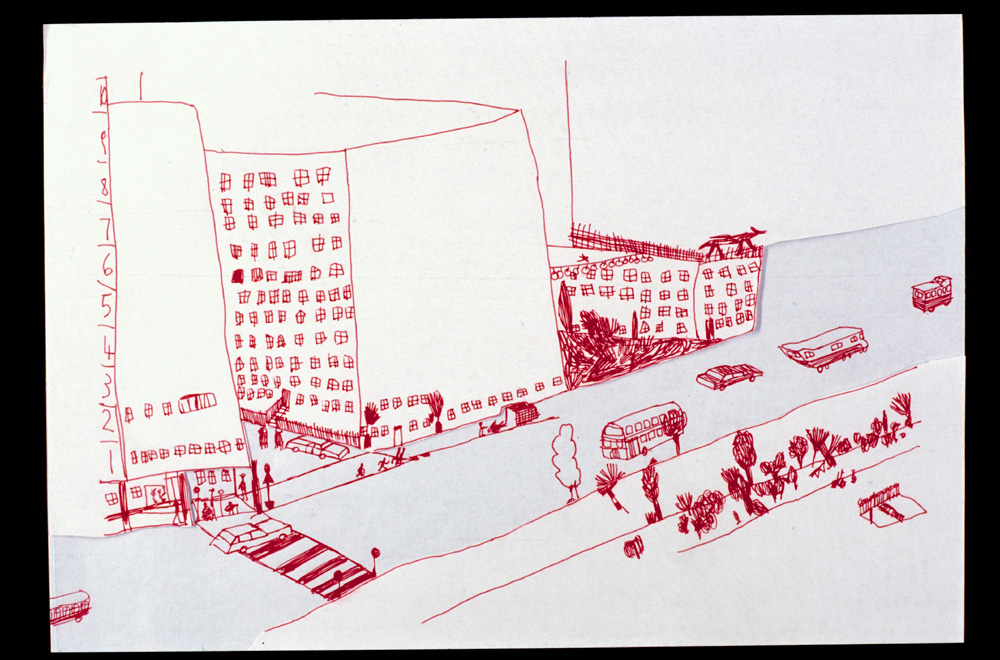
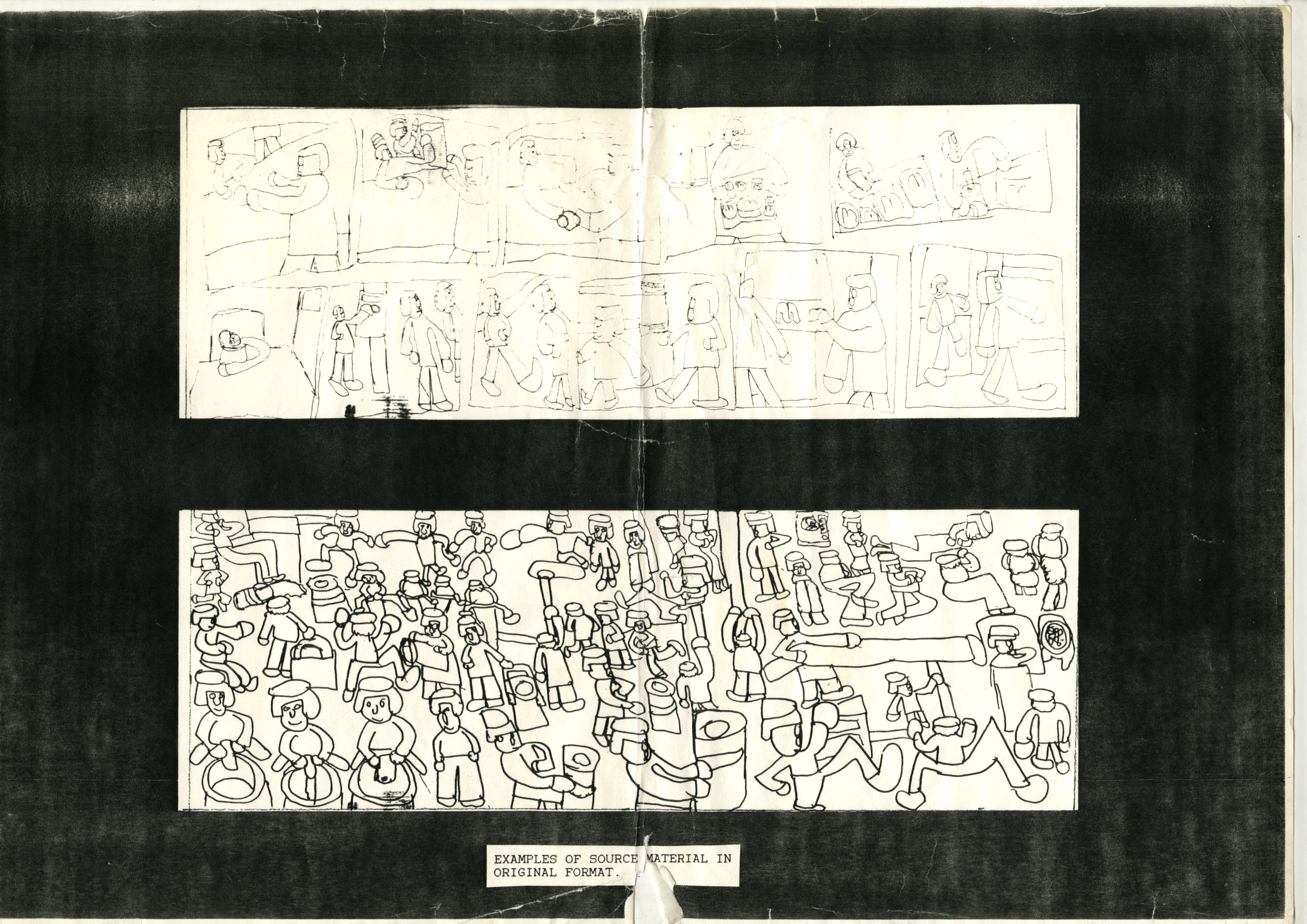
A is for Autism source material, Daniel Sellers (TL), Stephen Quinn (TR), Nicky Braithwaite (BL) Christine Taylor (BR)
And how did you settle on the idea of using their drawings?
I suppose that came through liking Steven Wiltshire so much – the idea of animating his drawings. It took some time to find Daniel. I had wanted to make film with more than one autistic animator collaborator, but it became impossible, for the deadline, to do that. We found artists but they but were not really interested in animating. One contributor didn’t want to read his own words, and one amazing artist who made beautiful drawings of cooling tower just had no interest in the concept of being paid money and animating. So the content was somewhat decided through finding contributors, and Daniel was an exception and one person who was up for it.
So were you working on a tight timeline?
Nine months. So, it was a proper production with a broadcast date a year ahead. Many animation commissions made for Channel 4 films at that time did not have this, they were put on a shelf and scheduled later.
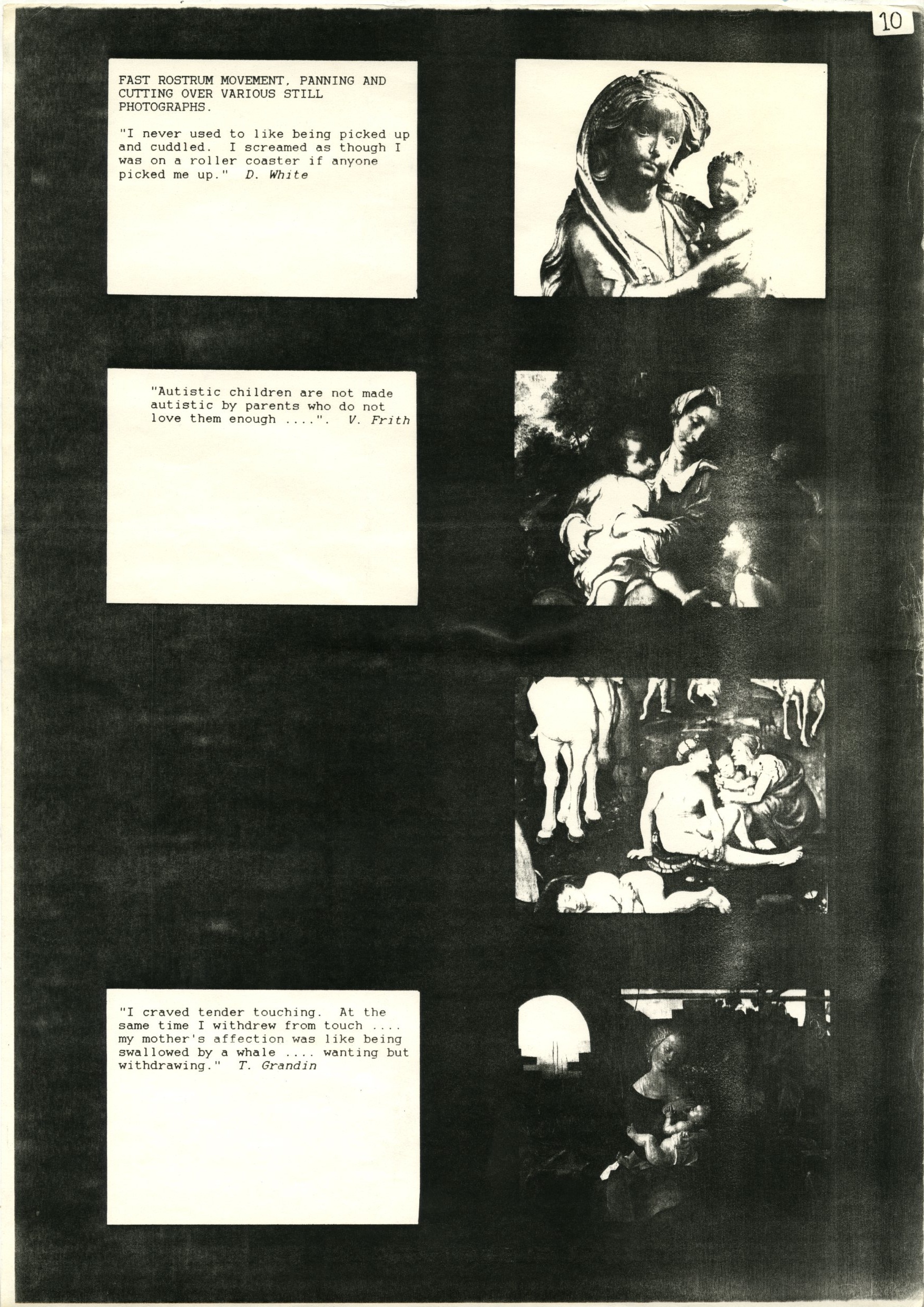
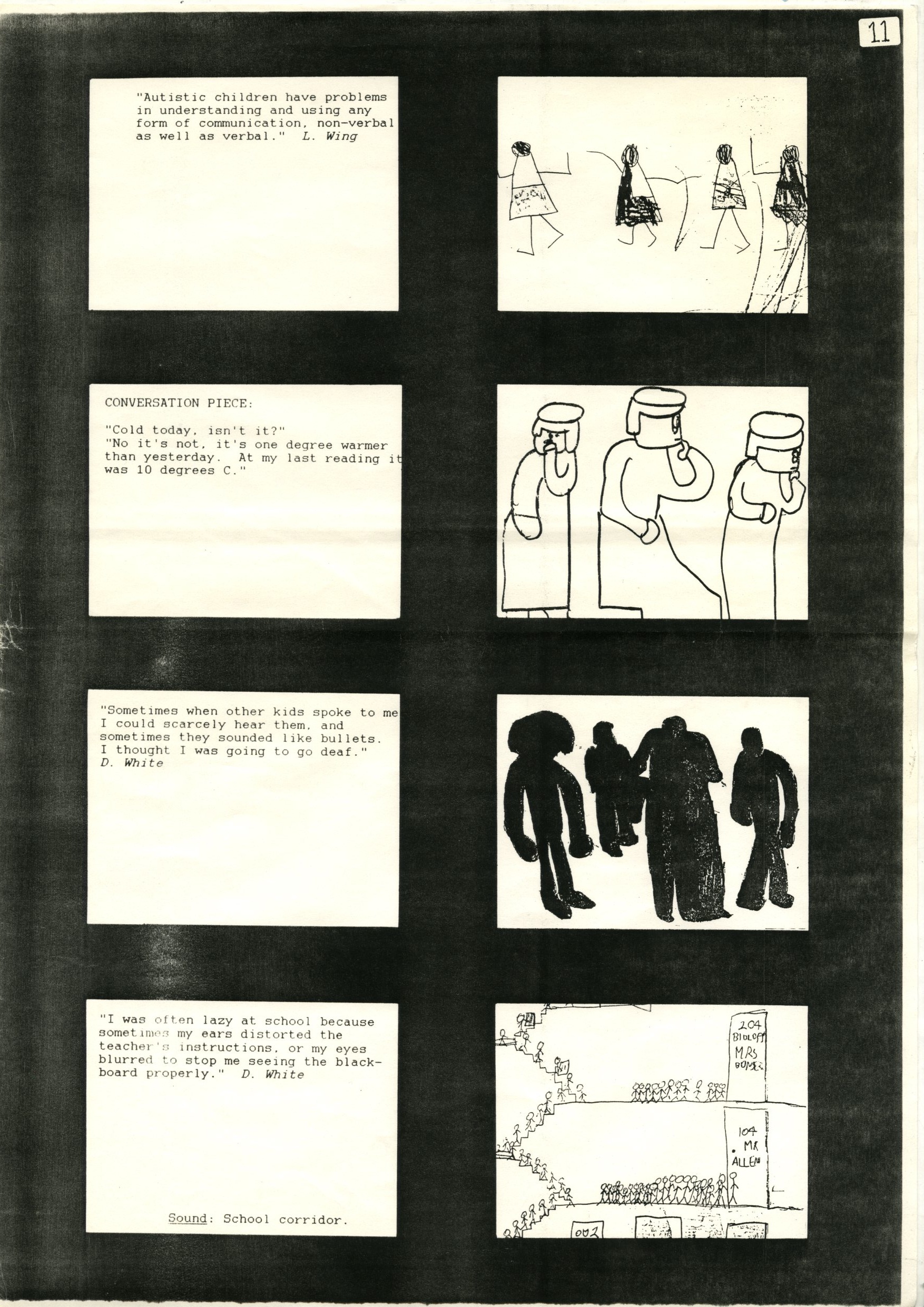
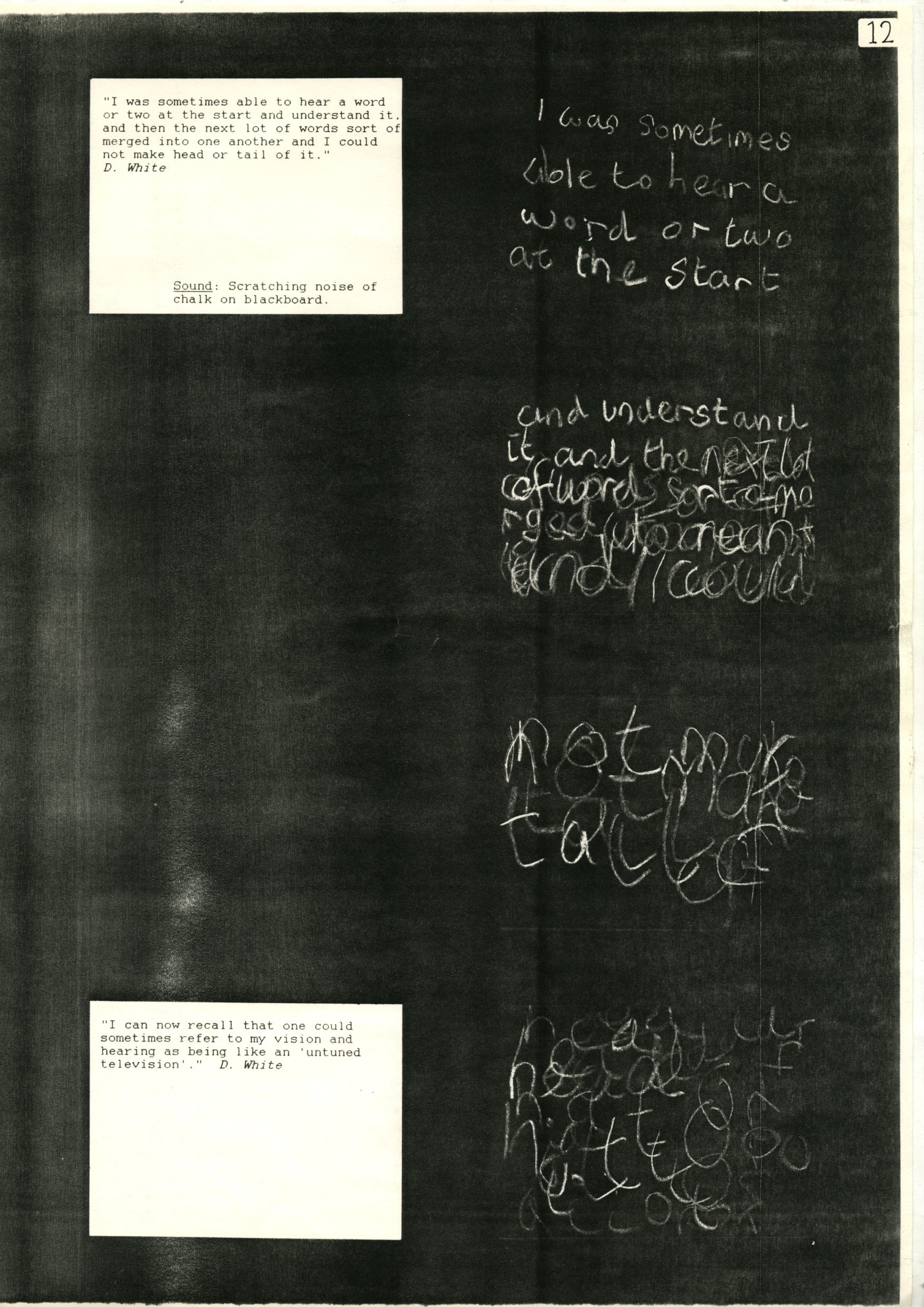
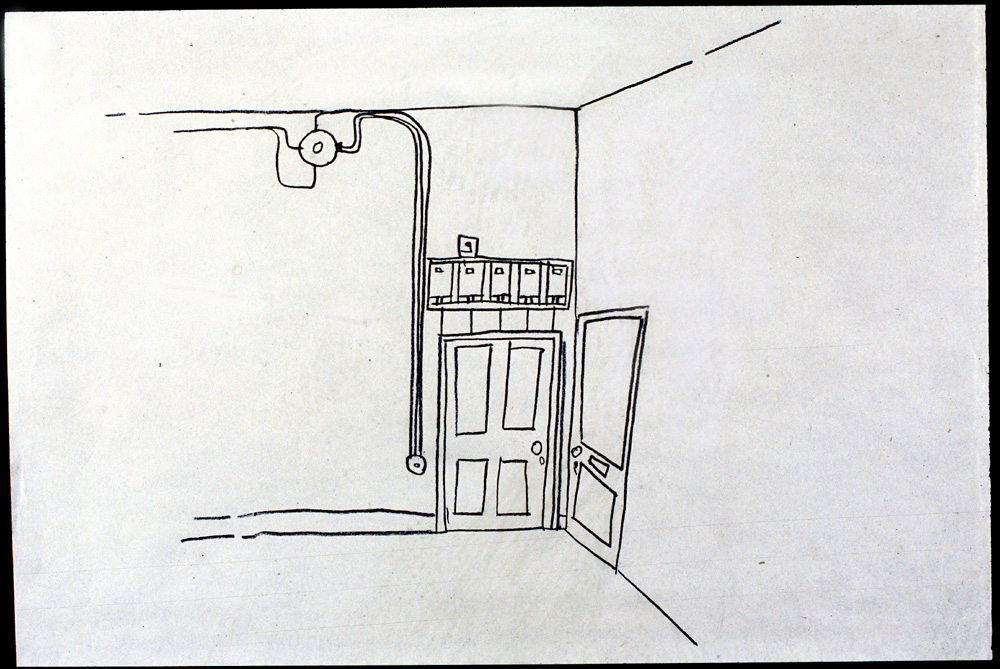
A is for Autism storyboards (Webb, 1992)
How many animated docs have you been involved with since then?
Well, I did a bit of work on Abductees (dir. Paul Vester, 1995). I started work on the woman levitating out of the window sequence, but the final outcome was not animated by me. But I have a credit for which I’m thankful. I think one or two backgrounds were mine.
Then you worked on Silence (the story of a a child holocaust survivor, directed by Sylvie Bringas and Orly Yadin)?
Yeah. I was given a script to start to visualise. The script was an edit, I think from a musical stage performance which Tana Ross (the film’s narrator) had been involved with. So the film initially was a reduced edit from that stage performance. I was trying to storyboard and work it out and it wasn’t going so well. And then the directors came across the artist Charlotte Salomon, and they showed me her amazing sequential paintings. So I then I started to storyboard straight into small paintings, no drawing, in gouache, using her as a massive influence. And then it went a lot better.
So you did some of the animation, and Ruth Lingford did the other bit?
There are also small sections of archive footage. I directed the Swedish section, and Ruth animated all the Theresienstadt sequence. I didn’t animate all of my section, Ron Macrae was the other main animator on this section. And Filipe Alcada and Liz Loveless did some small scenes. We had a group of painters who were painting each full frame of animation, using my gouache painting as a guide, but they needed to tighten my style up a little, because my paintings were quite loose. So, each frame is different, the drawings placed on light boxes and then painted on thin watercolour paper.
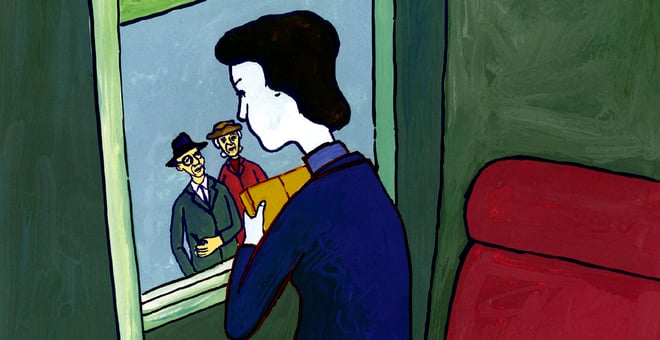
Silence (dir. Yadin & Bringas, 1998)
Did you know what Ruth’s section would look like? Were you encouraged to create styles
that worked in compliment to each other?
She was in the same building, in a different room and floor. We had a definite idea of what each of us was doing. Orly and Sylvie were overseeing how they wanted the film to be, and directing this. So, my lead came from them and the significant influence of Charlotte Salomon. But I suppose our styles of representation and characterisation do connect.
Do you know why they wanted the two sections to be visually different?
They were depicting the different periods of Tana’s life. My section was her time post war in Stockholm, a young lady facing the ‘silence’ of the war years. Ruth was animating the childhood period.
Your section is in colour and Ruth’s is black and white. Did you get direction in terms of that – were you briefed to work in colour?
I think the directors always wanted it to be colour, but it became completely based on Charlotte Salomon’s art. Some of the scenes are like her paintings. I didn’t have a big problem with being so influenced by her work because of the subject matter and similarities in their stories, though Tana survived the Nazis and unfortunately Charlotte didn’t. Charlotte Salomon’s work is amazing.
What would you like to see from animated documentary films now?
I suppose I’d like to see more commissions in the mainstream. I’d like to see it move beyond overuse of voice, as the dominant form of storytelling.
___
You can find more of Tim Webb’s work on Vimeo and Instagram
A is for Autism film credits Directed by: Tim Webb; Based upon drawings by: Nicky Braithwaite, Stephen Quinn, Daniel Sellers, Christine Taylor, Darren White; Animators: Ron MacRae, Daniel Sellers, Tim Webb; Colouring and rendering: Jayne Bevitt, Sarah Strickett, Ian Wells; Narration spoken and contributed by: Temple Grandin, Luke Hemstock, Stewart Hogg, Daniel Sellers, Justin Sutton, Darren White, Matthew and Sheila Baguley, and others; Mother performed by: Jean Stanley; Lighting camera: Dave Affleck-Green, Colin Hawkins; Rostrum camera: Heather Reader; Music performed by: Alan Carter, Thomas Wickens; Variations/improvisations arranged by Alan Carter; Editor: Matthew Dennis; Dubbing mixer: Colin Martin; Consultant: Professor Elizabeth Newson; Produced by: Dick Arnall; Production company: Finetake for Channel Four
Interview by Carla MacKinnon
 ANIMATED DOCS