
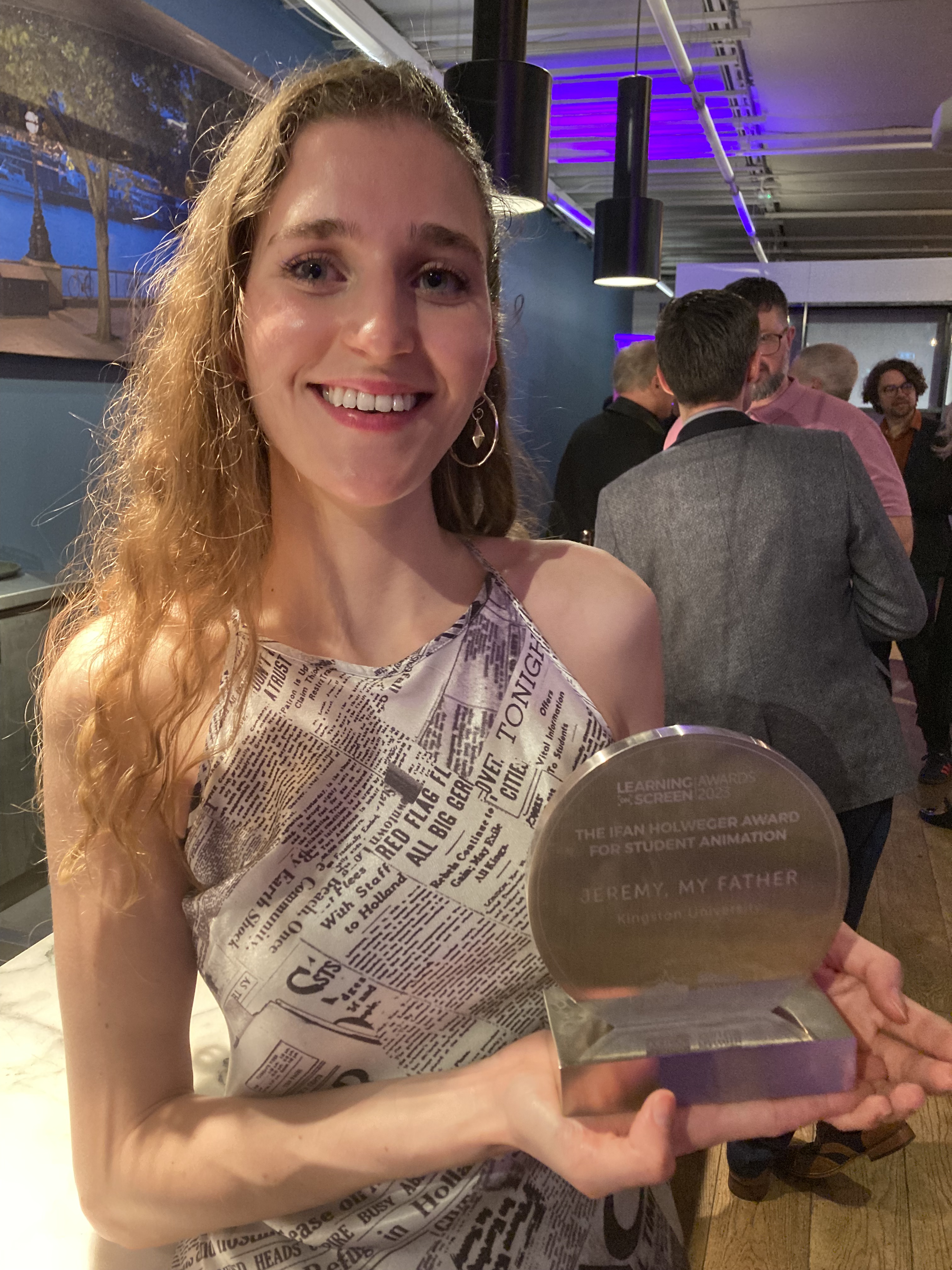
Miranda Peyton Jones is a filmmaker and moving image artist specialising in analogue and stop-motion animation. Jeremy, my Father, her 2022 graduation film from Kingston School of Art, is a short animated documentary that navigates bereavement following suicide. The film has screened widely and received numerous accolades, including a Royal Television Society award and a British Animation Awards nomination. We asked Miranda some questions about her film and creative practice.
Can you tell us about how Jeremy, my Father emerged – why did you feel it was time to tell this story, and why was animation the right way to do so?
This film came about in a very slow, meandering way; initially I had not intended to make such a direct work about my grief. It felt way too large of a topic to tackle. So I started with an idea to make a piece of moving image that spoke about my family’s ties to the sea. Keeping the project so vague felt more comfortable at first, but as it progressed, it became clear that I only had one thing on my mind: Dad.
Inevitably my experiments and research kept being drawn back into what I was dealing with there and then, and before long I had started delving into all the memorabilia that my Dad had left behind. Before I fully committed to a project about my grief, I spoke to my Mum and siblings to see how they felt about the idea. Their support felt like the blessing I needed to start constructing and thinking about my ideas for how to communicate this loss to an audience. It wasn’t particularly a chosen ‘right time’ to explore this, but something that felt so necessary that I almost didn’t have a choice but to try.
You use a mixed media approach including archive and animation. Can you talk about the creative process and the decisions behind it?
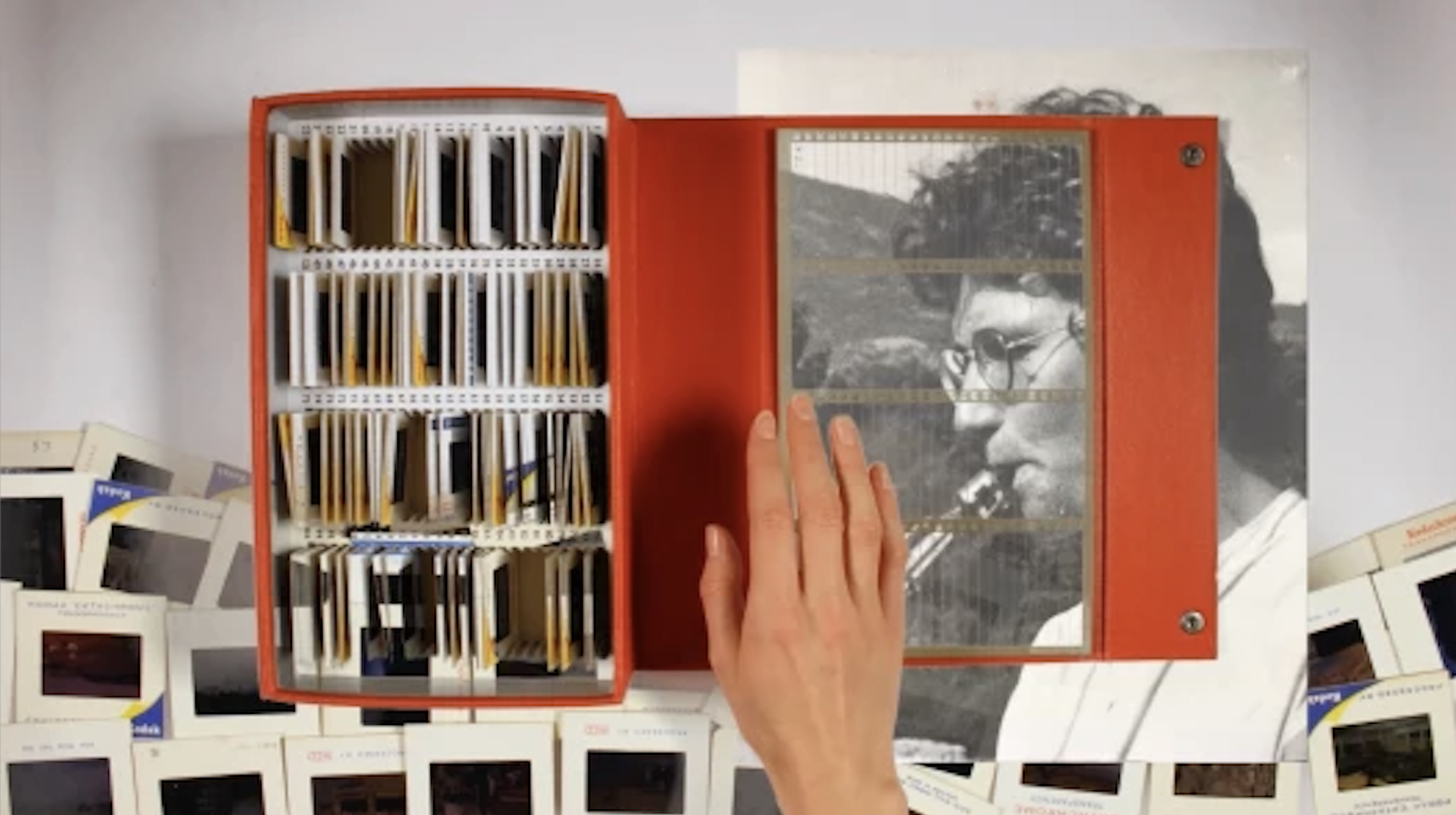
I chose to use analogue animation for the project. I had so much archival material from my dad that I wanted to record and document, so using them physically in the project felt like a good way to do this. I didn’t want to have static and lifeless records of all these items either, so bringing them to life through animation provided the intrigue and emotion that each object held for me. It is also a medium I feel comfortable expressing myself in, the tactility brings such a closeness with an audience that felt very important for this work.
The film tells a very personal story; were there challenges for you in working with this subject matter?
It was very challenging at times, moments of creative excitement were made strange by also holding the reason behind the work. Overall it felt so necessary for me to make this work and sometimes it felt quite good that I was putting in so much energy and effort into doing something for my Dad, I felt like I was honouring his memory. People have often asked me if making the film was cathartic, but I really hesitate to say it was. It didn’t feel like I was making my grief more manageable, or helping me with my feelings of loss. But it did make me feel like what I was doing had a bigger purpose, so that was positive.
The film has been very well received; have there been any particular screenings or responses that have surprised or pleased you?
It’s been entirely surprising. I made this film as an undergraduate, and any ideas of recognition outside of my academic circle felt wildly unrealistic to me! I only started sharing the film more widely after encouragement from my wonderful tutor Evgenia Gostrer (who was a huge support and mentor for the project). Her notion that it would resonate with audiences was completely correct. Each time someone shares their own experience with grief, or how this film made them feel, I am grateful that I’ve made this work. I’ve kept a record of every written response I received, which feels like an archive of interest in itself. Especially the responses where people share a story or two of their own. The time taken to share the impact the work has had is so precious to me.
A particular screening that felt so monumental to me was for the British Animation Awards, imposter-syndrome in hand, I went feeling so out of place but came away with a feeling that grief is so entirely universal, and we could all use some time for it.
What are you working on now?
I’m currently in the research stage of my next project. I’m exploring the ways people have had to overcome physical differences/limitations in their creative practice. This idea has come about after unfortunately having extensive surgery on my right hand. Being a right handed artist, it has been a challenge, one where I’ve had to think creatively and make adjustments. The main adjustment is working with my left hand which can be liberating yet frustrating.
I’m screening some preliminary work at FishTank Workshop and Gallery on the 31st of July. At it’s current stage the work is exploring my own experience, but I want to open the project out and work with other creatives (in any field) who have had to change their process for physical reasons.
You can follow Miranda Peyton Jones’ work on her website and Instagram. She is currently artist-in-residence at FishTank Workshop & Gallery whilst also working as a freelance animator in London.
Interview by Carla MacKinnon.
 ANIMATED DOCS