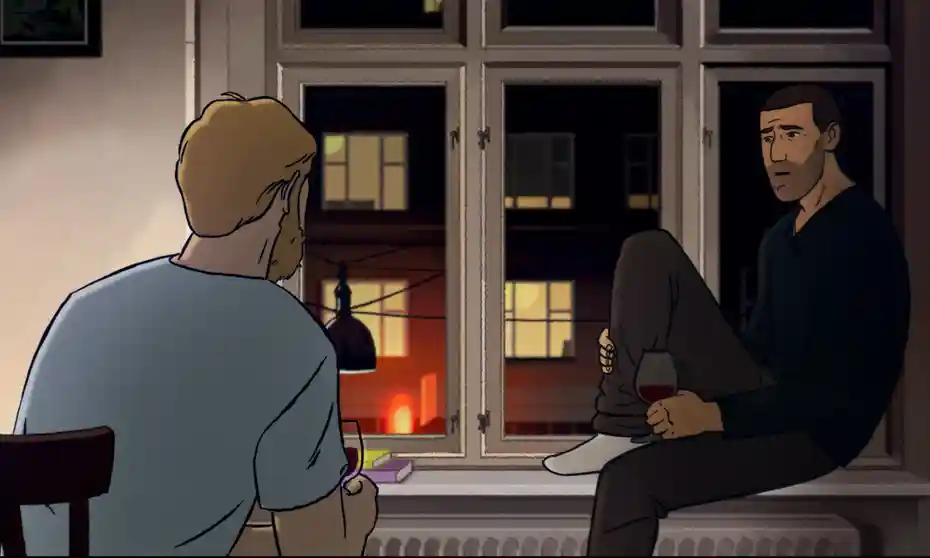
• Flee tells the story of Amin Nawabi as he grapples with a painful secret he has kept hidden for 20 years, one that threatens to derail the life he has built for himself and his soon-to-be husband. Winning many awards and accolades including the Sundance Grand Jury Prize, this film has garnered much critical acclaim since its release in 2021.

    Told to director Jonas Poher Rasmussen under an alias, we witness the life-threatening, heartbreaking journey undertaken as a child refugee from Afghanistan. The animation is interspersed with archive footage from Afghanistan, punctuating the memories with indexical images; the sequences striking a resemblance to events currently unfolding in Ukraine. This is further heightened by the plight of the refugees trying to find a way through systems to safe places, which in this story took many years. Alongside this is the sub storyline of Amin’s sexual identity and his coming of age as a displaced refugee.

    Flee was initially developed as part of AniDox Lab.

    https://neonrated.com/films/flee

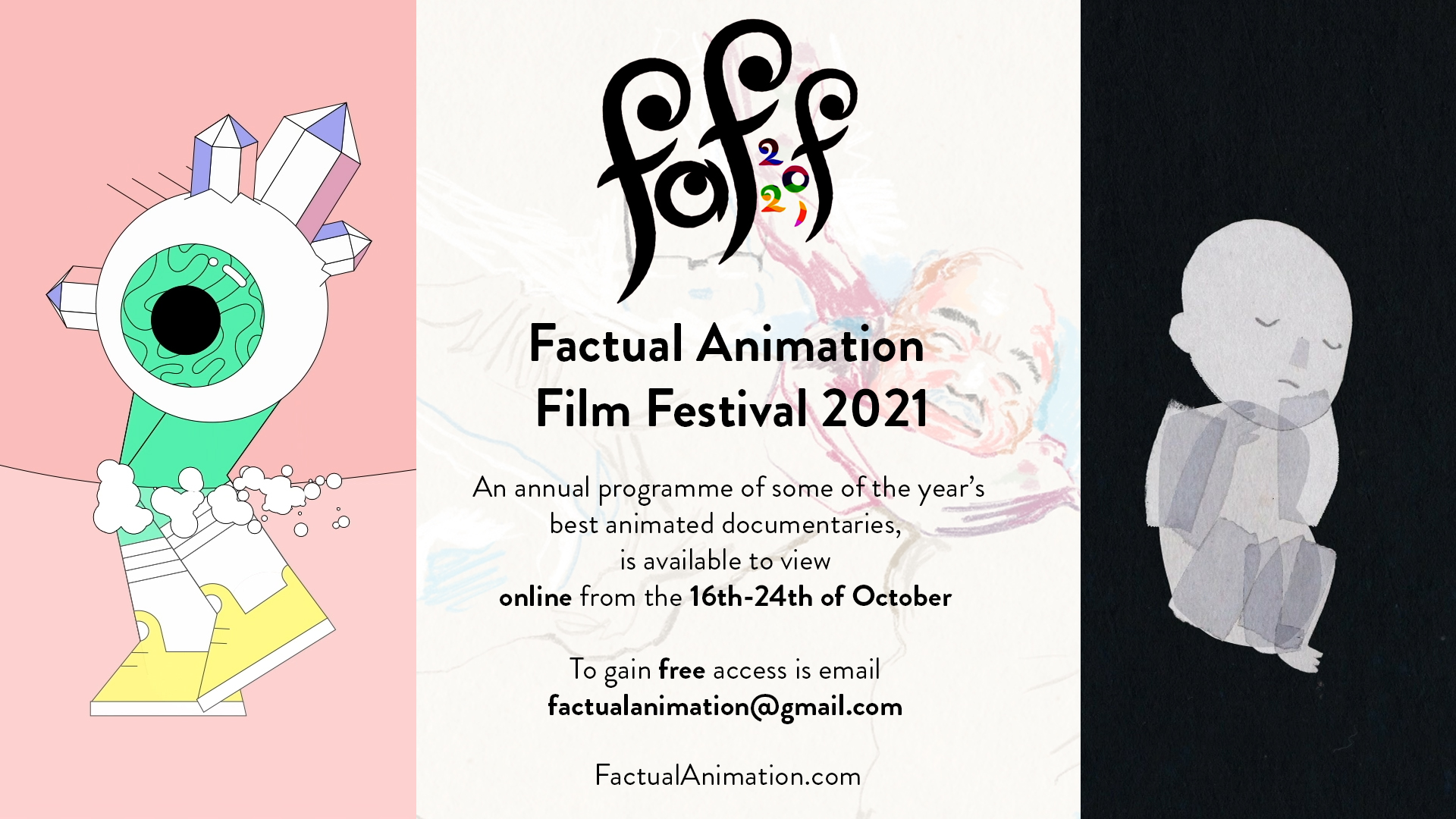
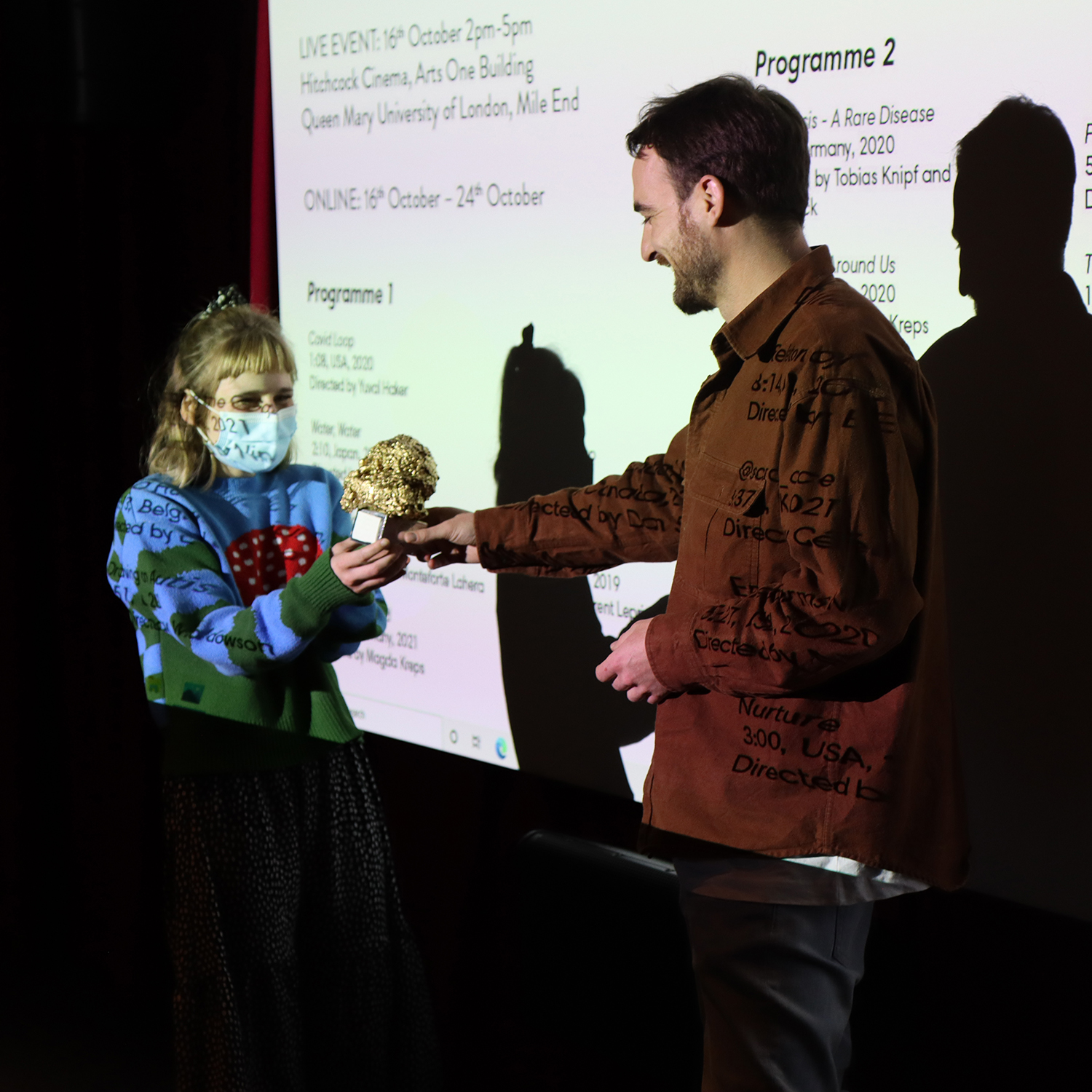
  • The 7th Edition of Factual Animation Film Festival was held at Queen Mary University of London’s Hitchcock Cinema on the 16th October 2021. The festival programme was also made available online until the 24th October. For full details visit factualanimation.com

    The programme consisted of curated screenings and a series of interviews with animation directors conducted by Holly Murtha, festival director, and Alex Widdowson, festival producer.

    The Beauty of Mathematics, an interview with Sarah Gorf-Roloff

    In Absentia, Interview with Adriana Monteforte

    I Want To Be Bored & The Things Around Us, interview with Magda Kreps

    Skeleton of A Moth, interview with Emma Kay Smith

    Moosehide Slide – Interview with Dan Sokolowski

    Awards

    There were two awards presented at FAFF this year: Best Student Film and Best Animated Documentary Film

    The award for Best Student film went to Magda Kreps for I Want To Be Board

    The award for Best Film went to Laurent Leprince for Waka Huia

    You can visit the FAFF website here https://factualanimation.com/

  • Still from Perinatal Positivity

    This is an Animated Documentary and wrap around campaign to raise awareness and talk about some of the mental health wellbeing difficulties parents may face during pregnancy, birth and after. The aim is to emotionally support parents and enable them to find support. First hand testimonies along with animated characters and storylines open up conversations and experiences that are often difficult to start or hear. This film is directed by Emma Lazenby through ForMed Films, a not-for-profit Community Interest Company.

  • The festival who shares the name of the first known Animated Documentary features a stellar line up of films. Their selection includes a mockumentary category and a Rising of the Pandemic category on films made about and during the pandemic.

    The festival is screening on location, alongside a hybrid online/ offline conference. You can find more details here: www.animadoc.pl

  • images

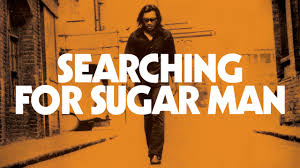
    A still from Searching for Sugar Man featured in ‘Interjections and Connections’ 

    Written a few years ago now, this article by Bella Honess Roe examines the animated segments within live action films and builds on the thinking in her seminal work ‘Animated Documentary’, both essential reading for those studying, making and writing about the theory and or practice of animated documentary.

    https://bellahonessroe.wordpress.com/2017/11/29/new-article/

  • The latest book about factual animation comes from Dr Nea Ehrlich, and a quick glance at the contents page shows notably distinct areas of animated documentary that have seen less coverage, for example an entire section of the book is dedicated to other forms of animated documentary within games and VR, whilst other chapters explore in depth the definition of mixed realities. We cannot wait to get reading, the book is available to buy at Edinburgh University Press or you can access the book via ‘open access’ via this link:

    https://library.oapen.org/handle/20.500.12657/46536

    About the book:
    Confronting shifts in the status and aesthetics of the real, *Animating Truth *analyses how contemporary technoculture has transformed the relationship of animation to documentary by mapping out two parallel
    trends: the increased use of animation within documentary or non-fiction contexts, and the increasingly pervasive use of non-photorealistic animation within digital media. As the virtual becomes another aspect of
    our contemporary mixed reality (physical and virtual), the book aims to understand how this visual paradigm shift influences viewers, both ethically and politically, and questions the wider ramifications of this transformation in non-fiction aesthetics.

  • FAFF this year took place from 17th – 25th October, as an entirely online event. Here are some collected highlights:

    Programme

    Winners

    Best film: Drop by Drop, directed by Alexandra Ramires and Laura Gonçalves

    Best student film: Right now, I am, directed by Ciara Kerr

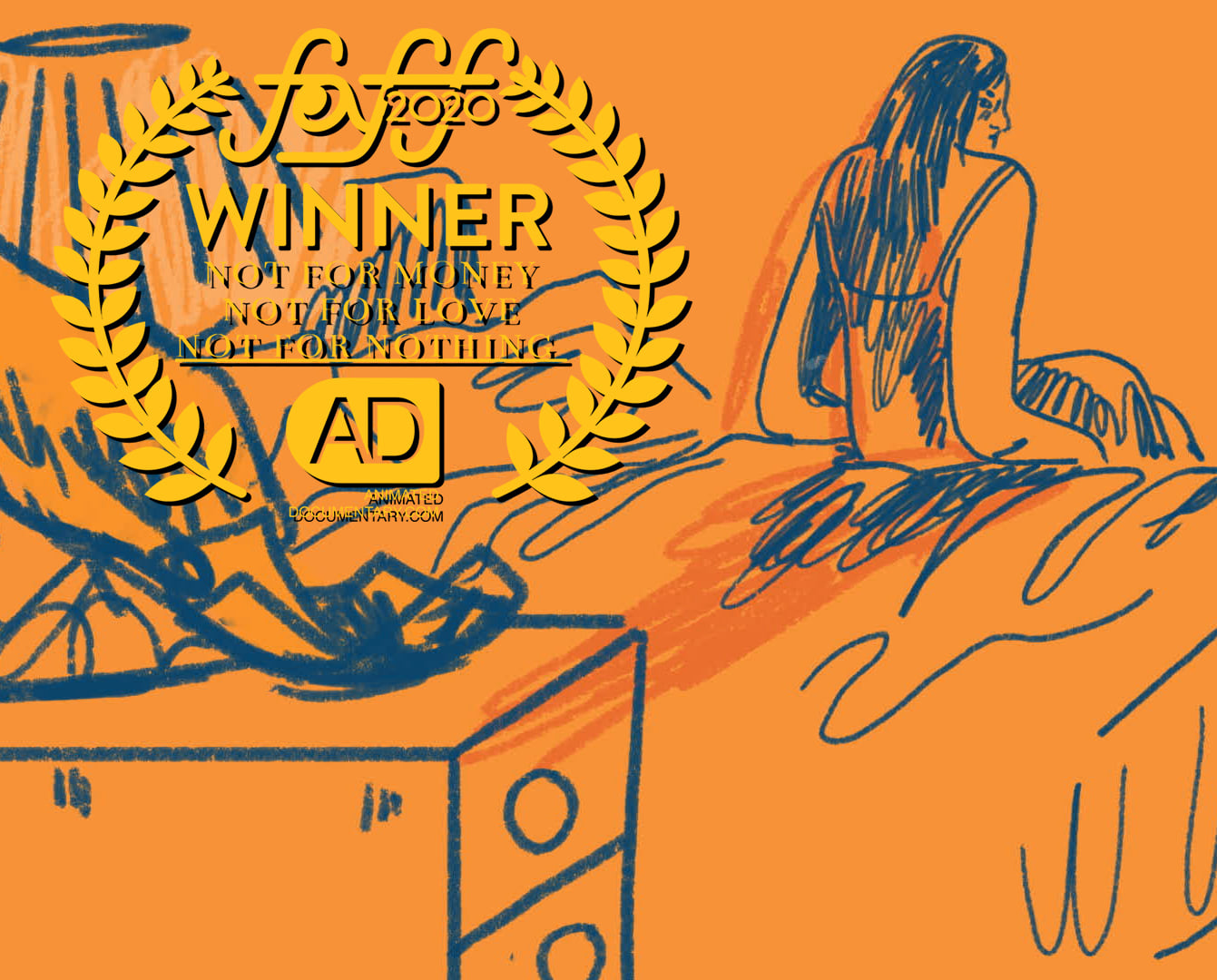
    Animated Documentary.com award: Not For Money, Not For Love, Not For Nothing, directed by John Robert Lee

    Festival organiser Daniel Murtha and I interviewed many of the filmmakers about their films:

  • We’re super-excited to share details of our upcoming panel discussion with three film-makers working with autobiography, in partnership with Animate Projects and British Council:

    Our next Animation Salon is programmed by Alys Scott-Hawkins and Ellie Land from Animated Documentary, is on 4 November. It’s our second in partnership with Animate Projects. The animated documentary genre continues to grow, featuring in a variety of formats: shorts and feature films, explainer videos, interactive documentary; and showcasing an array of techniques such as the autoethnographic film, the investigative film, the call-to-action and reconstruction films, to name just a few. Animators Mary Martins (UK), John Summerson (USA), and Signe Baumane (Latvia/USA) will share their insights and experiences with us, alongside some clips of their work.

    Animation Salon/Accelerate Sessions
    Animated Documentary
    18:00 (UK time), Wednesday 4 November
    Zoom
    More information here.
    Free. Register here.
    Spaces are limited – please join early to make sure you get in. Supported by Arts Council England’s Emergency Response Fund.
    Still: My Love Affair With Marriage, Signe Baumane, 2021

    Next Accelerate session coming up…

    12 November
    Animation and VR
    With Tom Higham (York Mediale), Liz Rosenthal (Venice Film Festival), Juergen Hagler (Ars Electronica), Helen Starr (Mechatronic Library), and Ulrich Schrauth (London Film Festival Expanded).  More details soon. 


  • anidox_vr-_logo

    The Animation Workshop (home to ANIDOX lab), is for the second year running their new initiative – the ANDOX:VR Award and Exhibition. The Awards include a cash prize and a residency grant for the development of new work.

    The 2019 awards included five projects in competition and one project out of competition.

    This review will focus on the information available for each project online, usually a trailer and reviews. Unfortunately, I have not experienced the projects as a VR experience yet, due to not being able to attend the festivals the projects have exhibited at. My aim is that the information I provide will be enough to introduce the reader to the project and by following the links, knowledge about where to access the work will be clear.


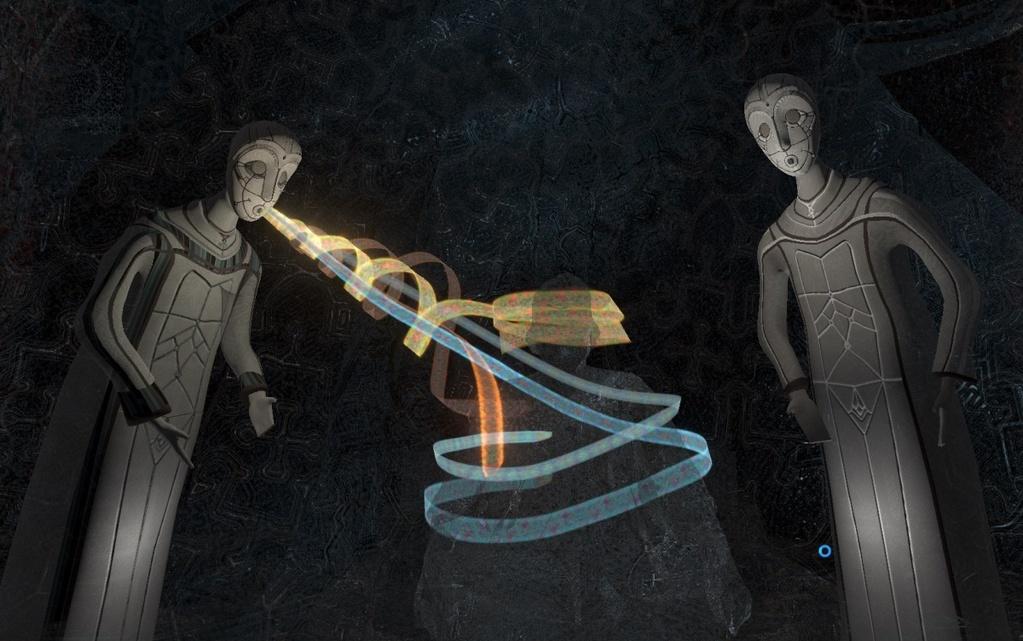
    ‘Ayahuasca Kosmik Journey’ by Jan Kounen (2019)
    ayahuasca-kosmik-journey

    This 18 minute VR film allows participants to immerse themselves in visions triggered by a dose of ayahuasca – a tea made from the leaves and stalks of shrubs found in Brazil and traditionally drunk by ancient Amazonian tribes. The spectator lives through the eyes of the director who has experienced the psychoactive brew.

    “Imaginative, architectural and delirious visualizations. More than an imitation of a drug trip, the world presented is a spiritual one. Chants fill the headphones. Snakes slither. And no amount of text we can draft can dig deep enough into the actual experience.”
    Review by David Graver on Cool Hunting

    You can find the trailer here and a link to the project’s website here


    ‘Homestay’ by Paisley Smith, Jam3 and the NFB Digital Studio (2018)
    unnamed

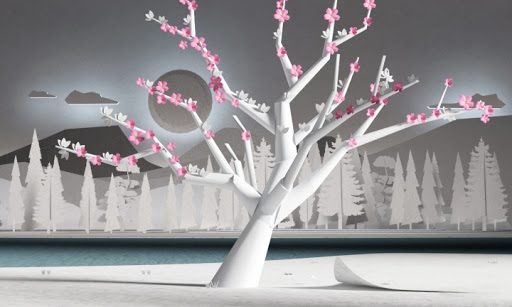
    The trailer for this VR Animated Documentary cuts directly to the dramatic points of the story. This is the tragic story of a Japanese student who stays with a Canadian family; a look at how complete immersion in another culture can create a clash of expectations and change our understanding of family, hospitality, nationality and love.

    The user experiences the story through a voice-over by the director, giving an account of her experience. The visuals embrace technological challenges by depicting a paper cut-out and origami aesthetic, created within game engine Unity.

    You can watch the trailer here and read more about the project here


    ‘Another Dream’ by Tamara Shogaolu (2019)
    another-dream2

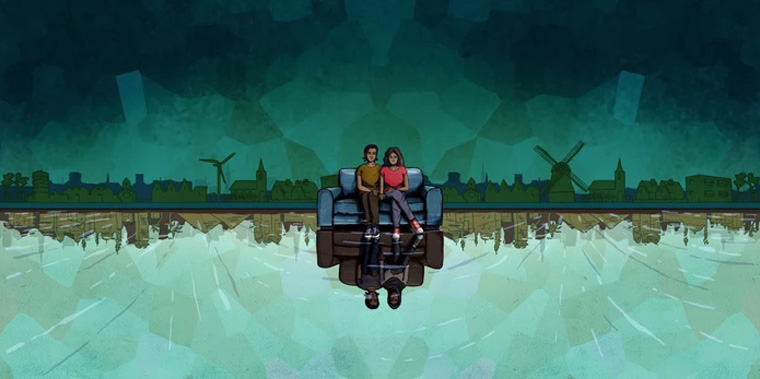
    Winner of the ANIDOX:VR 2019 Award for Innovative Storytelling, ‘Another Dream’ is a hybrid animated documentary and VR game bringing to life the gripping, true love story of an Egyptian lesbian couple. Faced with a post-revolution backlash against the LGBTQ community, they escape Cairo to seek asylum and acceptance in the Netherlands. An accompanying installation allows audiences to reflect on what they have seen, heard, and felt in VR.

    Another Dream is part of Queer in a time of forced Migration an animated transmedia series that follows the stories of LGBTQ refugees from Egypt, Sudan, and Saudi Arabia across continents and cultures — from the 2011 revolutions in the Middle East and North Africa region, to the world today.

    ​You can watch the trailer here and find more out about the project here


    ‘Accused #2 Walter Sisulu’ by Nicolas Champeaux and Gilles Porte (2018)
    stills_sisulu_1

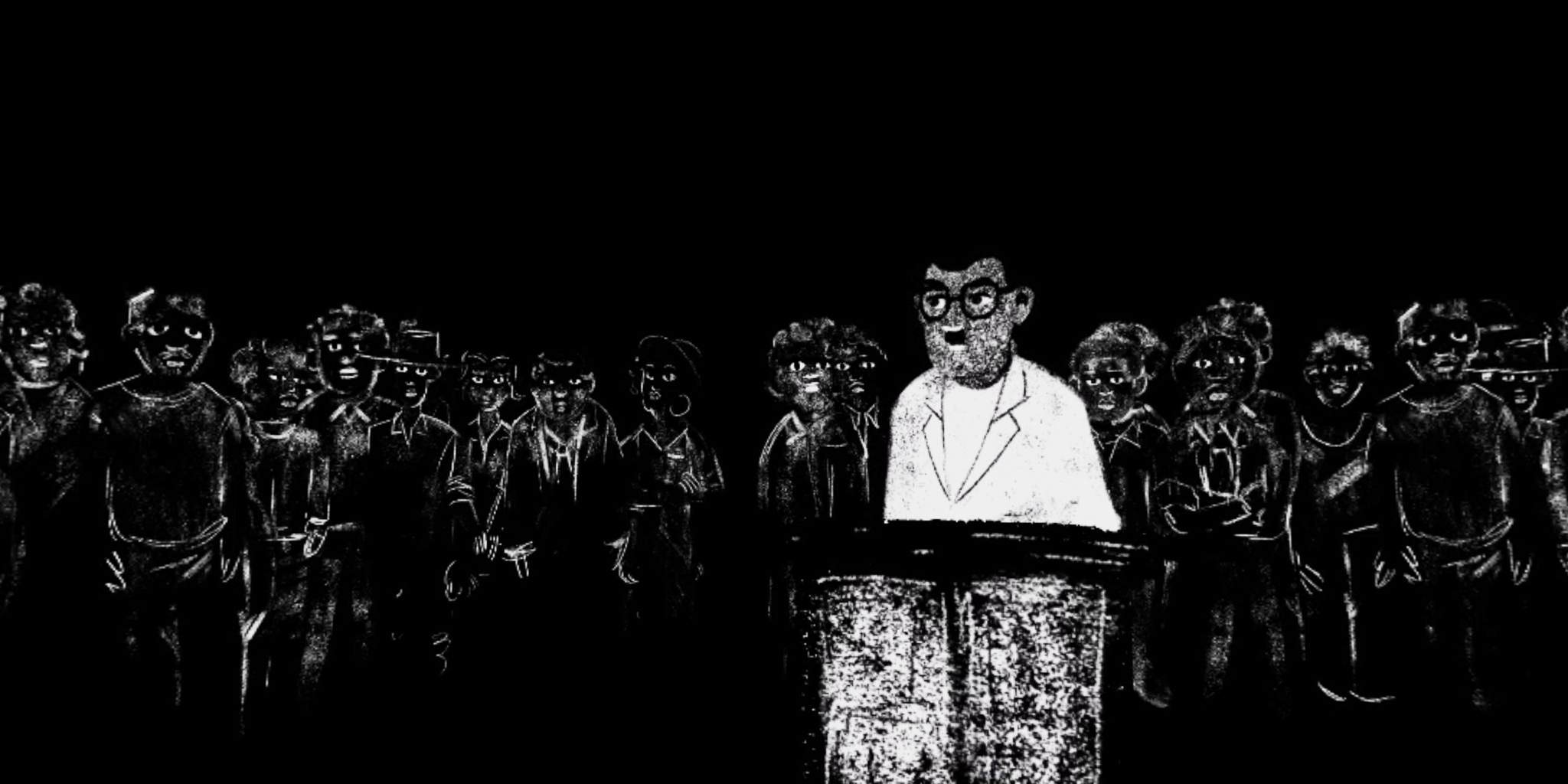
    This 360° video immerses the spectator at the core of the Rivonia trial, which took place in South Africa 1963-64. Accused no.1, Nelson Mandela and accused no.2, Sisulu faced a racist and aggressive prosecutor. The defendants used the trial as a political platform against apartheid, at the expense of their freedoms. The original sound archives of the trial form the narrative, with illustrations by Oerd Van Cuijlenborg brought to life.

    You can watch the trailer here and find out more about the project here


    ‘The Scream’ by Sandra Paugam and Charles Ayats (2018)
    unnamed

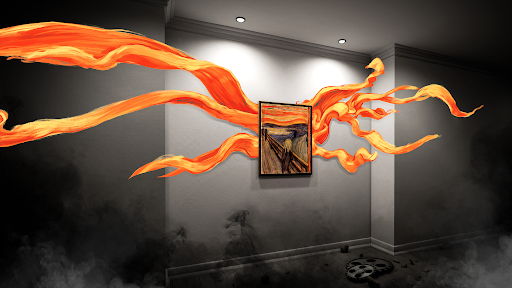
    Winner of the ANIDOX:VR  2019 award for Best Immersive work (€1000). Bringing to life ‘The Scream’ by Edvard Munch, this VR installation enables the user to interact with the painting. The trailer sets a scary tone: set in an empty museum you are invited to touch the painting…beware of what you might unleash.

    You can watch the trailer here and find out more about the project here


    ‘Songbird’ VR installation by Lucy Greenwell / Michelle & Uri Kranot (2018)

    maxresdefault

    Songbird is a fairy tale with a dark heart. You will be transported to the island of Kauai in 1984 and into a painted replica of a lush cloud forest filled with colourful birds. Here, you are invited to search for the last known ʻōʻō, an iconic black bird with yellow leg feathers and a beautiful song, a bird whose existence has been threatened to the point of extinction.

    Watch the trailer here

    Online Submissions are open until 20th July, for the ANIDOX:VR 2020 awards.

    The ANIDOX:VR Award is supported by The Animation Workshop/Via University College, Vision Denmark, The European Union, Viborg Kommune, The Danish Film Institute, and the Swedish Film Institute. The exhibition is sponsored by HTC VIVE.

  • ImOkHorsepaintedRideshortfilmTsr01

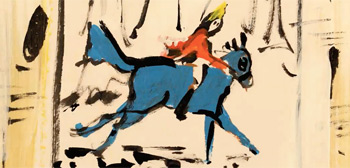
    Image: ‘Im OK’  by Elizabeth Hobbs


    While still in production, there was a lot of talk among art lovers about the 2017 animated documentary Loving Vincent. ‘It is completely hand-painted’, ‘an army of artists has been employed for its production’, ‘it will look like a moving painting’ (see Frizzell, 2017; Mottram, 2017; Vollenbroek, 2017)… I was in suspense for its release and fascinated by all the hype surrounding it. When I finally got to watch the film, I could not help but feel a bit let down. Yet, I could not understand the reasons behind this disenchantment. The imagery imitated van Gogh’s style flawlessly, the storyline dealing with the circumstances of the artist’s death was interesting enough, and as far as I could tell, the acting was good. What was it then? Why was I feeling like I wanted to see more? 

    Part of me felt that my art education was to blame, an education that was perhaps wrongly distinguishing and discriminating between art and craft. I could not see the point behind this repetitive exercise of recreating an art style whose value lay in being different, in being original and unique. The recreation seemed like a copy, an imitation and therefore to me, of less value. It seemed no further away from art than a printed reproduction of the original painting. It seemed almost futile, unnecessary, a bit kitschy. The story could hold its weight without the hand-painted stylization, and the stylization might have had a stronger effect without a storyline. However, I remembered how art students and apprentices used to study images –and still do to some extent– by copying the masters. This film employed over one hundred artists who worked painstakingly to recreate the footage in Van Gogh’s style. Keeping in mind this tradition of learning art, it seems like Loving Vincent acted as an apprenticeship for them. An homage to the technique of this master of modernism. To me, it is a performance that pays tribute to this great artist, not so much in its completed form, the final film, as by the painstaking process of its production. And that change in perspective elevates a rather good film to a masterpiece.

    Loving Vincent. Dir. Dorota Kobiela and Hugh Welchman.

    In her short film I’m OK, Elizabeth Hobbs (2018), took a completely different approach in depicting the life and work of the Austrian Expressionist artist Oskar Kokoschka. Despite some loose references to his work here and there, Hobbs did not try to emulate Kokoschka’s style, nor did she have a script and employ actors and rotoscoping. Using expressive, playful lines and bright colours on paper, the animator highlights aspects of Kokoschka’s life. She specifically focuses on the time when the artist volunteered for service during WWI, after being rejected by a lover. Although Hobbs communicates well the message of heartbreak, war and pain, unless a viewer is already familiar with the life and work of Kokoschka, it is unlikely that they would gain an education of the artist merely by watching the film. This, however, does not seem to be the priority of the short. Instead, it acts as a loose interpretation of the life of an artist.

    I’m OK Dir. Elizabeth Hobbs (U.K. and Canada)

    These two examples are very different approaches to document the life of an artist through animation. Both films take advantage of the medium to simulate an aspect of creation that van Gogh and Kokoschka were using. Loving Vincent partially employs rotoscoping in the form of hand-painted live action footage but remains confined within the indexical qualities of the recording. It takes advantage of van Gogh’s painterly aesthetics and simultaneously maintains a strong relation to ‘reality’. I’m OK, on the other hand, does not involve the tracing over live-footage and without this strong and recorded initial connection to the world, it recreates Hobbs’ own version of it from scratch. I’m OK applies an expressive approach with emotive brushstrokes, music, use of colour and symbolism to tell a story while highlighting the animator’s unique perspective and is without any pretence of presenting ‘the real’. Hobbs refers to Kokoschka’s style not by directly emulating his art, but by adopting a similarly expressive aesthetic while maintaining her artistic voice. Hobbs’s film is not only an homage to an artist. It is much more than that, as it is, at least in my humble opinion, a work of art in its own right.

    References

    Frizzell, N., 2017. 65,000 Portraits Of The Artist: How Van Gogh’s Life Became The World’s First Fully Painted Film. [online] the Guardian. Available at: <https://www.theguardian.com/film/2017/oct/13/loving-vincent-van-gogh-painted-animation-dorota-kobiela-hugh-welchman [Accessed 9 March 2020].

    I’m OK. 2020. [DVD] Directed by E. Hobbs. United Kingdom and Canada: Animate Projects Limited and the National Film Board of Canada (NFB).

    Loving Vincent. 2017. [DVD] Directed by D. Kobiela and H. Welchman. Poland and United Kingdom: BreakThru Productions and Trademark Films.

    Mottram, J., 2017. Loving Vincent: How The First Fully-Painted Feature Film Took Six Years. [online] The Independent. Available at: <https://www.independent.co.uk/arts-entertainment/films/features/loving-vincent-van-gogh-douglas-booth-armand-roulin-hugh-welchman-dorota-kobiela-a7994186.html [Accessed 9 March 2020]

    Vollenbroek, T., 2017. ‘Loving Vincent’: 6 Facts About The First Oil Painted Animated Feature. [online] Cartoon Brew. Available at: <https://www.cartoonbrew.com/feature-film/loving-vincent-6-facts-first-oil-painted-animated-feature-150443.html [Accessed 9 March 2020]