
The 2025 feature-length animated documentary Endless Cookie is a wonderfully weird, warm, and thought-provoking portrait of the family and community that surround the film’s two directors, Seth and Pete Scriver.
The film’s structure meanders through stories told by Pete, anecdotes from his own life interweaving with local legends from his home in Shamattawa, a remote First Nations community in Canada. These stories were recorded and edited over nine years by his Toronto-based half-brother, Seth, who then animated the scenes, creating a colorful, surreal world in which humour, care, spirituality, and everyday eccentricity sit alongside tragedy, social injustice, and occasional horror. The colourful design balances the cute with the borderline grotesque, building a captivating world unlike anything you’ve seen before.
Endless Cookie premiered at Sundance and won the Contrechamp Grand Prix at Annecy, the Rogers Audience Award at Hot Docs, and Best Feature Documentary at the Canadian Screen Awards, among other accolades.
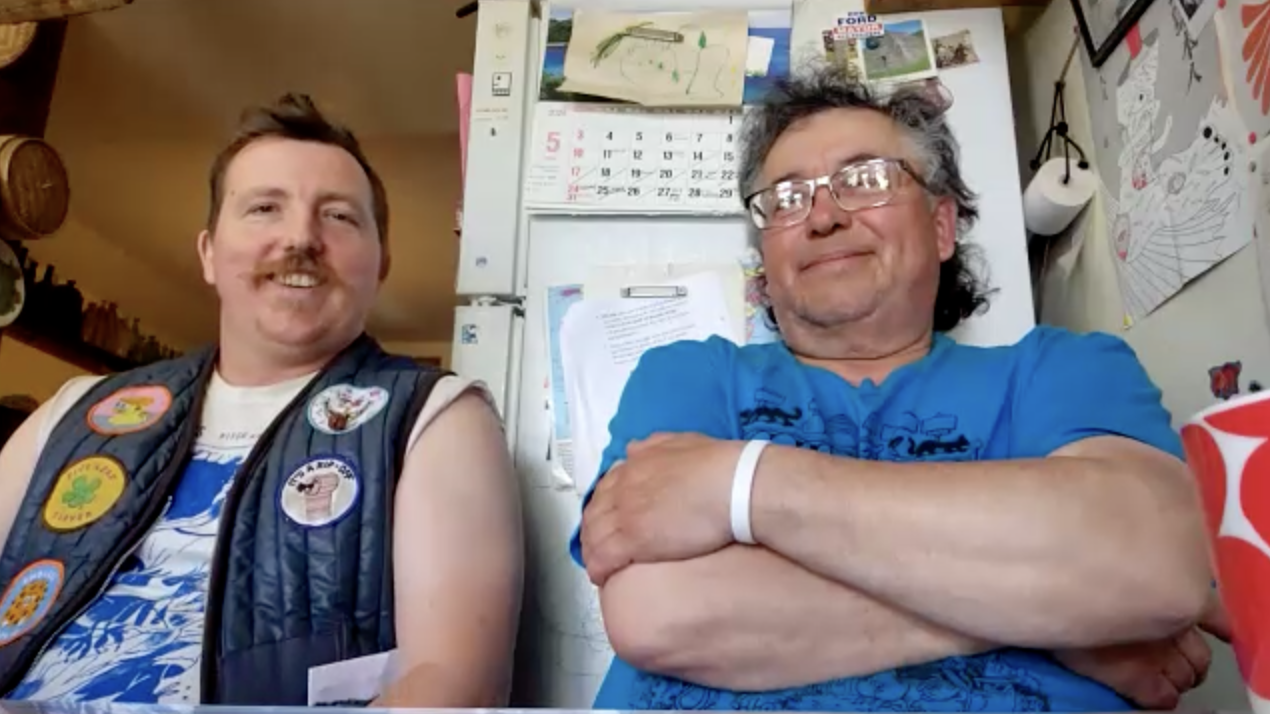
I had the pleasure of chatting with Seth and Pete Scriver about film, and their production process. You can listen to our conversation on the podcast, or read the transcript below.
Interview transcript
CM: How are you doing?
SS: Doing pretty good. Pete’s usually up north but he’s down visiting because we’re going to an awards ceremony tonight
CM: The film’s been doing brilliantly.
SS: Oh, yeah. It’s been amazing. Way crazier, way better than we thought.
CM: I absolutely loved it.
SS: Thank you.
CM: The film opens with this right-angle shaped guy who’s going to fund your film. From the “NFG”.
SS: That’s a carpenter joke, I work as a carpenter when I’m not animating, and we call that a square. So he’s literally a square. NFG is just a made-up funding body, it’s a joke on us because NFG stands for No Fucking Good. It’s what they write on tires and stuff like that, when it’s like they’re going to throw them away at the auto body shop – NFG. But then the big funder of animation and documentary in Canada is the NFB. You know, it wasn’t meant to be any kind of diss on NFB. I actually really loved the NFB but, you know, we were talking to them at one point and nothing ever happened, which is no big deal. Obviously we got money from other people. But it was funny because people thought we were dissing them. But we weren’t trying to, we were trying to make fun of ourselves.
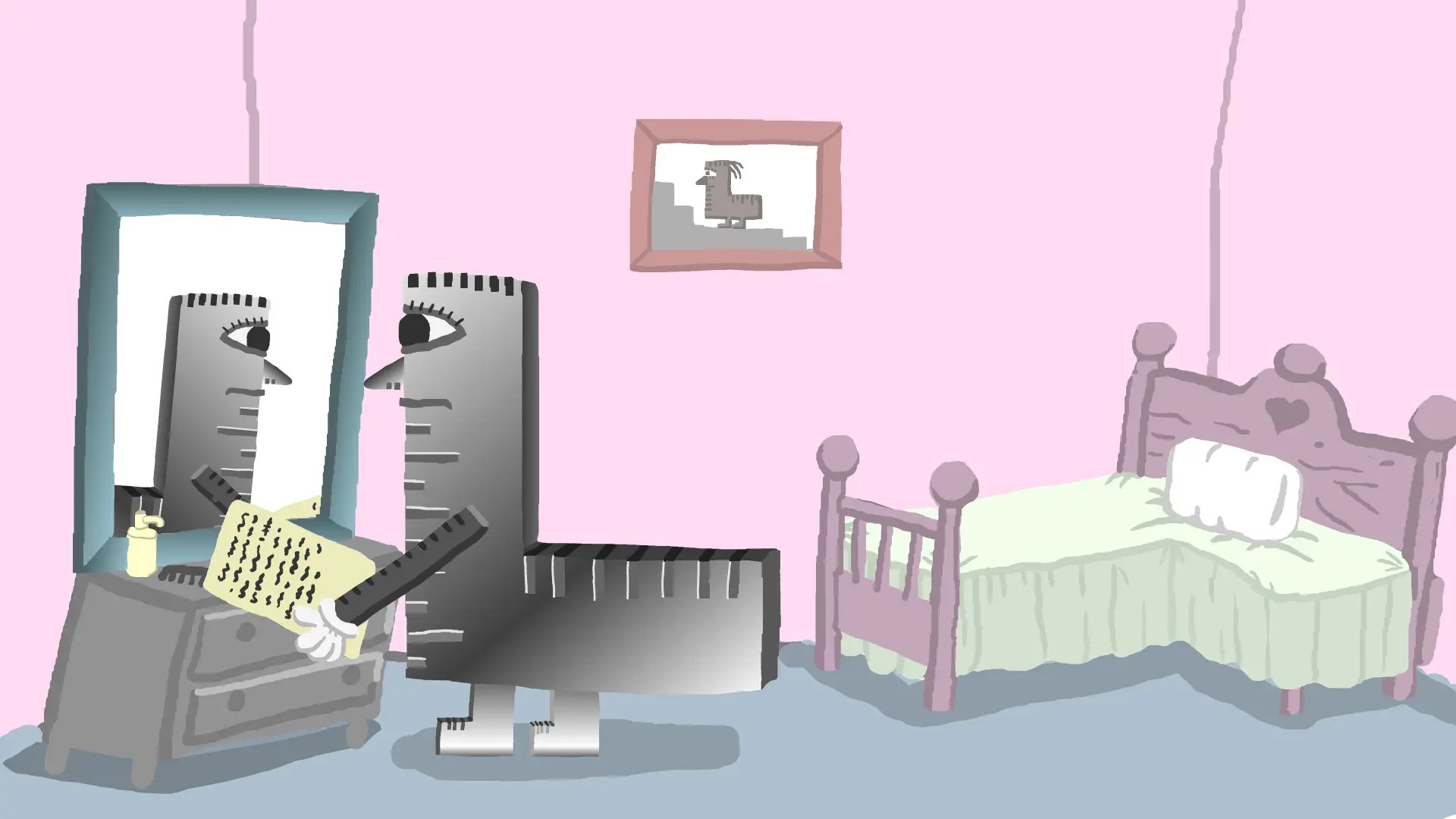
CM: So you had multiple funders. So this character of the main funder is a more of a device?
SS: Yeah, exactly. Some of those questions, some of his comments were real comments from producers, or from Telefilm or whatever, along the way. So it was a funny tool. It was kind of terrifying to make fun of the people giving you money, but then it worked great. At one of our first Canadian screenings there was some grant officers in the audience. I asked them, “what did you think of that?” and they were like “that was my favorite part”, they were like “I just like to be seen”. Which is really sweet.
CM: You presented him quite sympathetically as well. Like he’s asking, “why is this scene going on so long?” And you explain to him why it’s important. And he’s like, “oh, that’s very interesting. Okay”.
SS: Yeah, that was a real question. It was like, why is this ridiculous scene so long? And then it was trying to justify it basically.
CM: For me, something that was effective about the film is that so much of animation often just seems to be about efficiency, but there didn’t seem to be any efficiency – it was so meandering, so huge.
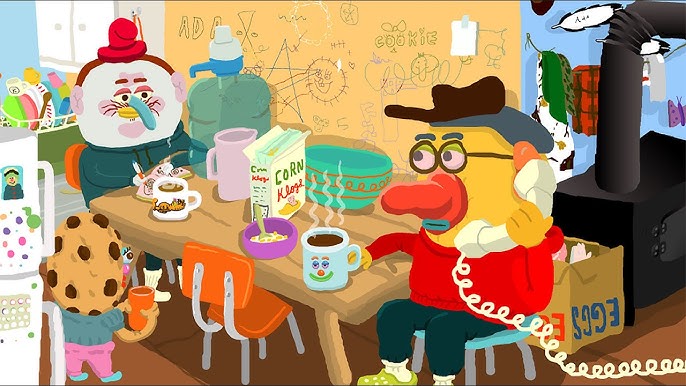
SS: I would not recommend taking the route we took. For us, it was the perfect thing because it allowed us to be more open with our storytelling and with where we went because we really went all over the place and we didn’t plan to go all over the place. The original plan was literally just telling a few stories to cover life in Shamattawa and then also a little bit of stories from Kensington. And then, sure enough, Pete lives in a four bedroom house with eight kids. And at the time, I think there were sixteen dogs. And then it was like…
PS: Twenty-six, twenty-six dogs.
SS: Yeah. Because the puppies too. And the noise of the puppies under the stairs, that was a real noise. We were trying to figure out what it was and it was right beside us, on the other side of this thin wall. All these puppies were born and making this high-pitched squealing noise.
PS: We tried to be professional at first and it was like record, then stop, record, then stop. Because all of a sudden you realize you can hear the clock ticking on the recording, and the fridge.
SS: Yeah. Over the nine years of recording, we have audio documentation of Pete’s fridge becoming, like, unbearably loud. But, yeah, in most animations obviously you have a big plan, you set up the plan, and then you do the audio recording first, and then you animate to the audio recording. Ours was like having a plan and then the plan totally getting screwed up, and then the audio leading the movie and then editing it once we kind of had the whole thing together. The movie was originally two hours long. It just hurt your ass to watch. And it was painful because there’s a lot of beautiful things that we had to cut out, but we ended up cutting out half an hour, and then I showed it to Pete, and Pete didn’t even know what we cut out. He’s like, “I don’t even notice the difference”.
CM: Was that half an hour of complete animation you cut?
SS: Yes, that’s the insane thing. So I probably animated for an extra year, but it’s great because we have those. Tonight we’re showing the film a couple hours away from Toronto and they’re going to screen a couple of the outtakes after the film, which are really funny little scenes. We’ll put them on the DVD or Blu ray or whatever or put them online at some point. Like bonus stuff.
CM: I did have a question then about this long period of making – it nine years, I think?
SS: Something like that. I keep forgetting.
CM: Animation covers so much over in terms of how things are made and how that fiction / non-fiction process works. There’s bits of the dialogue that feel definitely like spontaneous interview, and then there’s bits that feel definitely scripted, and then there’s quite a lot where you just can’t tell.
SS: Pete has a beautiful way of describing the way we recorded the stuff…
PS: Real situations, like conversations around the kitchen table where you have your family discussions and it’s not supposed to get recorded. That’s kind of what had happened.
SS: No one was actors. So we would just keep recording and recording and recording and capturing things, and sometimes I would go back into recordings to try and find something, and then I would find something I didn’t even realize we recorded that would be beautiful and make it into the movie. Like me encouraging Cookie, when I called Pete one time, I didn’t even remember any of that. I was like “oh, this is so sweet, we gotta put this in”. But a lot of the time, in a normal situation when you’re talking with family, there’s a lot of things that aren’t in context. We know all the contexts around every story and every person, right? And histories of First Nations and history of Canada. Our family usually has a grasp on it. And then we would realize when showing it – “oh shit, maybe people won’t understand this”. And definitely if it’s about our personal family stuff we gotta add context. And so that was one of the things that became scripted, but it would be usually scripted from something someone said before, so it would be a real thing, but then we would have to rerecord it because it just wasn’t in there, and we needed lines to make sense. And so those were generally the scripted parts. And then sometimes we would have other parts that were not done by family members, just to give context for a different story. Like the NFG officer, he would ask a question that could lead to context. We wanted it to be understandable, but we also wanted it to be loose. So that was a funny way to try and do that.
CM: I’m interested in the social politics side of it which keeps on pushing through. One of the sequences I loved was the comfy car seats in the idling car. You become very aware of yourself sitting in your seat and watching, when you’re watching the comfy car seats. To what extent do you want to make an audience critically aware of their position and reflecting on it, or how much is that just a joke?
SS: That joke of the car seats idling was about a native movement in Canada – a really powerful, popular movement. We worked on the movie for so long that that movement is a smaller movement now, but it was really big when I first started working on it.
PS: It was a very powerful movement.
SS: It was called Idle No More. And so that was the opposite of Idle No More – just idle. And then it was like, “who are the people that are idling?” and it was like, “oh, you couldn’t be more idle than actually sitting, idling”. Then the joke went further and it was like, the actual like car seat. It was a beautiful, surreal thing. I’m thankful people love that scene, even if they don’t know the Idle No More movement.
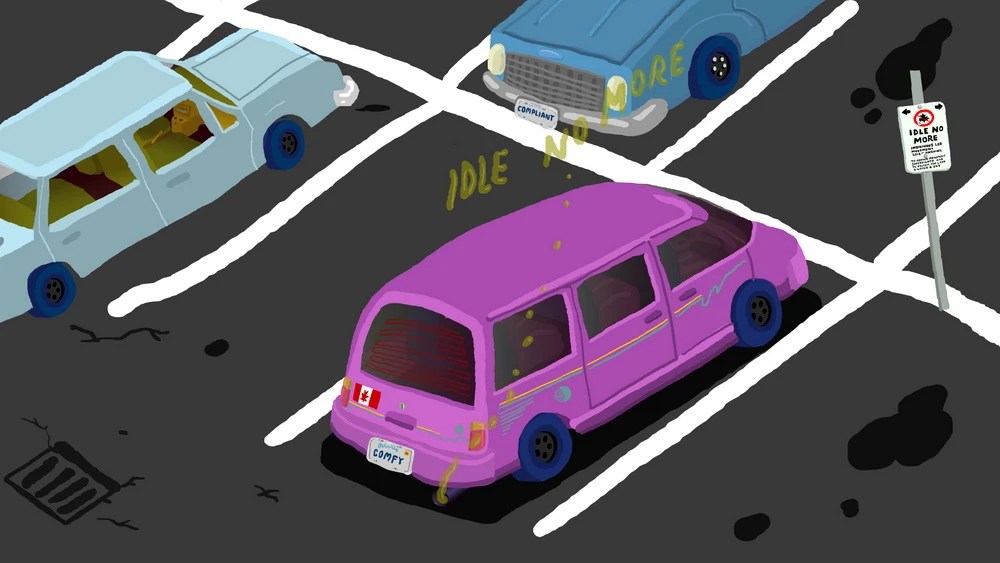
PS: It was a movement that started after the Oka crisis back in the early nineties or late eighties. They had a standoff with the Canadian government. They were trying to move graves to convert the land to a golf course. Idle No More came out after that.
SS: There’s a great NFB documentary by Alanis Obomsawin about that event. And then Idle No More was this movement and one of the leaders was having a hunger strike on the Parliament Hill. And the Prime minister at the time decided to, instead of meet with her, he like went to a zoo to cut the ribbon for panda bears, or something ridiculous.
CM: Pete, your involvement with the film, on screen, seems to start with a phone call. At that point of getting the money to begin the film, you guys had talked about you telling some stories, and that would be a spine for the film. Did you know more than that?
PS: I didn’t know it was recording.
SS: I cold called, and then at the end, I was like, “I recorded that”. Just so that he would be loose and it would be a real call. But I came up earlier. That phone call, that became a different device for the movie. Because I would interrupt his stories all the time. And it would just be like, “how do we deal with this terrible recording?” And I was like, “oh, I could just put myself there, and then we have the microphone”. That was one of the things that saved us, just deciding to show that we’re making a movie, to be transparent about everything.
PS: Yeah, it was just impossible to cut out all the background noise, and it just became incorporated.
CM: About two thirds or three quarters of the way in, we suddenly start seeing photographs of the real people, which has such a weird effect, having got used to the animated versions of them.
SS: My friend Aaron suggested that. He was like “you know, people probably don’t even realize that that your family is real. You should show real pictures”. And so that was kind of what spawned it. But it’s also nice to put it in kind of far along because by that point, they audience have been convinced that we’re real, but because the characters are so weird-looking they’ve put part of their judgment in a different section of their mind. Like “okay, I’m just gonna release this part of my mind and just say that this is real and this is what the way they look”. And then we show the real characters. It works really well. And it was fun because we had all these amazing photos.
CM: So that roots things in the reality. But then there’s also this spiritual side, the sleep paralysis and the dream of the elders, and these heightened realities. I felt like the animation let the reality and the heightened reality sit together, meld into one world. But did that come out through the process or was that always something you wanted?
SS: It came through the process. But that’s just a real situation up north in Shamattawa. And people like Pete’s stepmom, and my mom, she loves to talk about dreams. So it’s on both sides of the family. It’s actually a really common topic, but especially in Shamattawa, I think, with the kids and stuff. A lot of them have really wild dreams and visions and stuff like that. So it was nice. I’m happy that it came up because it was important. We have to include this stuff.
PS: When they first told me that it was a documentary, I was like, “what? It’s a documentary? How could that be?”
SS: Oh yeah. It’s funny, when we were finally done, we were both trying to figure it out because when you apply to film festivals, you have to apply to a category. And we hadn’t thought of it until then. And we were like, “what is it?” And then we were talking about it for a while. And then it was weird. I remember when we were like, “I guess it’s a documentary”, and you know, it really is. But it’s hard when it’s about yourself. It’s easy to forget that.
CM: Was there any point where you just felt completely lost in the process of making it?
SS: Oh, yeah. For a few years, it was like, “oh my God, like, what is happening?” We could always kind of see the curve of it, but putting it all together, it didn’t always flow. And then it took so long to animate because there wasn’t tons of money. I had an animation assistant for three months. And then, over the rest of the nine years, we only had enough for me and then it’s like, you can only abuse yourself up to a certain point to not pay yourself properly. There were lots of moments where it was so much work and it was so daunting looking at the storyboard. And it would just be like “okay, I gotta work a little bit every day and then eventually it’ll be done”. And then it started to be like “oh my God, why did we call this Endless Cookie? Did we curse ourselves? It’s just going to take forever”. That was the joke in the film about it being after the end of the world, and I’m still working on the animation.
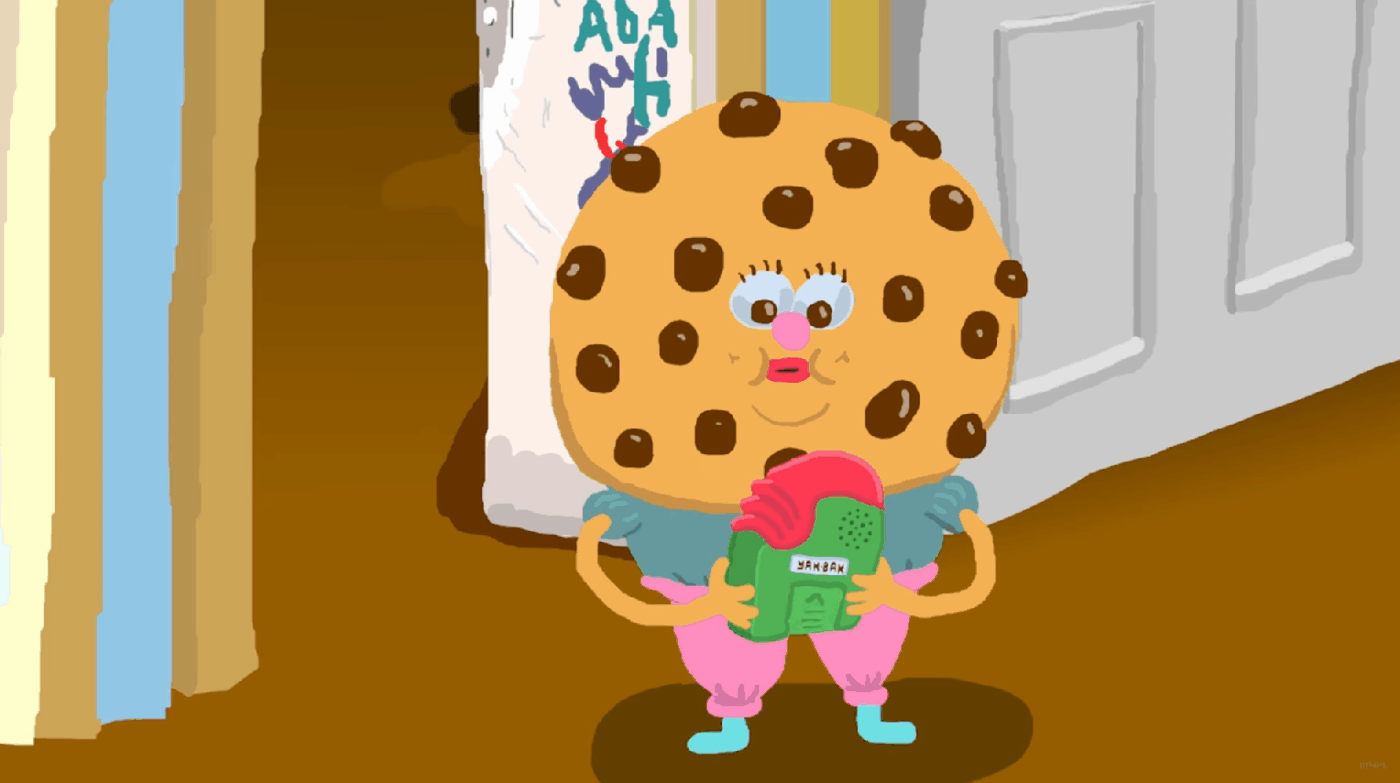
CM: I love the bit where Cookie says “oh yeah, I was just like a baby when you started this, and now I’m ten”.
SS: It’s pretty sweet how Cookie kind of came around to that, because for a while she liked her character, and then when she was twelve or thirteen or fourteen, she was kind of like, “why am I a cookie? Chris’s character is so cool. Why am I a cookie?” And then by the end, when now she’s nineteen, she’s like, “I like my character”. So thank goodness it took so long.
PS: I got a call one day from the producers. They had started wondering if this was for real. I hadn’t talked to them, they were dealing with Seth the whole time. So three of us went on a three-way call. And I totally forgot about the producers. Me and Seth started talking about an idea. I basically just broke out into a story. All of a sudden the producer is saying “okay, okay, that’s fine, sounds great”.
CM: Did you do an audio edit first and then the storyboards based on that, or was it simultaneous?
SS: Most would be audio first. I would just kind of compile a little bit of audio and then animate to it and then see how it flowed. And then sometimes there would be a bit of extra animation and then we could add audio to that. But most of the time it was dealing with the audio first and then animating. And then going back and forth.
CM: Would you finish a scene without necessarily knowing what’s coming before or after?
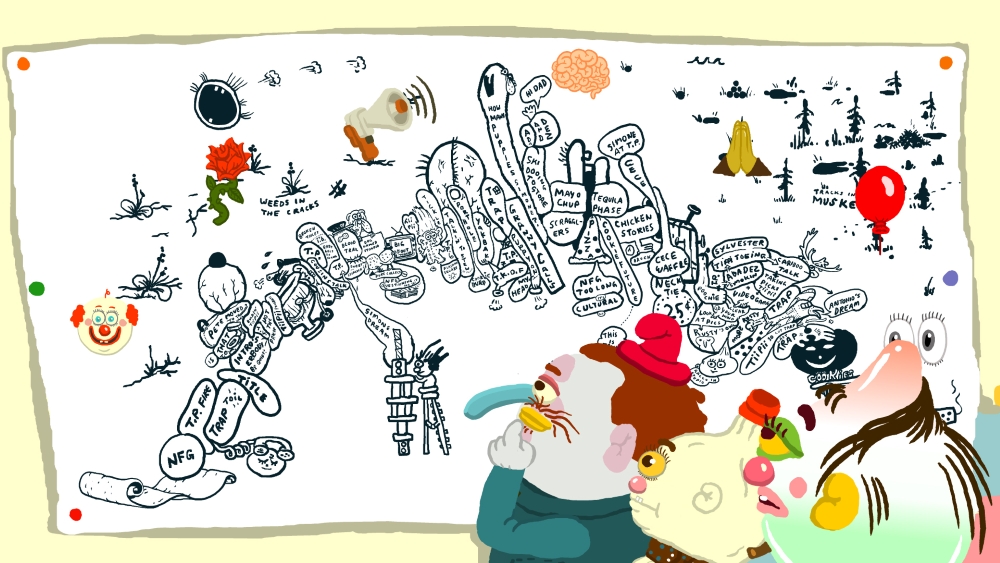
SS: Most of the time we actually kind of had a plan of the way a story is told and the way story flows, like in in real life around the kitchen table. And so there was a kind of pathway of the chaos. Like, when we gave into the chaos, it was kind of like we were being led. Like the joke about looking at the storyboard, I think I say like, “I’m not sure if the storyboard is leading me or if it’s following me. It was kind of like we were being led by the interruptions and all the other stuff.
CM: Would you have any advice for any filmmaker trying to like scale up to making longer form animated nonfiction?
PS: When I was in grade seven doing writing, the teacher told us that the best thing to do is to write what you know. So that’s basically our whole movie. I told stories that I knew, I didn’t make up anything. I guess I was comfortable with just talking and Seth recording. And a couple of times I thought “hey, how come is he looking at me like that?” I guess it just depends on the story.
SS: One of the good byproducts of the movie taking so long was that Pete would tell an amazing story, and then he would be like, “oh yeah, don’t put that one in the movie, I don’t want the kids to hear it, they’re too young to hear that story”. And then luckily they grew up, so we could put a couple of those stories in.
CM: Will you guys be working on anything else together?
SS: We have some plans to. We gotta figure it out. We have too many ideas. We gotta narrow them down to, like, two. We weren’t that organized, and I think we’re going to try and be a little more organized this next time around. But you know, we’ll probably end up being loose again because it’s just our nature.
PS: He did most of the work. I just did the talking.
SS: Well, you know, it wouldn’t have been very good if Pete wasn’t talking.
CM: Well, thank you so much for making the time to talk to me.
SS: No problem. Nice to meet you.
___
Interview by Carla MacKinnon
 ANIMATED DOCS