Encounters, the Bristol based UK animation and short film festival, continues with an excellent array of animated shorts in their second and third animation programmes.
Animation 2 – Moving Pictures was a collection of shorts that explored complex emotive narratives. Of the fiction work in the programme, ‘My Home (Chez Moi)‘ directed by Phuong Mai Nguyen, shone through as a truly touching and sophisticated exploration of a young boy coming to grips with his mother’s new romantic partner.
Two films from programme 2 that hit the animated documentary remit, both of which take place during the Second World War.
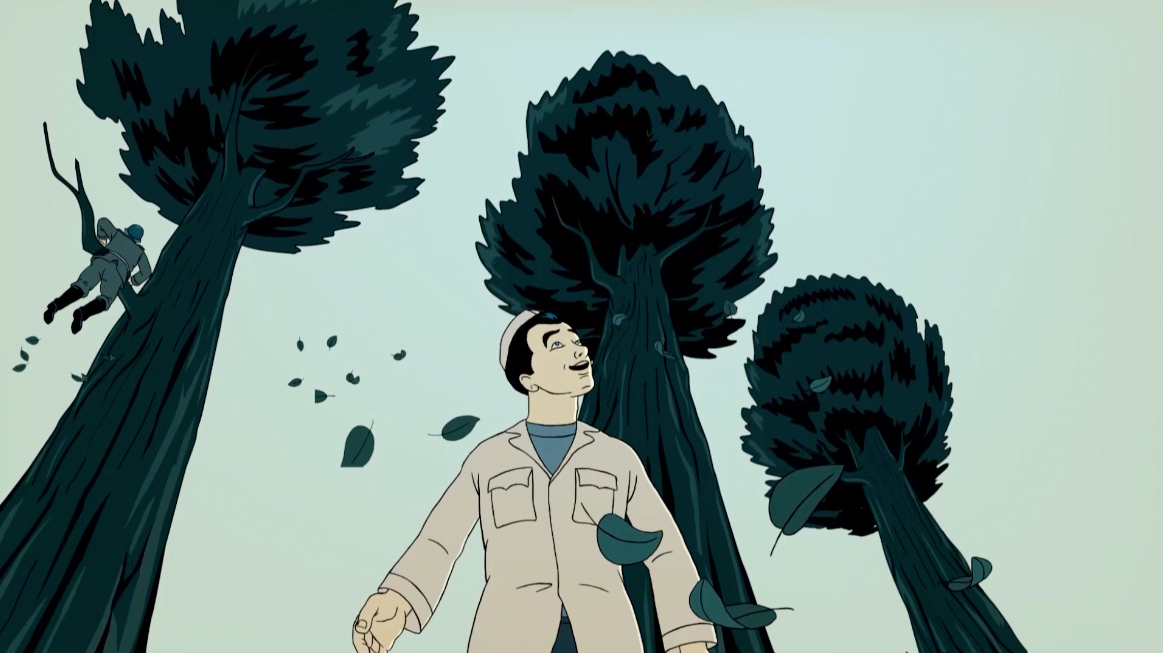
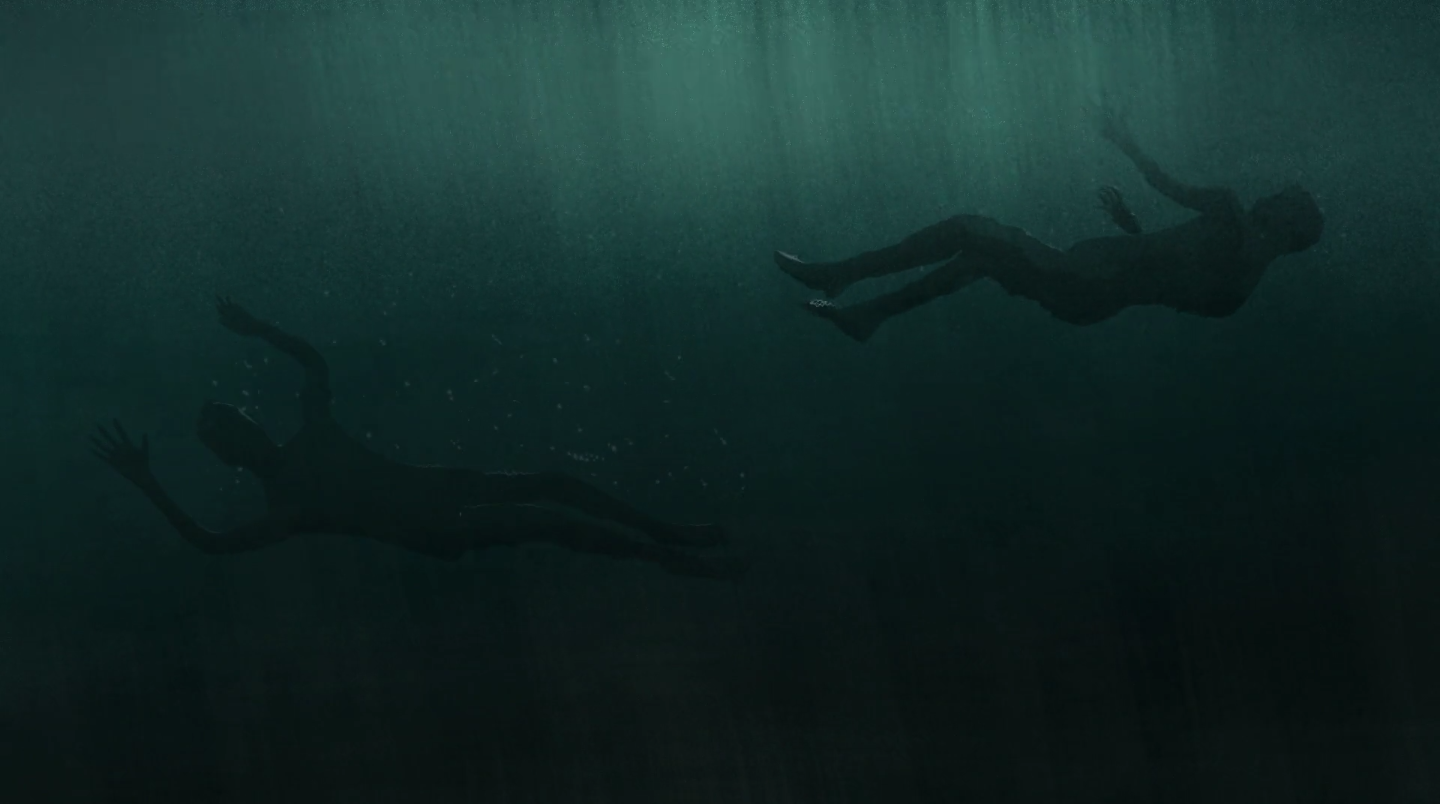
Zoltan Aprily, director of ‘Ungvár’, explores his grandfather’s memories of working on a Hungarian commercial ship which was leased to the German navy and appropriated for war.
The central moral dilemma of working alongside the historical villains of the 20th century is illuminated through crystal clear symbolism: the Nazi soldiers are quite literally depicted as faceless or monstrous henchmen, while the civilian crew are shown as a hapless bunch of normal-looking lads struggling through a precarious situation.
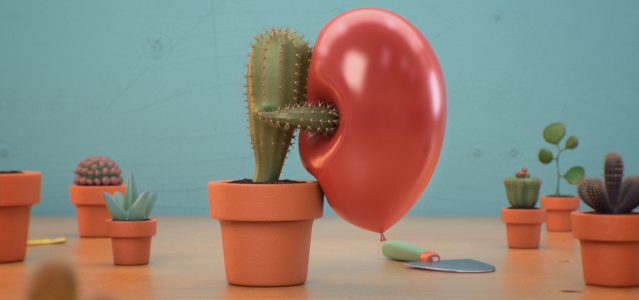
Michael Brookes was commissioned by the Bletchley Park Trust to reconstruct a key moment in British military history. Notes rescued from a captured German U-boat led to the British code-breaking teams cracking the German Enigma encryption. This 3D animation is rendered in a soft colour palette, with intricate textures reminiscent of the early 20th century printing of posters used during the Allied war effort.
‘The Petard Pinch’ is essentially a tale of duty and sacrifice. The stiff-upper-lip stoicism of the film serves only to sharpen the emotional response in the audience. This informative and moving short film clearly deserves the success it has already received from D&AD, Shorts of the Week and as a Vimeo Staff Pick.
Animation 3 – Top of the Class draws attention to animated films selected for their craftsmanship. Three of the films were identifiable as animated documentaries, but the of fiction and non-narrative work my attention was grabbed by the French-Hungarian co-production ‘Love‘, directed by Réka Bucsi. This fantasy nature documentary tracks the impact solar movement have on a weird and complex ecosystem.
Volker Schlecht & Alexander Lahl co-directed ‘Broken – The Women’s Prison at Hoheneck (Kaputt)’. This beautifully crafted film is narrated by Gabriele Stötzer and Brigit Willschütz, political prisoners from Hoheneck Castle in East Germany. These unfortunate women were forced to make garments which were sold for great profit across the border in West Germany.
The animation is classically drawn frame by frame. After scanning one step, the drawing was erased, changed or completely re-drawn on the same sheet of paper and re-scanned (a technique used by William Kentridge). The attention to detail in this film is truly astonishing. It seemed somehow telling that the directors chose to integrate the subtitles, perfectly matching the aesthetic of this powerful animated documentary.
‘Stems’, directed by Ainslie Henderson, is a straightforward documentary about creating stop-motion puppets. The director narrates as his characters are assembled is if through the magic of stop-motion. It’s all very meta. Henderson laments, “they are like actors who are destined to play just one role”.
‘Mamie’ is a touching portrait of director’s grandmother. Janice Nadeau tries to decipher her personal memories of this aloof and unforgiving matriarch. Although not explicitly stated, it seems clear that this is based on first hand recollection. If ‘Mamie’ is entirely invented character I must apologise for suggesting this is an animated documentary and commend Janice Nadeau for the realism in her writing!
Encounters short film and animation festival runs from the 20th -25th September across a number of venues in Bristol, UK.
The first Encounters Festival animation programme focused on politics, conflict and cultural identity. Amongst the short animations were a number of works of fiction which directly satirise world affairs and political systems. Others made unambiguous references to hot topics like North Korea. In terms of documentary approaches, four films stood out for me:
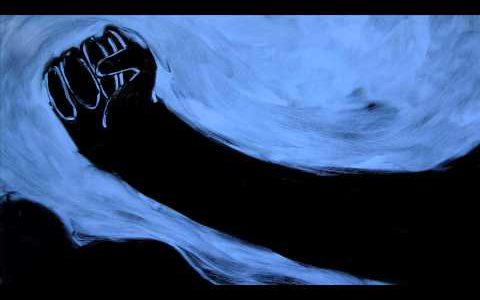
Having completed the AniDox:Lab under Uri and Michelle Kranot’s tutorage, I feel compelled to support the notion that their experimental film, ‘How Long, Too Long’, is a documentary. The animation conveys a loosely structured message of tolerance through appropriated historical footage and symbolic imagery. Each live action scene is manipulated though their highly distinctive paint on paper rotoscoping technique. The scenes are contextualised by the immortal words of Dr. Martin Luther King Jr. whose voice has come to symbolise tolerance. This film developed out of a collaboration with live action director Erik Gandini. His film ‘Cosmopolitanism’ (2015) on Vimeo is a more conventional documentary short which addresses similar subject matter and shares some of the animated scenes.
While thinking about how to categorise this film I was reminded that Uri had said animators often dismiss his and Michelle’s recent films as not real animation; while the structure and form of their films are lyrical enough for documentarians question their authority as a documentaries. However you might choose to define this short, Michelle and Uri’s contribution to animated documentary as educators is invaluable.
‘City of Roses’, directed by Andrew Kavanagh, mixes live action and animation to distinguish between recent history in Ireland and 1930’s USA. A young boy discovers an abandoned suitcase filled with letters home, written by an Irish emigrant.
These written documents both form both the basis of the narrative, and litter the aesthetic of the film. While the animated sequences are clearly an earnest attempt to represent historical documents, it is hard to know how literally one should read the live action scenes.
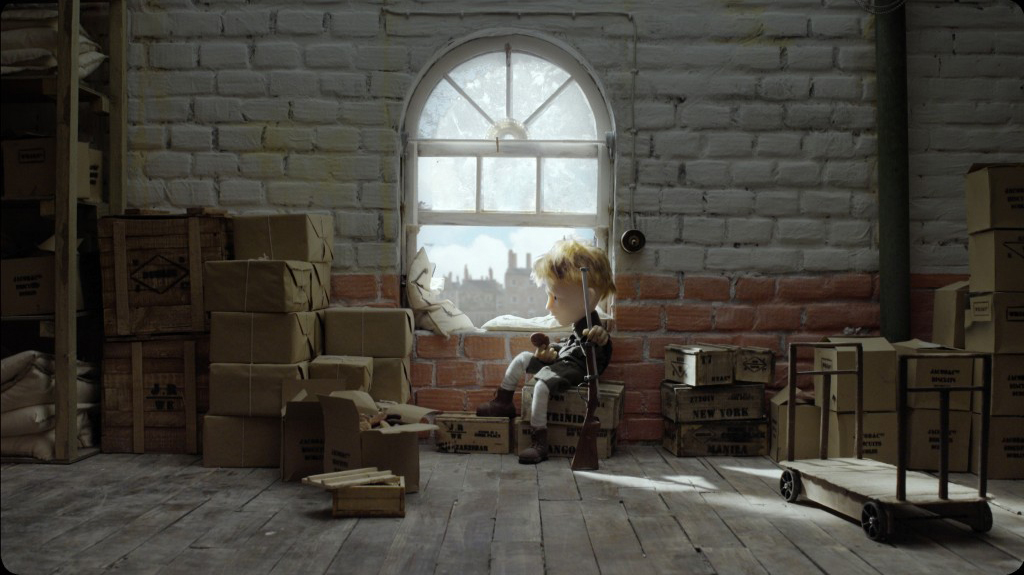
‘A Terrible Hullabaloo’ was commissioned to commemorate the 100 year anniversary of the Easter Uprising. In 1916, while the United Kingdom was distracted by war in Europe, Irish republicans rose up in an attempt to end British sovereignty. This film depicts a first hand account given by a fourteen-year-old patriot who found himself garrisoned in a biscuit factory during one of the most deadly weeks in Irish history.
Director, Ben O’Connor, initially conceived a stop motion animation but the sensitive historical deadline forced his production team to adopt live action puppetry. One of the more distinctive aesthetic choices was to composite human eyes onto the puppets. The uncanny effect some how makes the film both more and less realistic. O’Connor remarked in a Q&A session after the screening, that he considers the film a documentary because he made every attempt to remain faithful to the historic subject matter. Vinny Byrne’s testimony was recorded in 1980 for the documentary ‘Ireland: a television history’. While this is most certainly a documentary, it is fair to argue that this should not be considered an animated film. The vast majority of the footage is not created frame-by-frame or interpolated; instead puppets are filmed moving in real time, as are the digitally imposed eyes.
The final film on the Weight of Humanity programme was ‘Tough’, directed by Jennifer Zheng. This student film, from Kingston University’s Illustration and Animation undergraduate degree, explores the film-maker’s relationship with her mother and her own dual national identity. Zheng adopts a bold colour palette and traditional Chinese imagery while confronting difficult personal and political truths.
In the same Q&A session Jennifer declared her own problematic feelings about categorising this film as a documentary. She considers her audio interview as authentic documentation, but the animated action was entirely invented and features unrealistic or devised scenes. I would argue an artist’s interpretation of a conversation is just as valid and perhaps more meaningful than a ‘talking heads’ shot. Zheng, however, prefers the term “docu-fiction”.
Encounters is an international animation and short film festival basted in Bristol, UK. It is running from the 20th to 25th September 2016.
AnimatedDocumentary.com is getting ready to cover the Encounters Short film and Animation Festival. The festival runs from the 20th to 25th September across a number of Bristol’s cultural venues. Friday 23rd September looks to be an exciting day for Documentary Animation fans:
At 12 noon the 5th Animation programme, A Look Inside, will be screened at the Watershed, focusing on the aspects of medicine, emotional and psychological conditions. The programme explores topics like memory, ageing and perception. It features recent films from Samantha Moore and George Sander-Jackson, familiar names in UK the UK ahi-doc scene.
On the same day Animation Therapy will also be running a workshop from 10am-4pm under the ‘Animation on Prescription’ banner. The workshop is focused on the theme of compassion and is aimed at health professionals, dentists and vets. Documentary animation directors, Tim Webb and Em Cooper, will be teaching along side the occupational therapist and director of Animation Therapy, Helen Mason.
Later that day at 4.30pm there will be an Animation on Prescription screening and networking event featuring examples of films created in a therapeutic context. Great Ormond Street Hospital, Aardman Animations and TPO Uganda are just some of the institutions featured.
Alex Widdowson from the blog team here at AnimatedDocumentary.com will be attending the entire festival looking for other ani-doc snippets. Click on the event links for details about booking tickets.
A series of animated shorts illustrating young people’s perspectives of living as refugees and asylum seekers. Part of the BBC Two Learning Zone, this series won a Children’s BAFTA in 2012.
Produced by Mosaic Films in London, UK.
Director: Andy Glynne
Animation Directors: Salvador Maldonado, Karl Hammond, Tom Senior and Jonathan Topf
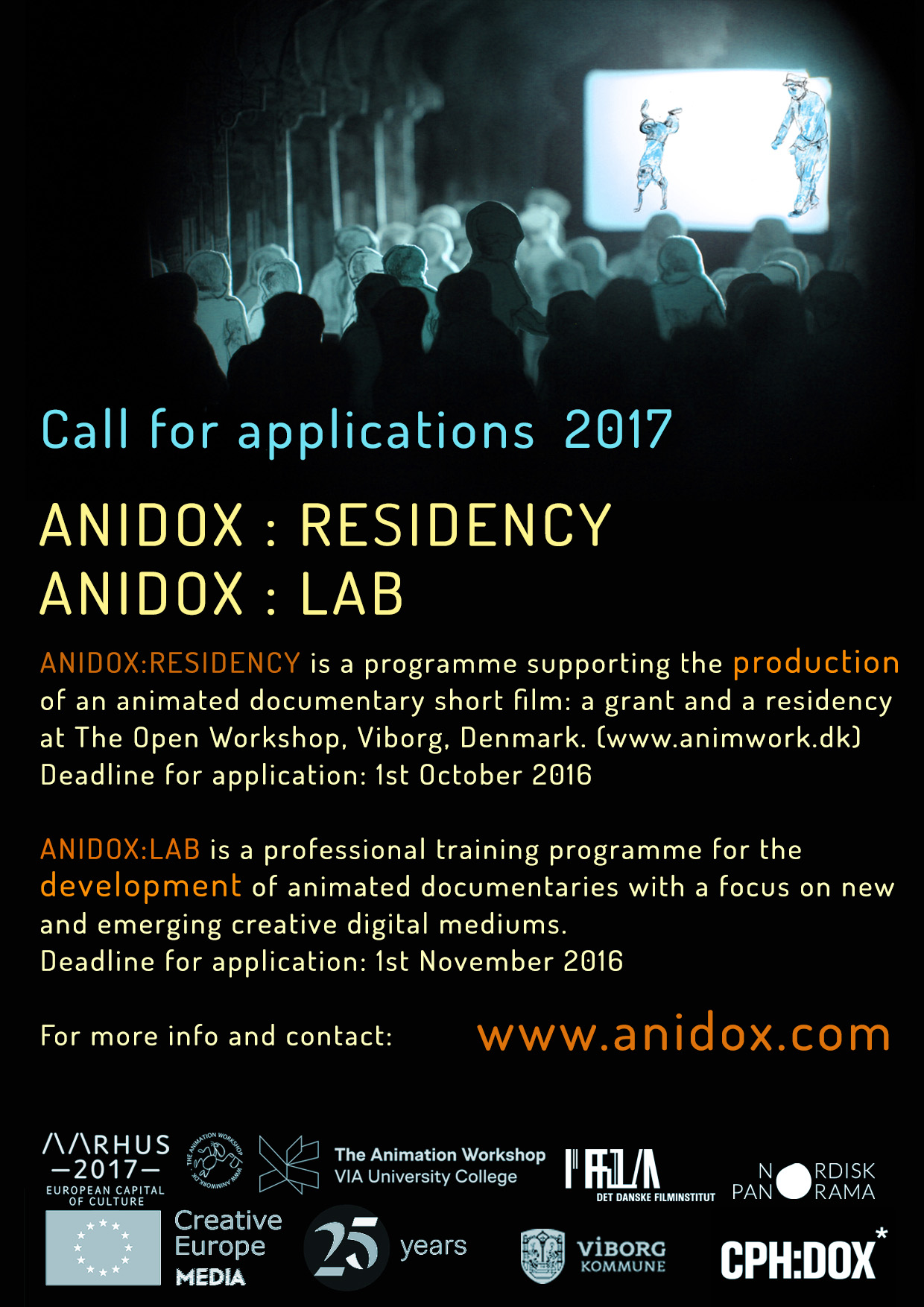
The AniDox:Residency is a fantastic opportunity for international filmmakers from The Animation Workshop, building on their successful Open Workshop residency and AniDox:Lab programme.
The organisers are looking for an artistic approach, exploring the possibilities and potential of animation documentary. They will provide studio facilities, workstations, accommodation, support and 27.000 EUR in financial support. For more information and to apply for the residency, go to the AniDox website.
Alex Widdowson: Your film, Pep Mask, was released a couple of months ago, can you describe the response you’ve had so far?
William Marler: The film kicked off at a small student-lead screening which was nice, because it allowed me to address the audience directly beforehand, and was an ideal opportunity for my close friends to see it for the first time. The first festival screening it had was at Flatpack Film Festival in April and I had lots of nice comments from various people. Some people focused on the animation itself, looking at the film artistically (such as my use of colour, which is purposefully limited), and others took the story as their main “souvenir”. Both types of response have fortunately been overwhelmingly positive.
AW: How does it feel coming out so publicly as someone with cystic fibrosis?
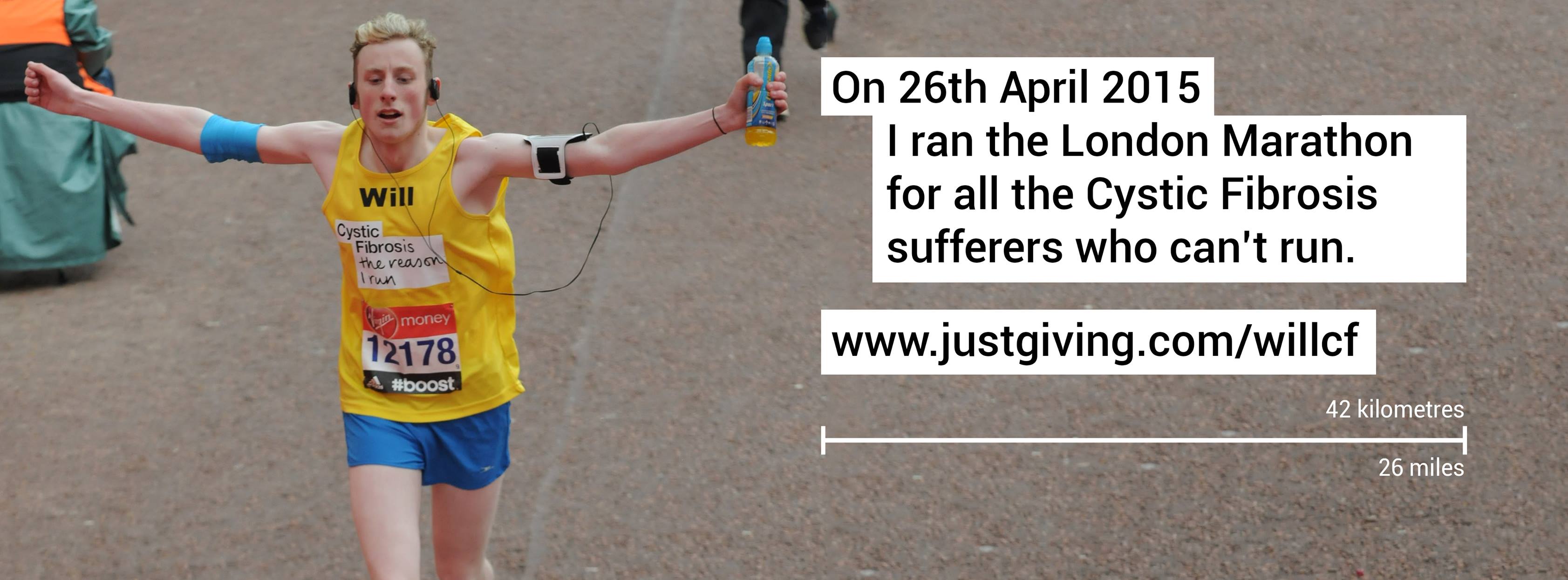
WM: For me, Pep Mask isn’t some type of “coming out” moment for me, as most people know I have it, and those who don’t, don’t know because it’s an invisible illness. I’ve never tried to hide my CF and I’ve always been a very open person when it comes to my health. For example in 2015, I ran the London Marathon for the CF Trust, and promoted my doing so as a “CF patient running for CF”. It has been interesting to hear people’s responses who didn’t otherwise know I had it, or who had an incorrect view on certain aspects of it – but overall it’s not designed to be a revelation to people as such.
AW: Have you heard any feedback from people who suffer from the same condition?
WM: One aspect of CF is that patients can’t mix due to cross-infection, so I don’t personally know many people at all with it. I specifically tweeted it out to a guy who I follow on Twitter so he could share it on, and he really enjoyed it. I’ve had very kind responses from people associated with it however, such as CF parents. I’d say the film is still in its larval stage of promotion at the moment, but my aim is to get as many interested parties seeing it as possible.
AW: Do you think the film will contribute to raising awareness of the issue of people living and dealing with cystic fibrosis? Have you had any experience of this yet?
WM: The film is yet to reach its full audience potential, but I have great hopes that it can at least introduce people to the existence of the condition and the routine it entails for some people. However, I had always set out to create a film about my CF in particular; it wasn’t designed to be a charity film, nor about CF in general. I’ve been a bit more relaxed when it comes to those potential aspects of the film, but really, this is just one single case of the condition, and it’s more about how I have personally dealt with it and how my parents kept me well through my childhood.
AW: Are you comfortable with the advocate/poster boy role?
WM: Absolutely. As I said, I’ve never had a problem with people knowing I have CF, and I’ve always been very open about it. Specifically though, I’d really like to be an advocate for what exercise, regular, strict treatment, and a focused attitude to the condition can achieve, I want people to know that a CF diagnosis is not the end of a fruitful life, but merely the beginning.
AW: Do you feel your film has helped you come to terms with your condition?
WM: I’ve never had any need to come to terms with my CF, that’s something I’ve done naturally as I’ve grown older. However, the film revisits a specific memory I have with my parents, and it’s helped me come to terms with that. It’s a memory I still find upsetting now, but I’ve realised that I should focus not on what I did to upset them in that moment, but what they did by not giving up on me.
AW: Could you go into a little detail about the influences regarding your visual style and approach to storytelling?
WM: I was inspired to use the white stroke on black style by an animator I met in 2014 called Viviane Vollack. She joined my class at Uni and delivered a presentation in that style, and ever since I found it much more captivating than the standard black stroke on white background. The white really pierces your eyes and stands out more than black in my opinion. The colour and also the animation concept of breathing text in and out came from a drawing I did not long before production of the film began. I liked the link between breathing in and out, and receiving and giving speech. There’s a delivery-and-response aspect to both. The colour was designed to be a real contrast from the rest of the piece, particularly defining important foreground and background elements. For example, the red and white of the Michael Jackson BAD poster helped capture its constant presence on my left wall as I do physio every day. I often watch or listen to MJ during that time.
AW: Do you consider this film a documentary?
WM: Certainly, I’m documenting both a specific time (the memory I revisit) and also document a general, repeated routine. I wouldn’t necessarily describe it as a documentary in the sense that I am teaching the audience or delivering information, however it fits that genre in that it captures a very important, and real, part of my life.
AW: When I was making a film about my own mental health experiences I felt like a bit of a fraud as an artist, as if transcribing events that I’d experienced was not a creative process. Do you relate to that at all?
WM: If anything, I am so much more inclined to enjoy stories with a real human element to them. If a narrative is picked out of thin air then I don’t feel as strong a connection with the artist, whereas if there is something real about the story, even if it’s more visceral, my attention is captured more strongly. Not having to construct a narrative allowed me to focus on how to tell the story, both visually and chronologically.
AW: Can you compare your experiences of dealing with documentary and fiction in animation?
WM: Actually I wrote a whole dissertation about the blurred boundaries of animated documentary. Focusing on Ryan by Chris Landreth, I explored how both fictional and non-fictional elements can be merged within the genre. As I said, I tend towards non-fiction animation as my favourite, but what I loved so much about Ryan is how fiction, or more accurately, exaggerated elements of real life, can bring a whole new experience to the art form. Everyone reading this now open a new tab and watch that film, because it is absolutely superb.
AW: Do you wish to continue as an animated documentary director?
WM: No, or at least not just as an animated documentary director. I’ve never liked the idea of defining myself, even as an animator really. Whenever I think I’ve found my niche, I end up branching into more different areas and interests. For example, I’m currently exploring projects concerning dance film, infographics, documentary, and so on. I just create, a lot of it is animation, but not always.
AW: My apologies for asking such a clichéd question for a recent graduate; what have you got planned next?
WM: Not long ago I started my new job at Ember Television in Birmingham as their in-house Motion Graphic Designer which has been really exciting because I’ve had different types of projects to work with and recently allowed myself the opportunity to challenge both my work, and that of the company. I’ve also recently set up a dance film collective with fellow filmmaker Dilek Osman called Figure + Phrase which will hopefully begin operating soon. I’m also planning another project surrounding my CF, which is really exciting, but I’m keeping somewhat under wraps…
Olivia Humphreys uses archive photography and hand drawn animation to create an evocative film about the memories of loss. A great example of how animated documentary can transcend the boundaries of reality.
A great short film about a young man’s experience of homelessness and his reflections on the divide between the wealthy and the poor in modern day America. The film ends on an uplifting positive note which leaves you rooting for the protagonist.
Created for the American Refugees Service, were you can see three other animated documentaries – it’s worth a visit.
I recently returned from the second module of The Animation Workshop’s ANIDOX:LAB in Denmark. This development lab, supported by Creative Europe, brings together animators, documentarians, artists and producers from across Europe, all united by a common interest in exploring the form of animated documentary. Each participant enters the lab with a documentary idea which is then developed across three modules. At the end of the lab, the participant is expected to have a strong pitch package supported by a two-minute promo for their project. The team behind the programme then continue to support a selection of these projects, bringing them to European film markets where finance may be secured to take the project further.
Anidox is put together by filmmakers Uri and Michelle Kranot, and has emerged from their own practice and research in the field of animated documentary. The Kranots were originally animators, drawn to non-fiction through “a desire to make films politically”. Their work has gained international acclaim and continues to compel audiences with its combination of fluid, poetic imagery and strong political meaning.
Still from ‘Black Tape’ by Uri and Michelle Kranot
Communities of Practice
ANIDOX launched in 2013, with the original aim of bringing documentarians and animators together to find out what differences there are in their practice, and what challenges this brings to the production of the animated documentary. Over time common challenges which have been identified include:
Communication issues stemming from differences in use of language and terminology between the animation and the documentary community;
A lack of understanding in the documentary community of the production processes, timelines and budgets necessary to produce animation;
A mutual lack of understanding of the very different editing and post-production processes in documentary and animation production; and
Other difficulties with effective communication between animators and documentary directors and producers.
In response to these and other challenges, ANIDOX aims to foster dialogue between documentarians and animators, while providing business opportunities and a rich environment for creative development, helping filmmakers to develop the essence of their project and visual approach.
As well as being an excellent opportunity for project development, ANIDOX offers a diverse programme of talks from and about filmmakers, commissioners and other players working across animation and factual film production.
Module 1
In the first Module of the programme, Uri and Michelle Kranot were joined by filmmaker Paul Bush to lead several days of workshops. Kicking off with an overview of animated documentary, Uri Kranot and Paul Bush discussed the history and current state of the field in broad terms. Bush voiced his opinion that while drama has always been influenced by documentary, animation is only now catching up as part of a “coming-of-age for the animation form”. Bush acknowledged that the ‘contract’ with an audience is different in an animated documentary from a live action one, since with animation the audience is clearly aware that what they are watching is not an indexical record of real events, but he claimed that this is a strength of the form. In his opinion the British documentary industry has given up on ethically trying to present any kind of objective reality, although audiences will still automatically believe live action documentary and assume it is ‘real’. In this way, he claimed, animated documentary is less ethically problematic than its live action sister – through it’s transparently constructed nature it is more honest in its complex truth claim.
While documentary often uses animation as a way to limit the damage of missing or poor quality live action footage, there are also many other approaches and opportunities for the form. Bush specifically mentioned the power of animation to show alternative viewpoints, stories told from perspectives other than the point-of-view of the traditionally empowered. This ability of animated non-fiction to challenge hegemonic power structures has been discussed by various scholars and the potential of the form to weave alternative histories to those recorded and presented by the mainstream is widely considered one of its key creative strengths.
In a presentation about the history of animated documentary, Uri Kranot showed a range of films spanning a century and discussed the merits of each, in the context of their time. Kranot believes that we are seeing a coming-of-age not just for animation but also for documentary – an age of creative docs which can question as well as represent reality.
This pit-stop tour of animated documentary took us from Winsor McCay’s The Sinking of the Lusitania (1918), through WW2 propaganda films to the more personal work of John and Faith Hubley and Aardman Animation, whose pre-Creature Comforts short films Conversation Pieces (1983) used the conventions of documentary alongside stop-motion to reenact mundane and amusing scenes and situations. Kranot showed how over time the animated documentary moved from telling big political stories to smaller personal stories, such as Chris Landreth’s Ryan (2004) and Jornal Adele’s Never Like the First Time (2007). With this came a plethora of ethical and creative considerations that continue to challenge contemporary filmmakers. The animated documentary form has shown itself to be a powerful medium for exploring these ideas, with films such as Is The Man Who Is Tall Happy (2013) deconstructing itself even as it tells its story, raising questions of transparency and authorial voice.
Still from ‘Is the Man Who is Tall Happy?’
Kranot also touched on the importance of technological novelty in animation trends, showing how many of the most successful short animated documentaries have found their success in part through the innovative use of new creative technologies.
Presentations on the first ANIDOX module also included talks by alumni filmmakers including Martina Scarpelli, who presented her recently commissioned work-in-progress short EGG, a poetic documentary about an anorexic woman’s complex relationship with food.
Module 2
The second module of ANIDOX took place in Copenhagen with guest tutors including: Swedish-Italian documentary director Erik Gandini; animated documentary producer Andy Glynne (Mosaic Films); Katrine Kiilgaard, Head of Industry at CPH:DOX; Ane Mandrup, Head of Documentary and Shorts at the Danish Film Institute (DFI) and Cecilia Lidin, Documentary Film Consultant at DFI.
Gandini, who works predominantly with live action, screened his feature film The Swedish Theory of Love (2015) and talked about his relationship to documentary. After growing up in Italy, saturated as it was with flashy, misogynistic, Berlusconi-controlled media, Gandini then moved to Sweden where he had the life changing-experience of stumbling upon Claude Lanzmann’s 9+ hour long Holocaust documentary Shoah (1985) on television. He describes this encounter with documentary as a “reconquering of reality”. Gandini went on to study film and make many documentaries including Videocracy (2009), an indictment of the Italian media and its social context.
At film school Gandini leant the rules of documentary storytelling, which at the time favoured a journalistic approach: an invisible filmmaker interfering as little as possible in the action, no music and closeness to character identified as the most important element. Gandini believes that this approach is “gone now, thank god”, destroyed in part by the rise of reality TV.
Gandini’s own work moved towards an essay-film approach, focusing not on recording objective fact but rather building personal arguments: “Taking command of storytelling… not showing reality as it is, rather showing reality as I feel it”. His work uses manipulation of sound, image and situation to construct a representation of the filmmaker’s subjective perspective on a subject, and he believes that the concept of authenticity in film should include being true to your own thoughts and feelings as well as your objective observations. Despite this, he strongly identifies as a documentary filmmaker, believing that documentary contains an unpredictability which isn’t present in fiction or animation and that documentary storytelling should be open to including representations of fantasy and internal life as well as hard fact – an area in which animation can be a useful representational tool. It is this co-habitation with unpredictability that makes documentary magical for Gandini, and his challenge to animated documentary filmmakers is “to what level can we keep unpredictability a friend even when using animation?”
Producer Andy Glynne brought some good practical advice to his talks. At Mosaic Films approximately 30% of the documentary output is animated docs, usually with subject matter that deals with the internal and psychological world as well as subjects and situations that are inaccessible for various reasons, or that demand anonymity. Glynne spoke about Mosaic’s process for engaging contributors, through which they have placed safeguards to ensure the story they tell remains authentic and respectful to the contributor despite the mediation process of editing and animation. He also offered some valuable insights gleaned as a result of the development of Nothing to Envy, a feature length animated documentary about North Korea, currently in very early production. Originally conceived as a foreign language documentary, the film’s development process has seen it take on more fiction qualities as well as becoming an English language production – changes that were made partly in response to the requirements of the feature film industry.
Both Glynne and the representatives from DFI spoke at length on the issues that can arise when pitching animated documentary. A recurring challenge is the expectation in the documentary industry of having a promo to show of the film being pitched – relatively straightforward for a character based live action documentary but more complex for an animated documentary, where each second of footage incurs significant expense and visual development.
Representing the fast-growing documentary festival CPH:DOX, Katrine Kiilgaard spoke of the festival’s focus on hybrid and interdisciplinary work. With larger audiences than DOK Leipzig and Sheffield Docfest (though smaller than IDFA and Hotdocs) CPH:DOX is a force to be reckoned with on the documentary festival circuit. It is significant that it demonstrates a progressive attitude to form, with a programme that includes industry forums for art-documentary projects, some of which are intended for gallery exhibition rather than theatrical or broadcast. Despite this embrace of alternative forms, Kiilgaard noted that only a small percentage of work screened at the festival is animated – estimated at less than 5%. When asked why this was she responded that the animated documentaries they receive are often at odds with the larger programming direction of the festival. Hans Frederik Jacobsen, a programmer for CPH:DOX also present on the module added that animated documentaries “often don’t fit our understanding of what a film should do”, although he indicated that this was changing, partially due to the work of programmes such an ANIDOX, which help to develop innovative productions that exploit the potentials of both the documentary and animation form.
Through these and other talks, the ANIDOX programme offered its participants a rich insight into thought and industry process related to the animated documentary field. It also provided a fantastic forum for project development, in which ideas could be presented and worked on in a supportive environment with the help of tutors and participants with a great diversity of experience. Ultimately, as with most training programmes, it is this rich peer network which offers the strongest and most lasting benefit. Through this network, participants are able to draw on each other’s knowledge and experience across the spectrum of the industry, in order to develop and strengthen their own creative voices and professional acumen as filmmakers pushing the boundaries of the animated documentary.
More information about ANIDOX:LAB and other residencies the initiative offers can be found at anidox.com.
A new online journal, the International Journal of Film and Media Arts, launched this year with a special issue dedicated to animated documentary. The articles in Vol 1 can be viewed online, and offer some valuable insights into the field. They include Drawing the Unspeakable – Understanding ‘the other’ through narrative empathy in animated documentary, by Jan Nåls.
Nåls uses A Kosovo Fairytale (2009), an educational film project for which he acted as a supervisor, as a case study to explore how the use of combined animation and live action can encourage empathy for a documentary’s subject. The film tells the story of a family who were forced to leave their youngest child in Kosovo, seeking safety as refugees in Finland.
A Kosovo Fairytale
In the article Nåls discusses documentary within the historically ethically problematic field of ethnography, noting that “documentary representation is fundamentally informed by the challenges of inter- and multi-cultural encounters since it always entails a dialogue between a film-maker and a subject that exists in the world outside of the narrative – a person, a community or a culture.” He views animated documentary as a valuable tool within contemporary ethnography, which can be used to bring breadth and depth to representation of ‘the other’.
A Kosovo Fairytale was made by five exchange students from Africa and Europe. It combines roughly-made animation with live action footage of a Skype call. The lo-fi look of both the animated and live action sections means that the film’s aesthetic is consistent throughout. Nåls notes that although animation is traditionally an expensive and time-consuming process, it is possible to produce a film such as A Kosovo Fairytale on a very low budget and in a very limited timescale (the film was made in less that three months), and for the film to still be successful and well received in some exhibition contexts. In a tradition familiar to animated documentary and famously used by Tim Webb in his groundbreaking A is for Autism(1992), the characters in A Kosovo Fairytale are presented as figures hand-drawn by the real life subjects, and this integration of the participatory self-portrait helps to justify the rough-around-the-edges aesthetic style.
A is for Autism
Nåls believes that the combination of animation and live action footage can create a particular empathetic response in the viewer. The animation allows an audience to relate to what is being shown as a universal human story. Nåls believes that much of the specificity and complexity of the situation being portrayed is negated through the use of iconic, “naive and minimalistic” characters and backgrounds. In contrast, book-ending the film with stark live action footage reminds us that this is in fact a very specific story; it is not a fairytale, and it has no happy ending. Nåls relates this to the Brechtian concent of Verfremdung – alienation or distancing which disrupts audience immersion in a story, highlighting construction and challenging the viewer to question the action. He sees the combination of live action and animation in documentary as “a technique of alienation… also a technique of persuasion, a way of convincing the audience of the authenticity of the story.”
Nåls mentions the “unique quality of animated non-fiction as a medium to represent traumatic events”, which has also been written about in detail by scholars such as Annabelle Honess Roe. He believes that the juxtaposition of live action and animation can be particularly effective in evoking traumatic experience, a technique also used to great effect in the final scene of Waltz with Bashir.
While many of the concepts put forward in Nåls’ essay have been discussed in existing scholarship, his use of A Kosovo Fairytale as a case study provides a useful lens through which to explore the ideas in practical terms. His thoughtful exposure of the nuts and bolts of the production process behind the film adds an extra layer of meaning to the viewing of it.