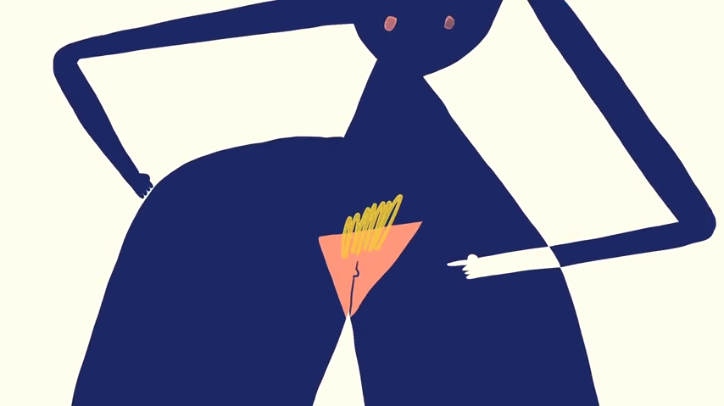
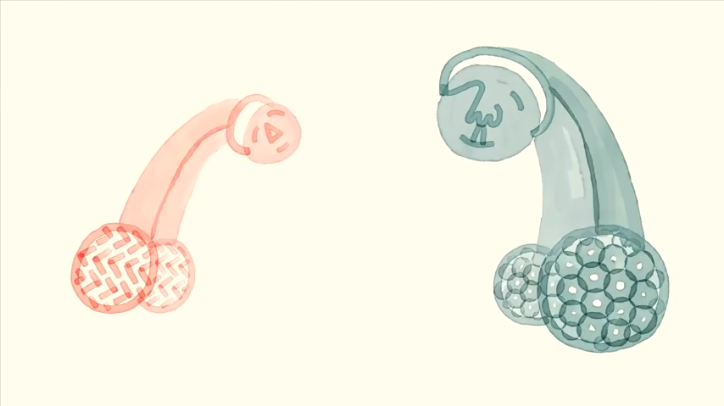
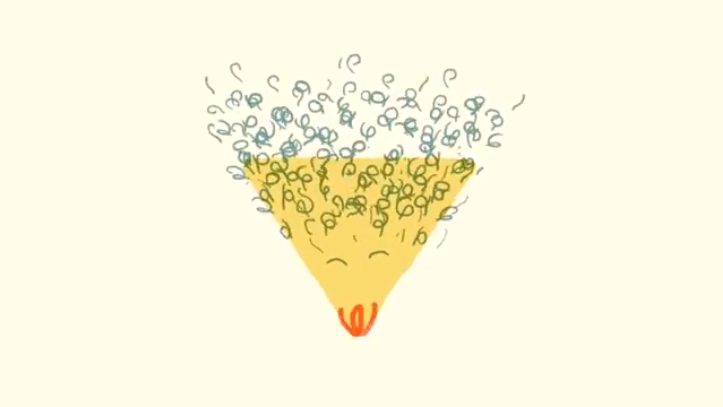
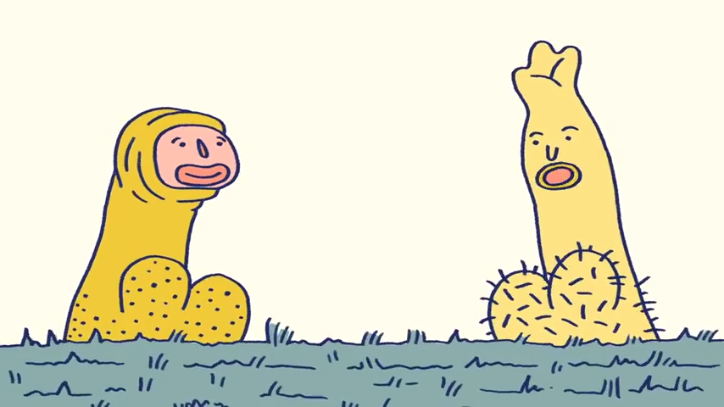
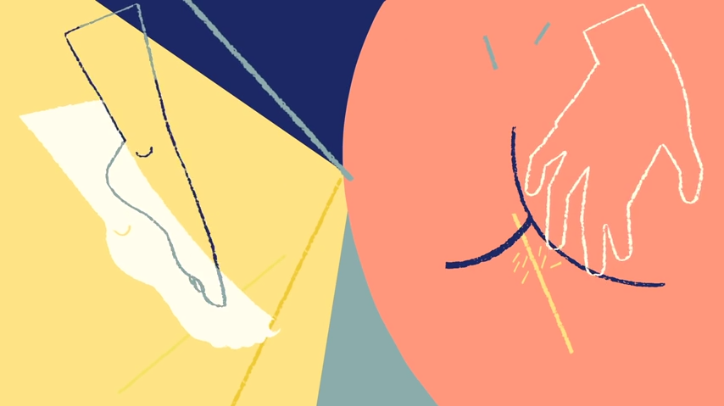
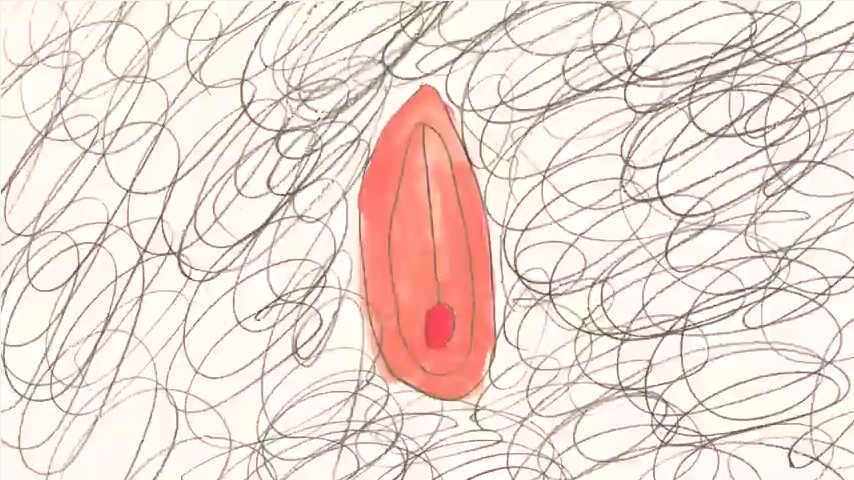
• Anna Ginsburg’s snappy animated documentary, Private Parts, sidesteps social taboo by presenting frank and funny discussions about sex, with particular focus placed on the female anatomy.   

     Commissioned by Channel 4’s Random Acts, in partnership with It’s Nice That, Anna Ginsburg felt compelled to address the lack of attention given to carnal gratification when female sexuality is depicted in our society: “Conversations I’ve had with close female and male friends over the last decade have shed light on the continuing struggle that women have to engage with and love their own bodies, and to access the sexual pleasure they are capable of… I’ve been exposed to ‘dick drawings’ since primary school but have rarely, if ever, seen a vagina visualised other than in a clinical medical context. So I thought that talking to men and women about vaginas, masturbation and pubic hair – and then animating them as talking genitals – would be a good place to start in my crusade to open up these issues of sexual inequality and get the conversation started.”

     pp03

    The ‘nuts and bolts’ of sex is a difficult matter to discuss both directly with an intimate partner but also between friends. In many respects the leap between the noticeably non-verbal language of sex and frank discussion is vast. This void is often first bridged by state sanctioned sexual education, however the increasing reach of internet pornography means that children as young as 8 are first learning about sex through media largely tailored to the male gaze.

     pp01

    While it is not Anna’s explicit intention to make a sexual education film, she is clear about her interest in promoting open discussion: “Communication is the key to improving sexual confidence and sexual relationships… This documentary does not give any answers it just presents the sexual struggles, insecurities and successes of a range of people.”

    pp06

    Ginsburg is working in the tradition of Creature Comforts, Aardman’s first Oscar winning short featuring non actors in vox-pop style interviews. Each subject was represented as a personified animal. Crucial to the success of this claymation documentary was the enormous attention paid to the characters facial expressions and gesticulation.  

     Directing 14 animators, Ginsburg places special focus on the design of each personified genitalia,: “Details like the foreskin, pubic hair and labia are used to give each penis and vagina a specific character, reflecting the specific human voice it embodies.” 

    pp02 

    Anna interviewed 22 participants for the film: “Usually it was just a case of talking to the person and giving them enough time to relax and adjust to the fact they were being recorded…I found interviewing people in small groups worked well as people would be encouraged by each others’ honesty and often get over-excited and hysterical which led to entertaining interactions.”

     pp04

    Anna was compelled to address these issues as an interview based animated documentary.  Such a methodology allowed for authentic voices to be brought into the limelight without pushing the participants into a public forum. This anonymity minimised their feelings of embarrassment and inhibition. 

    pp07

    Ginsburg added that this process also puts the audience at ease: “Drawings are abstract enough to bring the feeling of universality to an individual voice… The use of animated characters in place of photographic footage works as a protective barrier which can quash ingrained prejudice and allow empathy to flow unobstructed. It is way easier to pass judgement on a person based on a photograph than based on a drawing – even if it is a drawing of a giggling vagina.” 

    Reference:

    Source of interview itsnicethat.com/features/anna-ginsberg-private-parts-channel-4-random-acts-170516

  • Here’s the first of our posts reporting on the Ecstatic Truth symposium, which was held on a warm Saturday in May at the Royal College of Art, London. A postgraduate (PGR) research event organised by Animation Research Co-ordinator Dr Tereza Stehlikova, the day launched the RCA’s new Documentary pathway, on its long-running MA Animation course, now under the new head of Animation, Dr Birgitta Hosea

    We start with a run-down of the speakers and their papers, from the symposium programme, illustrated by our own Alex Widdowson:

    ecstatic_truth_portraits_panel_1

    “According to Werner Herzog mere facts constitute an accountant’s reality, but it is the ecstatic truth (a poetic reality) that can capture more faithfully the nuances and depths of human experiences. Given that animation has the freedom to represent, stylize, or reimagine the world, it lends itself well to this aspirational form of a documentary. The symposium explored the idea of “Ecstatic Truth” and reflecting, speculating and imagining how the animated form might elicitate the different facets of this poetic truth, through its unique language.


    ecstatic_truth_portraits_paul_ward

    Keynote: Paul Ward

    The ‘illocutionary force’ of animated documentary’

    I examine how animated documentaries do what they do by linking to Austin’s ‘illocutionary force’ in his ‘performative’ model of language. The illocutionary force of a speech act is concerned with effect and intention: it points to what something means and what you mean by saying it (in the way that you do). Animated documentary’s power, poetry and potential weaknesses can therefore be understood by thinking about their illocutionary force.

    Paul Ward is a Professor of Animation Studies at Arts University Bournemouth, where he is Course Leader for the MA Animation Production at AUB and supervises PhD students. He has published widely on animated documentary and other topics. He is a Board Member of the Society for Animation Studies and served as its President from 2010-2015.


    ecstatic_truth_portraits_roz_mortimer

    Showing the Invisible

    Roz Mortimer, PhD candidate, University of Westminster, UK

    ‘Traumatic histories and phenomenology as method’

    My research is centred on a phenomenology of the invisible, by which I mean ghosts, atmospheres and emotions. In this talk I used my recent film This is History (after all) by Roz Mortimer to explore the challenges of making visible the invisible. In this film the image is digitally manipulated to visualise affect related to traumatic memory. The question is how can phenomenology reframe our relationship to traumatic histories?

    Roz Mortimer is an artist-filmmaker and doctoral researcher at University of Westminster. Her experimental films cross the genres of documentary, fiction and animation and have been shown widely around the world since 1995. Taking documentary methods as a starting point, she incorporates fantasy into her work to create socially engaged films that question ideas around truth. Roz has an MA in Visual Sociology from Goldsmiths, and teaches universities in the UK and USA. www.wonder-dog.co.uk
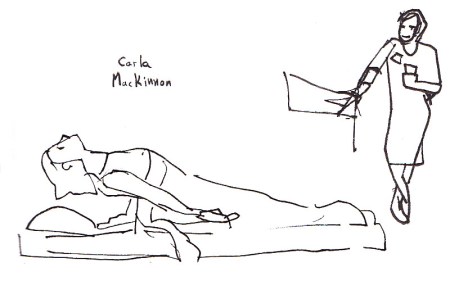
     

    ecstatic_truth_portraits_carla_mackinnon

    Carla MacKinnon, PhD candidate, Arts University Bournemouth

    An Approach to Authenticity: Using abstracted stop-motion to evoke physical and psychological experience in animated documentary

    I am exploring the use of ‘tangible territory’ (Stehlikova, 2012) within the evocative mode of animated documentary (Honess Roe, 2013). In particular, how stop-motion may be used to evoke physical and psychological states that cannot be conventionally recorded, through the use of materials that encourage haptic visuality and filmmaking techniques that trigger a physical audience response connecting the viewer to the subject.

    Carla MacKinnon is a PhD candidate at Arts University Bournemouth. She completed her Masters in Animation at the RCA in 2013 and has worked as a producer and festival programmer as well as director of award-winning live action and animated shorts. Her documentary installation Squeezed by Shadows is currently featured in the ‘States of Mind: Tracing the Edges of Consciousness’ exhibition at London’s Wellcome Collection. www.mackinnonworks.com
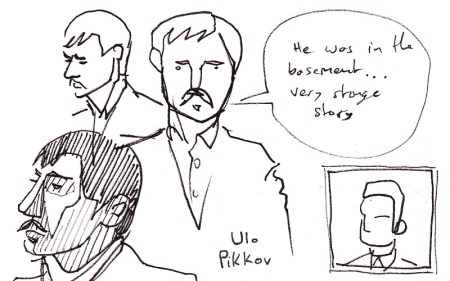


    ecstatic_truth_portraits_ulo_pikkov

    Transcending Time

    Ülo Pikkov, PhD candidate, Estonian Academy of Arts, Estonia

    Presentation of short animation film Empty Space 

    Empty Space invokes a past memory, an apartment that once existed, and a small girl dwelling and playing there. It presents a story forged in the dreams of the father hiding to avoid capture and imprisonment. Empty Space is a reconstruction of a vision on the backdrop of the anxieties of the 1950s in the Soviet Union.

    Ülo Pikkov studied animation at Turku Arts Academy in Finland and since 1996 has directed several award-winning short animation films (“Tik-Tak”, “Body memory”, “The End”, “Dialogos”). In 2005 he graduated from the Institute of Law in University of Tartu, focusing on the media and author’s rights. At themoment he is a PhD student at Estonian Academy of Arts. Ülo is the author of “Animasophy, Theoretical Writings on the Animated Film” (2011). www.silmviburlane.ee
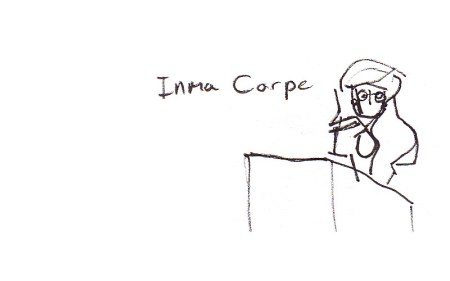
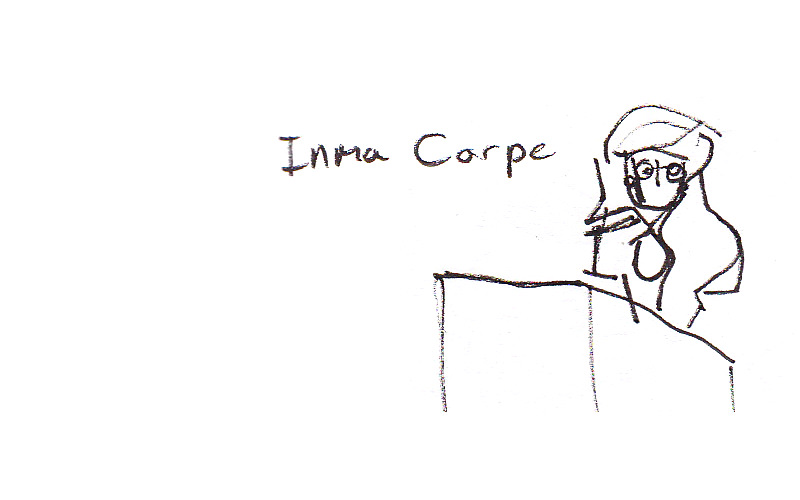
    ecstatic_truth_portraits_inma_carpeInma Carpe, Animated Learning Lab, Denmark

    ‘The Dressmaker, remnants of a life. The re-creation of the Self and memories through animation’

    Animation is a visual thinking and feeling media that helps us to express an internal reflection about our reality so called life, to make sense finding our peace of mind and heart; to re-construct our Self  (the alignment of our thinking, feeling and acting). It is an alternative language to communicate and understand other points of views, other many selves seeking for the same: the ecstatic truth, our story in motion pictures.

    Inma Carpe: Born in the Mediterranean, I live and work abroad between my home base in Denmark and Los Angeles. An experienced freelance visual development artist and animation-lecturer, I specialize in short formats and pre-production, but also split my time as a production assistnat in film festivals. Currently I’m working and researching how animation and visual literacy improve Self-development and communication (emotions-beliefs) based on art production experiences connecting cognitive/affective neuroscience with film making/storytelling. www.carpeanimation.com
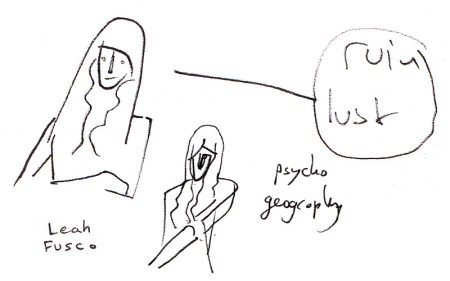
     

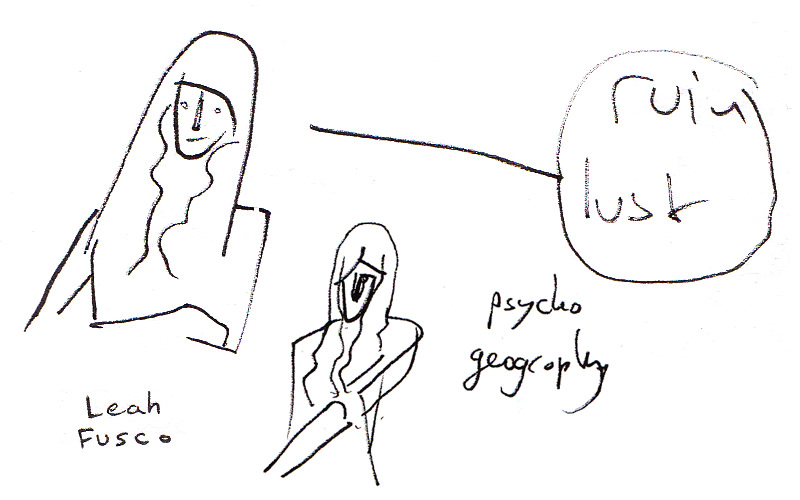
    ecstatic_truth_portraits_leah_Fusco

    Leah Fusco, PhD candidate, Kingston University, UK

    ‘Northeye: past, present and anticipated narratives of a deserted medieval village’

    This research explores the documentation of a DMV (deserted medieval village), previously an island but now a reclaimed landscape located on a saltmarsh in East Sussex, and addresses problems in recording fragile histories and stories in physically shifting landscapes. I’m interested in how drawn visual narrative through moving images can explore and capture alternative timeframes and readings of place.

    Leah Fusco: After completing at BA (Hons) in Illustration at the University of the Creative Arts, I graduated from the Royal College of Art in 2010 with an MA in Communication Art and Design. I am currently working towards a practice based PhD at Kingston University, supported by the Arts and Humanities Research Council. The research explores lost histories in landscape, using the deserted medieval village or Northeye in East Sussex as a case study. www.leahfusco.co.uk


    Art and Science

    ecstatic_truth_portraits_abigail_addison

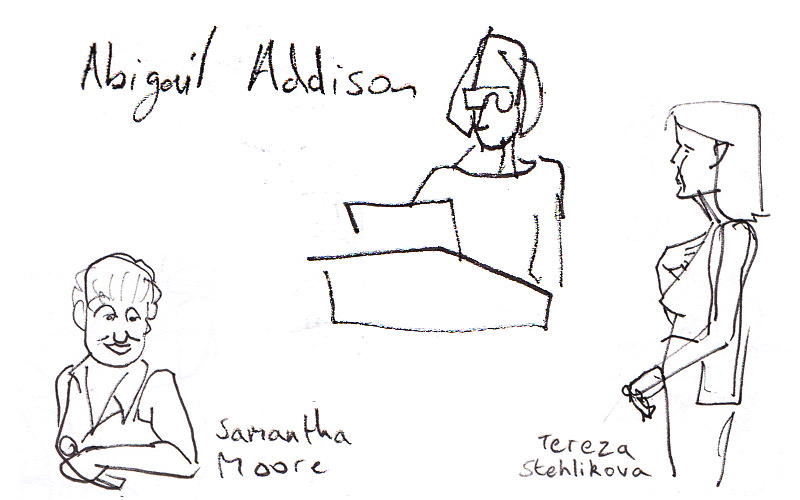
    Keynote: Abigail Addison

    Silent Signal – probing the universal truth of science  

    With Silent Signal, Animate Projects has connected six artists working with animation and six biomedical scientists to produce experimental animations that elicit new ways of thinking about the human body.

    The project’s producer, Abigail Addison, talked about how the artists engaged with their collaborating scientists’ data, tools and processes, and brought to life the science. She also explored how each artist challenged the universal truth of science in the work they have produced.

    Abigail Addison co-directs Animate Projects, an arts agency that champions creative animation practice, and produces ambitious interdisciplinary projects, such as Silent Signal, with a range of UK-wide partners. As a freelance producer she works with individual artist and cultural organisation on developing, producing and exhibition experimental moving images projects. Abigail is a Trustee of film and photography charity Four Corners, and an Advisor to Underwire Festival. @AnimateProjects


    Truth, Fiction and Poetry
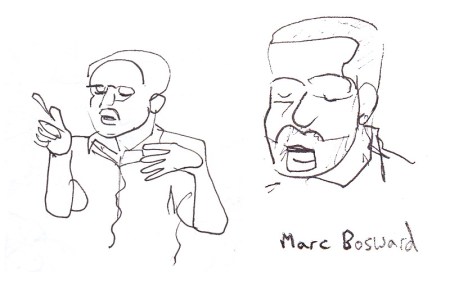
    ecstatic_truth_portraits_marc_bosward

    Marc Bosward, PhD candidate, Arts University Bournemouth

    ‘Layers of Meaning, Layers of Truth: Fragmented Histories & Composited Video Collage’

    The paper presented a body of practice-based research that interrogates the interface of live-action and animation, specifically, how found footage as an indexical element of lived experience functions within the aesthetic of a constructed ‘other’ world. In this framework, the construction of non-real spaces that synthesise animation and found footage are explored for their potential in describing alternate histories with reference to ontology and ideology.

    Marc Bosward: I am a lecturer in Animation and Illustration at the University of Derby. My research interests include the convergence of digital and analogue practices in moving image, the interface of live action and animation, experimental animation, animation and history and memory and experimental non-fiction film. I am a first year PhD candidate under the supervision of Professor Paul Ward at Arts University Bournemouth. www.marcbosward.com


    ecstatic_truth_portraits_alexandra_donofria

    Alexandra D’Onofrio, PhD candidate, University of Manchester, UK

    ‘Reaching Horizons: exploring existential possibilities of migration and movement within the past – present – future through participatory animation’

    Alexandra D’Onofrio, documentary film director and PhD candidate in AMP (Anthropology Media and Performance) at the University of Manchester. She graduated in anthropology at the School of Oriental and African Studies in London, and then completed her MA in Visual Anthropology at the University of Manchester in 2008. At present she is in her final year of her doctoral research where she has investigated the stories and part of the imaginative worlds of three Egyptian men, though different creative methods, combining applied theatre, storytelling, photography, animation and documentary film making. Vimeo
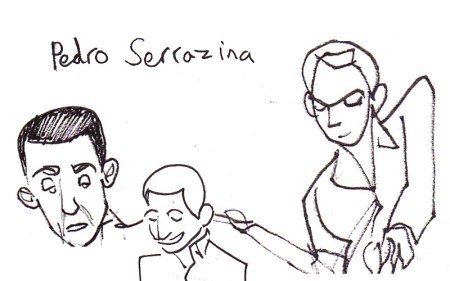
     

    ecstatic_truth_portraits_pedro_zerrazina

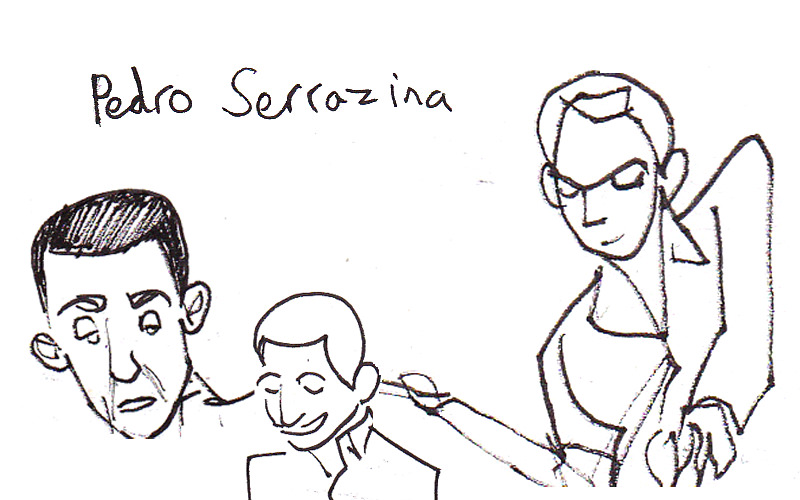
    Pedro Serrazina, PhD candidate, University Lusófona de Lisboa, Portugal

    ‘Notes towards the use of a documentary approach in the teaching of animation’

    Since its early days, animation film has always reflected its cultural context at the time of creation. Nevertheless, it is still widely perceived as kid’s entertainment. Reflecting on practical examples and teaching methodologies, this presentation argued for a practice of animation which, by adhering to documentary strategies, engages with real issues, leaving behind the traditional Disney/anime/fantasy/game-inspired references that frame most of the animation students’ intentions at the beginning of their path. Rather than a matter of technique, and regardless of the much debated issue of “realism”, this text suggests that a teaching framed by a documentary approach, bringing questions of identity and social perspective to the core of the practice, reinforces animation’s thoughtful and participative role in the contemporary moving image debate.

    Pedro Serrazina is an animation director and senior lecturer at Univ. Lusófona de Lisboa currently undertaking a practice-based PhD on The Creation and Use of Animated space in Animation, with a grant from FCT, Portugal. Pedro combines work as a director (his last film was the award winning Eyes of the Lighthouse, 2010) with an academic career in Portugal and the UK. He has published academic articles, a book of short stories & illustrations, and is currently preparing his next film, with funding from the Institute of Portuguese Filmmaking. Vimeo


    ecstatic_truth_portraits_brigitta_ivanyi_bitter

    Keynote: Brigitta Iványi-Bitter

    Animated documentaries from Hungary and Central Europe:

    From the 70s’ cinema verité to contemporary art practices

    Animated documentary films from Hungary and the neighbouring countries are reflecting the actual historical context of the era they were made.  The genre itself became prevalent in Central Europe during the 70s due to cinema verité in Western Europe and documentaries with a socially critical edge and had a comeback in the 2010s with predominantly female directors, who gave it a poetic twist. In both eras artists of the region experienced dictatorship or later a socially engaged, critical position, therefore animated documentaries usually serve as complex traces of the past as well as pieces of art. Artists-directors to be introduced: Béla Vajda, Kati Macskássy, György Kovásznai, Éva Magyarósi, Eszter Szabó, Zbigniew Czapla, Ewa Borisewicz, Malgorzata Bosek.

    Brigitta Iványi-Bitter is a freelance researcher of Central European animation history, animation film producer, curator of contemporary art (including animation) exhibitions and author. Berigitta completed her PhD at the Doctoral School of Film, Media and Cultural Studies, Eotvos Lorand University, Budapest, Hungary in 2012. Her Research thesis was on Cold War era experimental animation films in Central-Eastern Europe, with special focus on the legacy of the Pannonia Film Studio (Hungary)  and György Kovásznai’s (animation film maker) Oeuvre. Brigitta is a Lecturer in the History of Animation and in Contemporary  Media Art and animation at Moholy-Nagy University of Art and Design, Budapest. Vimeo
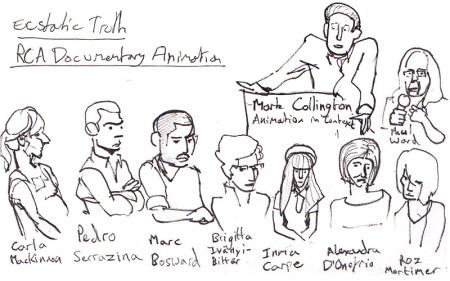


    ecstatic_truth_portraits_panel_2

    Ecstatic Truth and Human Condition in Animated Documentary

    Final discussion introduced and chaired by Mark Collington.

    Mark Collington is the author of Animation in Context (2016) and course leader up the MA & BA (Hons) Animation Courses at the CASS, London Metropolitan University. He completed his own animation studies at the Royal College of Art.  His MA films, and subsequent Arts Council England funded animation commission work, have been screened on television and at a number of international animation festivals. His personal work primarily explores relationships between architecture and animation.


    Other Symposium content:

    Workshop with Judit Ferenz, PhD candidate, Bartlett School of Architecture

    ‘Animating the layers of history’

    The workshop explored the role of the narrator in creating history. It introduced attendants to a specific Hungarian conservation method (falkutatás) that uncovers the different historical layers within the walls of a building, as a means to narrate the history of that building. We translated falkutatás into animation using the multiplane animation desk in experimental ways and collectively produced a series of short animations which are be uploaded to a website created specifically for the workshop.

    Judit Ferencz is an MPhil/PhD student at The Bartlett School of Architecture, UCL. In her architectural research by design she is developing a new methodology to talk about history in architectural heritage. She studied illustration and animation at Kingston University, and art history at ELTE University, Budapest. She has a freelance illustration practice and is teaching illustration at The Cass, London Metropolitan University and City Lit. www.juditferencz.co.uk

    Zoetrope by Hugo Glover, PhD candidate, Innovation Design Engineering, RCA

    My research focuses on placing the animator as the central axis of animation making. By basing my approach in the arena of ‘design thinking’ I am attempting to construct an understanding of how animators think, and how they access and utilize their embodied knowledge of the world to inform their creative decisions. Using the framework of second order cybernetics my work explores control of change between animated objects viewed through a zoetrope.

    Hugo Glover is an MPhil/PhD Candidate in Innovation Design Engineering (IDE) at the Royal College of Art. His research focuses on the creative exploration of stereoscopic 3D space through the use of digital stereoscopes, which house experimental CGI animation. By creating a physical space, as well as a digital stereoscopic space, Hugo’s work explores the hinterland of these two realities. Vimeo

    The Ecstatic Truth symposium was coordinated by Dr Tereza Stehlikova

    Tereza Stehlíková is a London-based artist working primarily in the medium of moving image.  She is currently a research coordinator on the Animation programme at the Royal College of Art.  Stehlíková is a founder of Sensory Sites, an international collective based in London that generates collaborative exhibitions, installations and research projects that explore multi-sensory perception and bodily experience. Current projects include developing a collaboration with professor Charles Spence of Cross Modal Research Laboratory, Oxford, as well as a collaboration with the Centre for the Study of the Senses (UCL), investigating how interactions between the senses can be utilised in the expressive vocabulary of cinema.

    ”

    More reporting to come soon – watch this space!

  • “Silent Signal is an ambitious project that brings together six artists working with animation together with six leading biomedical scientists to create experimental animated artworks exploring new ways of thinking about the human body”

    Image copyright Samantha Moore ‘Loop’ 2015

    Image copyright Ellie Land ‘Sleepless’ 2015

    The six animations are currently on a year long tour, with the latest exhibition at Wellcome Genome Campus, Cambridge until September 2016.

    You can watch all of the films online on the silent signal website, alongside artist interviews and a useful science guide. Check out the every expanding events section to find out about screenings, public talks and workshops that support the tour.

    http://www.silentsignal.org/


  • [edit 16th May – this video’s been taken down due to a copyright issue but we’ll let you know if it comes back online.]

    “Waltz With Bashir is a documentary film that exists in a rare category (along with films like Close-Up and The House Is Black) in that it bends the generic conventions of its format, ultimately creating an experience that is truly unique. Its idiosyncratic blend of animation, music, and recorded interviews makes it a documentary that is both a sensory spectacle and an emotional journey. In our essay “Echoes of a Forgotten Past” we explore how director Ari Folman uses the seemingly contradictory elements of the animated documentary format to comment on the ethics of filmic representation and the cycle of historical trauma.”

    More info here about Digging Deeper “a two man team that likes looking at a film and trying to see if something else is lying beneath its surface.”
    https://www.patreon.com/diggingdeeper?ty=h

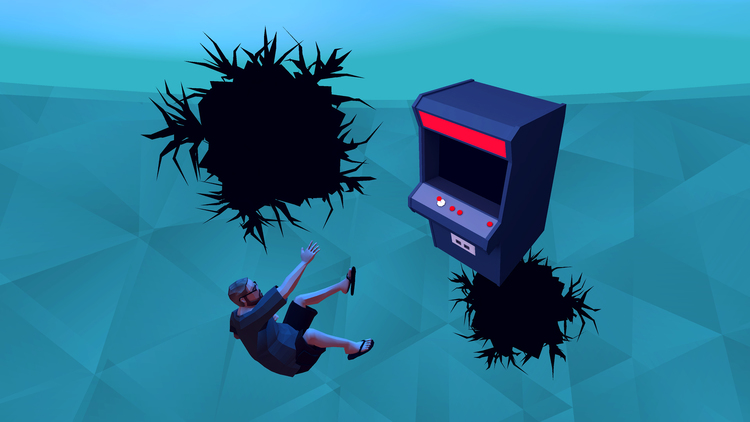
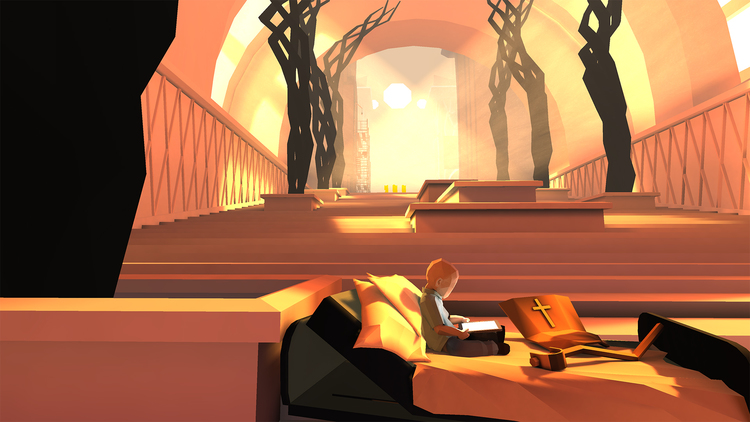
  • Ryan Green’s infant son, Joel, is dying from cancer. A developer of apps and indie-games by trade, Ryan and his wife Amy have chosen to tackle their active sorrow head-on by creating a game about their son’s life and suffering. Initially funded by a successful KickStarter campaign, the game launched on 12 January 2016. The painful honesty of this project has made it stand out amongst other gaming experiences. I would go so far as to argue it has more in common with the animated documentaries covered on this blog than with the conventional gaming market.

    green_drip

    I first heard about That Dragon, Cancer on the Reply All podcast. Further investigation revealed an enormous amount of online media coverage. Wired Magazine has published an extract from the first scene that Ryan conceived, viewable at this link. It is a close reconstruction of a terrible night Ryan spent with Joel. He was forced to accept his limited ability to help his son. From this came the idea of a gaming experience where the player is not necessarily granted influence over the outcomes in the story. The significant absence of control leaves the player with no option other than to accept their fate, and that of Joel.

    drowning

    Christianity strongly influences the Green family’s perspectives regarding Joel’s plight. The game is very much rooted in the tension first articulated in the Book of Job. In essence this ancient text asks why do the innocent suffer? The world being Godless, might seem to be a conceivable answer to a bourgeois atheist like myself, but it is clear that the Green family’s faith and prayers are vital tools that are helping them through this ongoing tragedy.

    joel_ipad

    From an outsider’s perspective, I would argue that there is something more tangible than prayer helping this family; the power of catharsis. This game is the method chosen by Amy and Ryan to address their pain. Every ounce of personal tragedy evident in the game play, is suffering that they are not going through alone; suffering that they have had to pick apart and understand in order to make it communicable to others. I cannot begin to understand what it would be like to watch your child battle with cancer for three years, but this game is the best that Ryan and Amy Green could do to show me.

    That Dragon, Cancer is available for purchase and download here.

  • London International Animation Festival’s Animated Documentary screening returned to the Barbican in London in December 2015, showcasing a diverse selection of animated docs from around the world.

    Many films of the selected films did not include any live action elements, and featured voiceovers which were obviously scripted and acted – raising questions about what makes a film a documentary at all. All these films were both presented and received as documentaries, but in many their claim to real world truth rested on trust – there was no ‘evidence’ presented in the film that what we were witnessing was real.

    This is an interesting quality of the animated documentary – one which sets it apart from most live action work and which can, when successful, elevate it. This programme of films offered a rich variety of perspectives; not only on the world but on the documentary form itself.

    The screening kicked off with Everyone is Waiting for Something to Happen, a mixed-media piece by UK-based animator Emma Calder. Calder’s film used the social media posts of one of her acquaintances to create a portrait of him over the course of a critical time in his life – his cancer diagnosis and treatment. The film offers a light-hearted look at the images we project of ourselves on social media, and the audiences we do not always know we have, who observe these.

    Everyone is waiting for something to happen (Official Trailer) from Emma Calder/Pearly Oyster on Vimeo.

    The Beast Inside by US filmmaker Drew Christie is a portrait of a homeless young person, determined to live a compassionate, creative and optimistic life in spite of his circumstances. The film is upbeat, with a lively, musical pace, but has moments of deep pathos that make an impact, such as when the protagonist is refused a job at a fast food joint because – he is told – he looks as if he would steal money or scare the customers. The young man’s hurt at the apparent indifference that the general public has towards the fate of those on the street, also provides a moving and memorable perspective.

    The Beast Inside from Drew Christie on Vimeo.

    Drew Christie’s second film in the programme is Psychedelic Blues, an animated interview with ‘freak folk band’ Holy Modal Rounders which explores their formation and early days. This is a non-stop, acid- and amphetamine-fuelled celebratory rollercoaster of music and absurdity. The characters move fluidly between their old and young selves, caught up in moments that they’d never forget, if only they could remember. The gonzo glory of the memories is tempered by a twinge of sadness, evoked by the fragility in the voice of the ageing, drug-saturated narrator, allowing an openness in terms of how the film can be received.

    Psychedelic Blues from Drew Christie on Vimeo.

    Baba is a colourful and entertaining short by New Zealand filmmaker Joel Kefali, in which his grandfather describes his experience of arriving in the country as a Turkish immigrant many years before. The film successfully captures the experience and character of an exuberant man, baffled by certain cultural oddities but ultimately filled with humour and joy of life; able to take the world on and adapt to his strange new environment.

    BABA from joel kefali on Vimeo.

    A Portrait by Greek filmmaker Aristotelis Maragkos is another film about a grandfather, but this one has a very different tone. In this piece, the film-maker’s grandfather is seen from the outside through the memories of his grandson. It is a sensitive portrayal of a complex relationship. The film touches on ugly and violent elements the man’s mysterious past, of which the film-maker only knows fragments – which lead him to fear what potential for darkness may lie inside his own genetic material. This sense of violence is undercut however by the clear love that the narrator has for his grandfather, and the tension between these two perspectives is elegantly brought out in the very short film, making it a moving and memorable work which brought depth to the programme.

    Food, by US/China based Siqi Song, is a bizairre and compelling take on the talking heads interview format – in which the talking heads are in fact foodstuffs, discussing their own food choices. A plucked chicken describes its decision to go vegetarian, while a loud-mouthed burger extols the virtues of meat-eating. “I think maybe healthy is overrated” he says, his bun flapping open to reveal a tongue-like slab of meat and cheese as he speaks. The film is comically grotesque and, while the interviews themselves do not tell us anything very new, the delivery certainly makes for compelling viewing which adds a new dimension to the issues discussed.

    FOOD from SIQI SONG on Vimeo.

    The theme of food was returned to later in the programme with the visceral Canadian production Table D’hote, which combines an attractive illustrative style with repulsive and disturbing imagery, reflecting on the industrial savagery of meat production.

    Me and My Moulton is an NFB-supported film by Torill Kove. It tells the story of a young girl growing up in Norway and coming to terms with her unconventional parents and her place in the world. The film takes an unhurried approach to storytelling and paints an engaging picture of this girl’s life and the everyday issues she deals with. It balances humour with nostalgia, conjuring a picture of a childhood world that is, while not untroubled, ultimately safe and filled with love.

    Me and My Moulton (Trailer) from National Film Board of Canada on Vimeo.

    Ode to Joy by UK-based filmmaker Martin Pickles is a tribute to hugely influential but near-forgotten animator Joy Batchelor, affirming her rightful place in the canon of British Animation.

    Ode To Joy (2014) from Martin Pickles on Vimeo.

    Elsewhere in the programme another film by Pickles, What is Animation?, is an insightful meditation on the nature of animation wrapped up in a portrait of British Animation legend Bob Godfrey. You can read more about this piece here.

    In Last Words by Yuwen Xue, the filmmaker interviews hospice residents at the end of their lives, creating imaginative visual representations to capture these characters, and broadening the scope of the film beyond the individual sounds captured to wider thoughts and feelings. The visuals play experimentally with live action and animation, conjuring a fantastical space between life and somewhere else. Fascinating insights into the artist’s process can be found on Yuwen Xue’s production blog.

    Words are again the focus in Arlene, by UK filmmaker Farouq Suleiman. This film is a portrait of a woman who suffers from Aphasia, a brain condition affecting language. Her difficulty with words is expressed with strong visuals including the memorable image of letters of the alphabet falling from a tree like autumn leaves.

    CIvdvbXWIAAp9p-
    Still from Arlene

    Hora, by Israeli filmmaker Yoav Brill, is a longer piece exploring same-sex love in Tel Aviv through reflections on public hand-holding. Interviewees discuss the practice of hand-holding, what it means to them and how the meaning changes when it is observed. There are some truthful and tender insights here, delivered with slick and engaging visuals; making for a film that carries you through smiling.

    Still Born, by Swedish filmmaker Asa Sandzen, was the most hard-hitting film in the programme, in which a pregnant woman describes the experience of discovering that her 18-week old foetus has serious heart defect, and making the devastating decision to end the pregnancy. The film does not shelter from the painful process of this, taking the audience through the whole physical and emotional journey of late abortion and delivery. The film is made to feel very real by the small but affecting details that are recalled about the medicalised termination process and the disturbed thought process that takes place in parallel. Ultimately this is a raw and truthful film about the pain of loss, that is as disarming as it is memorable.

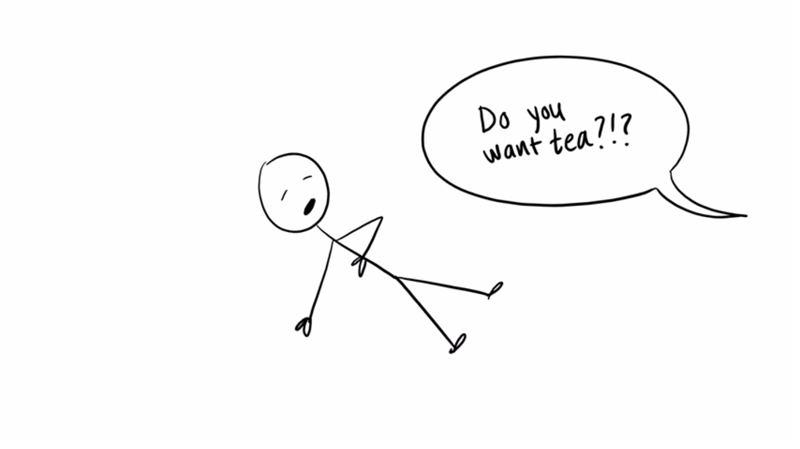
  • Tea and Consent is a public information animation which is used with permission by Thames Valley Police to address and clarify issues of sexual consent as part of the Consent is everything campaign. This simply rendered Flash animation draws a parallel between sexual consent and the intuitive etiquette associated with offering someone a cup of tea.

    In essence you can offer someone tea but it’s not acceptable to pressure or force him or her to drink it. The elegant metaphor behind the short film originates from a blog post written by the feminist blogger Emmeline May, a.k.a. Rock-Star-Dinosaur-Pirate-Princess.

    tea_and_consent_01b

    When exploring this work in the context of animated documentary it is important to recognise that this film does not comfortably fit with Annabelle Honess Roe’s 2013 definition of the genre, which follows a few rules:

    Firstly, is it animated? Yes.

    Secondly, does the animation reflect an imagined world of an auteur or ‘the world’? This is not as clear. The film primarily addresses a hypothetical scenario, which raises an ethical sexual dilemma. This dilemma is explored explicitly through a metaphor. It is also a distillation of the controversial social and political ideologies of the feminist writer, Emmeline May.

    However, I don’t believe these points suggest the film is about an imagined world. The issues addressed clearly reflect a very real problem, while the ideology that is represented considers a majority perspective of our Western society and is supported by the legal system. It is also fair to suggest that theoretical or allegorical devices are a key part of the animated documentary language and help shed light on reality rather than an imagined world.

    Finally, was it the intention of the filmmakers to create a documentary? I believe not. I would argue that it was the intention of Blue Seat Studios and Emmeline May in making it, and of Thames Valley Police in their use of the film, to change behaviour rather than observe and capture it.

    Tea and Consent sits more comfortably amongst the state sponsored animated propaganda of the mid 20th century than contemporary animated documentary discourse: ‘Animation has historically been used as a tool for illustration and clarification in factual films… [It’s advantage over live action] led to an ever greater uptake of the medium by the US government in the Second World War.’ (Honess Roe, 2013)

    Nonetheless, animated educational and propaganda films were an essential evolutional stage in the development of contemporary animated documentary and clearly still have a useful role to play.

    tea_and_consent_02b

    While the issue of consent is often received as a grey area topic, Tea and Consent proposes that it is a simple one. The analogy is powerfully robust. This very strong foundation facilitated the exploration of ambiguous and horrifying sexual conduct with incredible clarity and humour. It has not however been disseminated across the Internet with universal praise.

    Comments on the film’s Youtube page have now been suspended, but I can testify that I was startled by the sexual aggression and anti-‘political correctness’ sentiments expressed in some of the comments posted previously. Sadly Youtube has a reputation for providing a platform for the vitriol of anonymous misogynists.

    The simplistic Flash animation lends itself to easily rendered parodies. The two I’ve seen awkwardly contort the tea/consent analogy either for ‘comedic value’ or as a counter argument. The first version pushes the concept to an absurd extreme, suggesting that it is never safe to drink tea without lawyers present. The second explores an ill-conceived comedic inversion in which a “slut” wants tea in all scenarios. Neither of these spoofs deserves viewer hits so forgive me for not sharing their links.

    tea_and_consent_03b

    My bias is clearly highlighted by the fact that I feel naturally suspicious of the people who are offended by this film. I wonder if those who are most threatened are also individuals who would benefit most from its message. I suspect this argument is a little reductive and extreme.

    The Internet is a breeding ground for such conflict after all and I resign myself to this. I neither have the energy or the skill to engage and attempt to change the minds of those I mistrust, unlike the makers of Tea and Consent.

    Notes:

    Honess Roe, A. (2013) Animated Documentary, London: Palgrave Macmillan. p.5&9

    Animation courtesy of Emmeline May at rockstardinosaurpirateprincess.com and Blue Seat Studios. Copyright © 2015 RockStarDinosaurPiratePrincess and Blue Seat Studios. Images are Copyright ©2015 Blue Seat Studios.

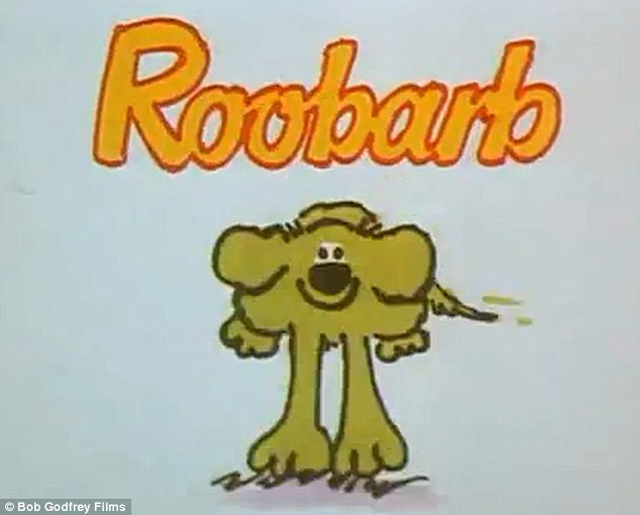
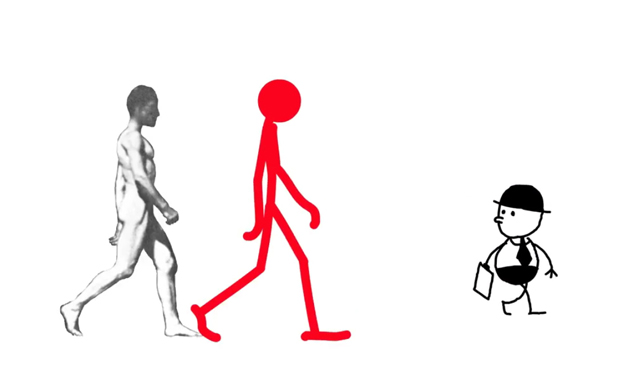
  • Martin Pickles is the director of an animated interview with Bob Godfrey titled What is Animation? This was one of two films by Pickles that were screened as part of London International Animation Festival’s animated documentary programme. Martin is well known through his role as the organiser of the London Animation Club, a monthly screening event in Fitzrovia.

    roobarb_01

    In What is Animation? Pickles animates a snippet of wisdom from Bob Godfrey (1921 – 2013), the British animation hero responsible for creating Roobarb and Henry’s Cat.

    When thinking of this film in the context of animated documentary, I was struck by how relevant Godfrey’s words are to one of the larger tensions within the genre: how does a filmmaker faithfully document their subject matter without simply replicating it? Godfrey encourages animators to be whimsical and to forget the limitations of physics or representation.

    The key phrase he uses, one which I have heard many times before, is “…if this thing can be done with a live action camera then for God’s sake do it with a live action camera.”

    wia_01

    While Godfrey wants animators to confront the “absolute freedom” of their medium, animated documentary makers maintain an adjacent balancing act. Our challenge, perhaps, is to find a subject that requires a Godfrey-esque whimsy in order for the story to be documented usefully.

    Without wanting to sound pretentious, it’s all very ‘meta’. Not only is this an animation about how animators should animate, this short documentary is also structured around an almost visible feedback loop.

    Firstly there is Martin Pickles the director, interviewing his hero Bob Godfrey, who effectively imparts wisdom and instruction to the audience. Then, much deeper in the mechanisms of this film, we can feel Martin tangibly being inspired by Bob’s words and legacy – Martin even credits meeting Godfrey as the stimulus that pushed him to study animation at the Royal College of Art. The next revolution of the feedback loop begins with me, the viewer, inspired enough by Bob’s words and Martin’s film that I chose to write about it. It’s fair to predict that this whole process might inform my own or someone else’s next animation; and so the wheel spins.

    Ignoring my theoretical posturing, the true joy of this film can be found in its back-story. Martin Pickles and Bob Godfrey met in Croatia at the Animafest Zagreb festival in 2004. A fan since childhood, Martin sought every opportunity to foster a friendship with Bob. Officially, he found himself in the role of odd-job-man – when they met there was always a light bulb or whatever that needed replacing. Over time, his visits to Godfrey’s ACME studio in Deptford became much more social in nature.

    Martin spoke about Bob’s aptitude for story telling and teaching with great affection. One day, as Martin sat opposite his hero, sipping tea, he felt that it didn’t seem right that he was the only one experiencing this. He was struck by the realisation that no one had made the effort to record these pearly nuggets of wisdom. With a real sense of urgency he got his hands an old tape recorder, and with Bob very much enjoying the spotlight, they recorded over two hours of rambling fun from one of the British animation scene’s more charismatic icons.

    The two animators started to hatch grand schemes for what to do with the material. Collaboration seemed on the cards until Bob’s health began to suffer. By this point Godfrey was in his late eighties, and with great sadness Martin witnessed his gradual decline. Out of respect the project was put on hold indefinitely. A while after Bob’s passing in 2013, his family and the Bradford Animation Festival released an open call for archival content relating to Bob’s life and work. Following that the rest of the pieces fell into place.

    You can read a full transcript of the interview here.

  • OPen City Docs LSFF Drawing from Memory
    Darn it, news of this event in June passed us by – but what a line up of fascinating nuggets it is, programmed by London Short Film Festival and Animate Projects

    And all films are available to watch online, which makes this a screen-at-home programme you can enjoy yourself!

    Films can be found in the Animate Collection here:
    animateprojects.org/films
    apart from Ellie Land‘s Centrefold which you can watch here:
    vimeo.com/46035152

    http://opencitylondon.com/workshops/london-short-film-festival-drawing-memory-animated-observations

    Perfect for a rainy Sunday…

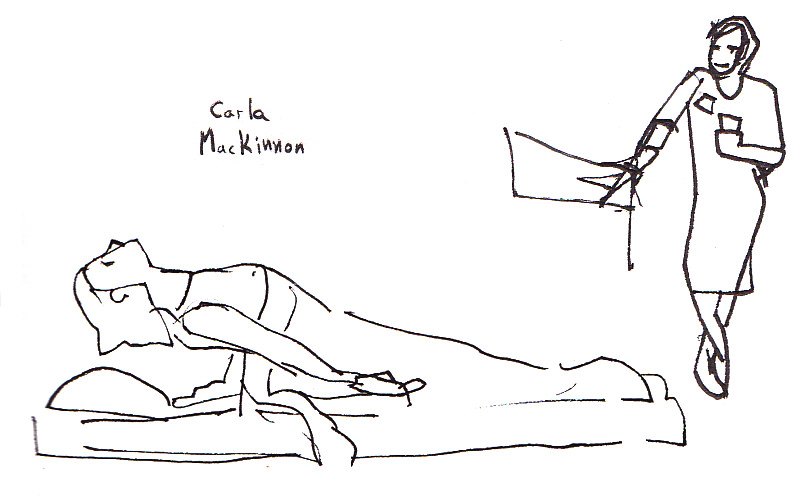
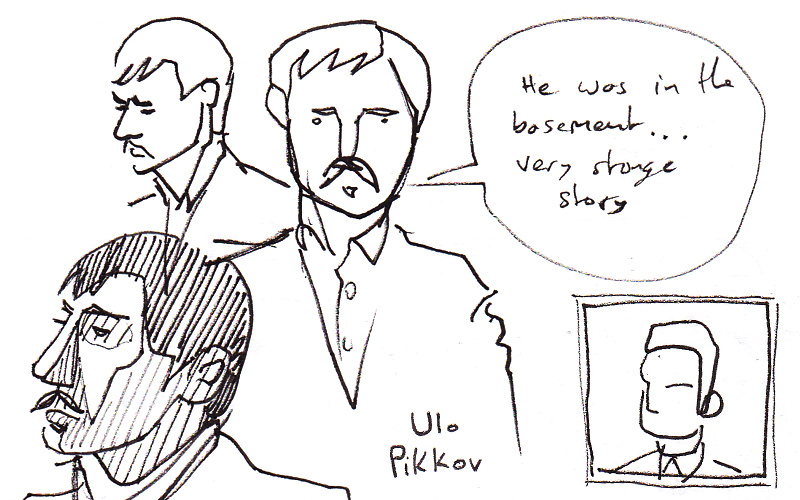
  • Wow. What a brilliant few days! Here are a few of the drawings I made during some of the excellent presentations and keynotes. Many apologies to those represented – accuracy has never been one of my strong points!!

    It was my first SAS conference, and also the first time I’ve delivered a paper. I met some lovely people and got some really useful feedback. Thank you all. Next year is Singapore….

    image image

    image image image image image image