
Released over a year ago this animated docmentary looks at the current UK trend for labia surgery, a procedure which trims and tidies a woman’s labia.
Directed and designed by animateddocumentary.com’s co founder Ellie Land.

Released over a year ago this animated docmentary looks at the current UK trend for labia surgery, a procedure which trims and tidies a woman’s labia.
Directed and designed by animateddocumentary.com’s co founder Ellie Land.
Corrie Francis Parks, a Montana based animator and photographer, took part in the New Zealand based Fulbright academic exchange award. Her fellowship culminated in the creation of the 14-minute animated documentary ‘Conversing with Aotearoa’. (Aotearoa is the most widely know and accepted Māori name for New Zealand.)

Francis Parks writes about the film: ‘In an age of technological integration and urban life, people turn to the natural world for a wilderness experience. What draws us to the remote corners of land and sea when we realize something in our lives is missing? Conversing with Aotearoa/New Zealand uses unique visual imagery to take the viewer into the physical and mental wilderness encompassed in the diverse landscapes of New Zealand. In this animated documentary, New Zealanders attempt to fathom their deep, personal connection with their land. Among the interviewees are hunters, fishermen, farmers, trampers, mountaineers, adventurer-racers, conservationists, ecologists, artists, urban and rural dwellers, Pakeha, Māori and tourists, young, old and in between. The thread that ties them all together is a passion and love for the wild places in New Zealand.’
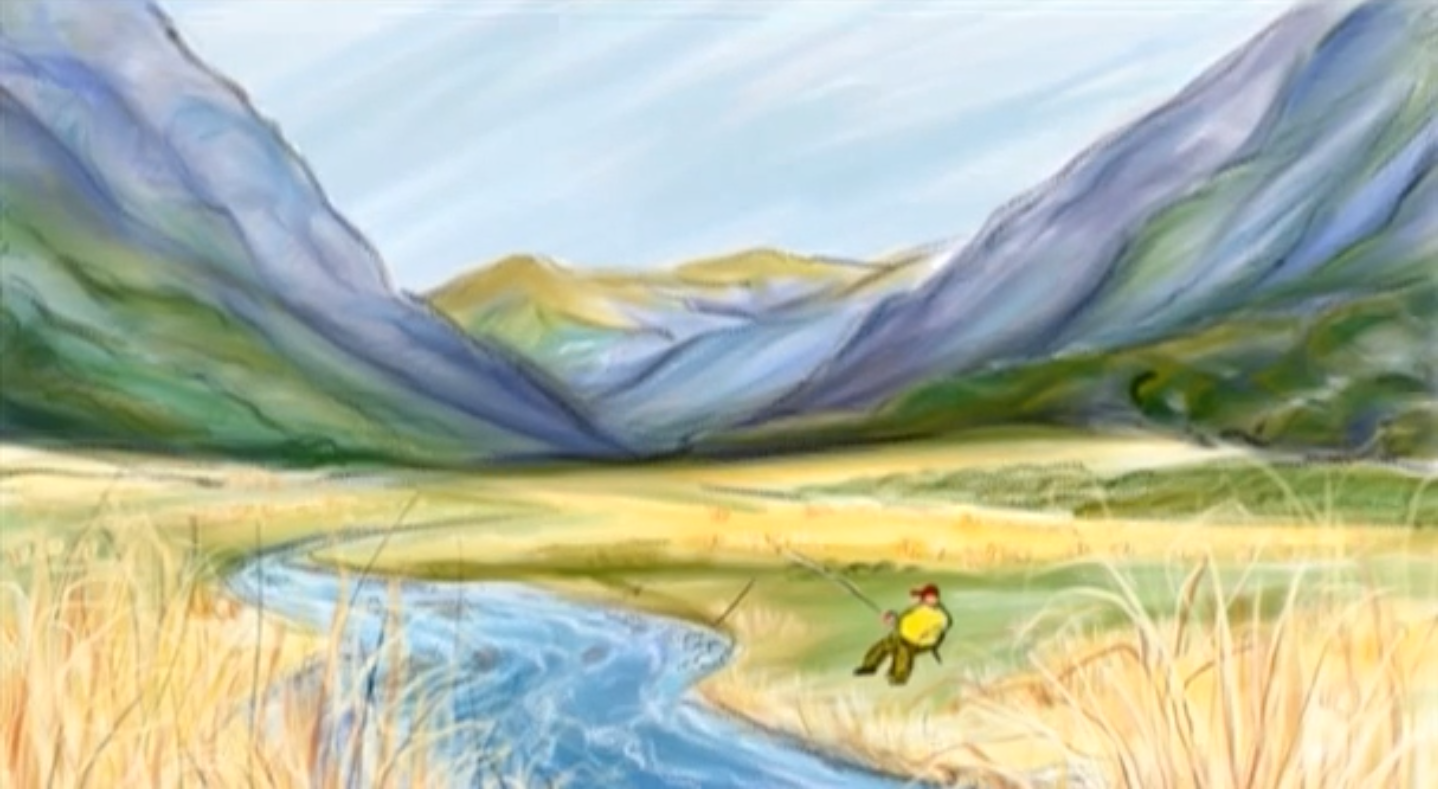
‘Conversing with Aotearoa’ is mostly compiled from photographic animation techniques interjected with partially fluid hand drawn scenes. These are characterised by a pastel colour palette and a feathered quality of line.

The film is speckled with bracing moments and cinematic experimentation. The time-lapse footage of starfish in a rock pool demonstrated the filmmaker’s fascination with the varied and wondrous environment. The title scene where the mountain range appears to breath is similarly striking.

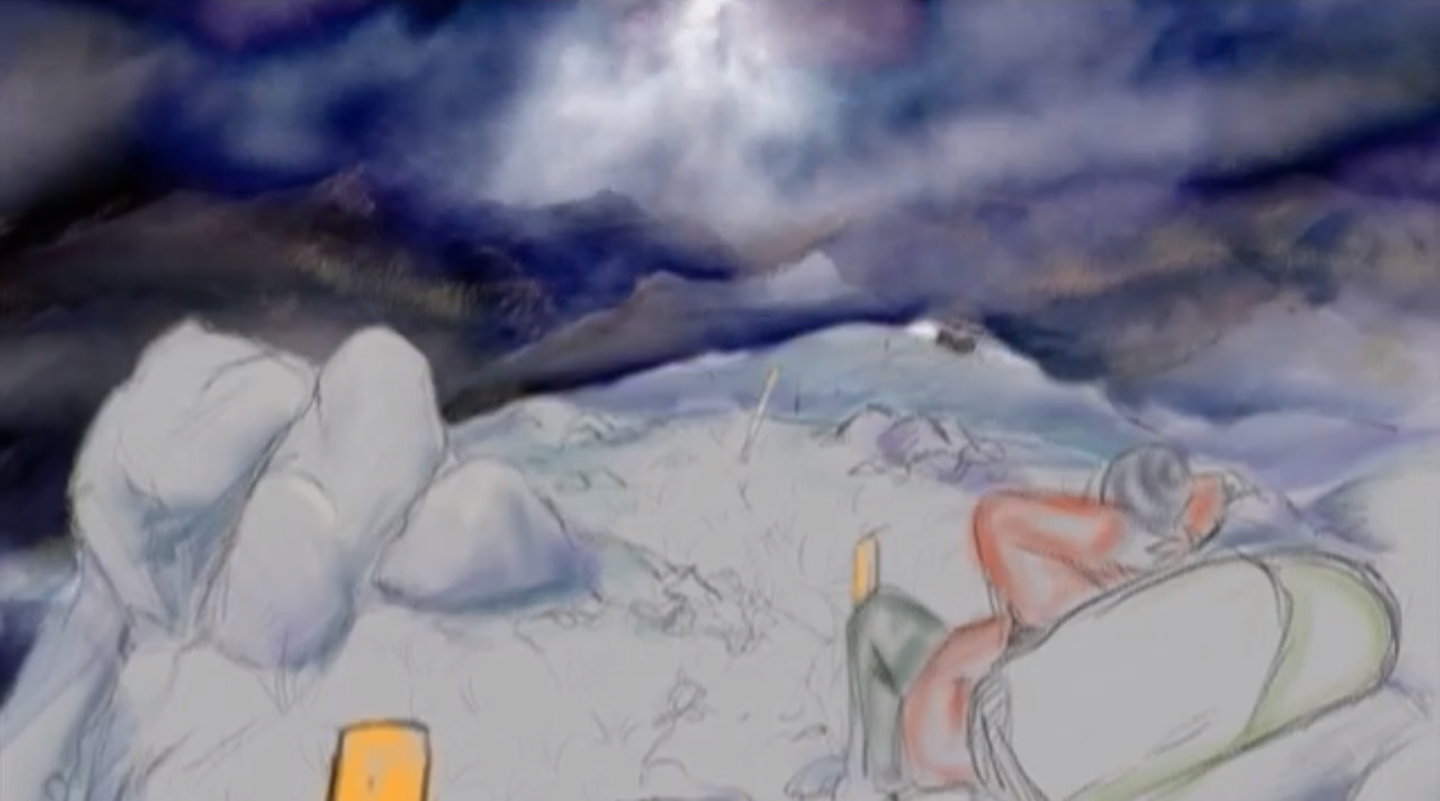
There are however some less successful moments. A Māori spirit/mask spins around a struggling mountaineer, presumably to symbolise his relative powerlessness when confronted with the overwhelming power of nature. The crude rotational movement of the Māori design, when combined with a quaint woodwind instrumental score, felt visually disappointing and distracted from the absorbing account of mountainous peril.
Although only a trailer is available on Vimeo, the full 14-minute version is accessible through SnagFilms, an online documentary streaming service supported by advertising. It is free to sign-up but expect to receive a weekly email unless you unsubscribe.
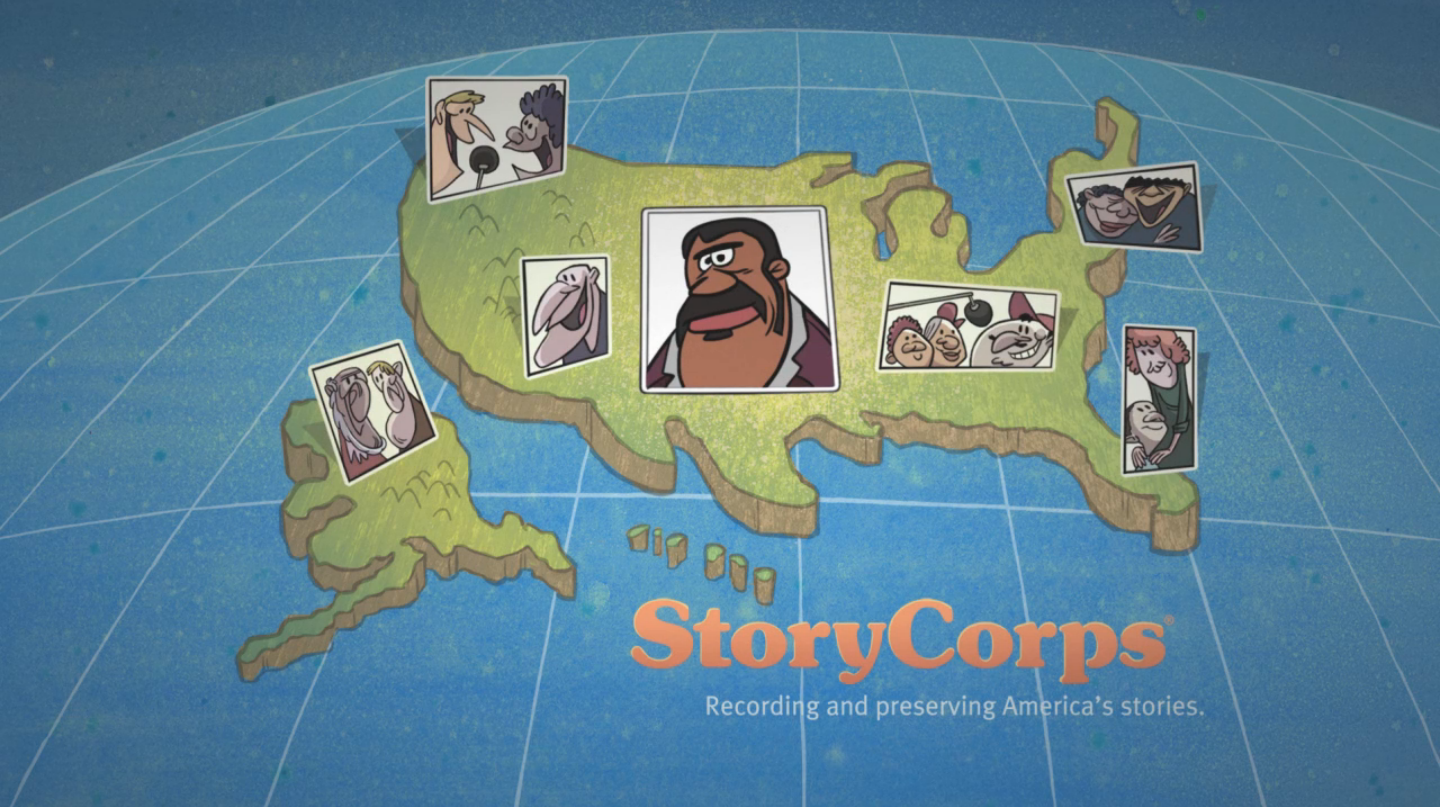
StoryCorps is a US independent non-profit oral history project, charged with the task of recording, sharing and preserving personal stories of American lives. Many of the thousands of stories are broadcast weekly on National Public Radio’s ‘Morning Edition’ while a handful have been adapted into short animated documentaries.
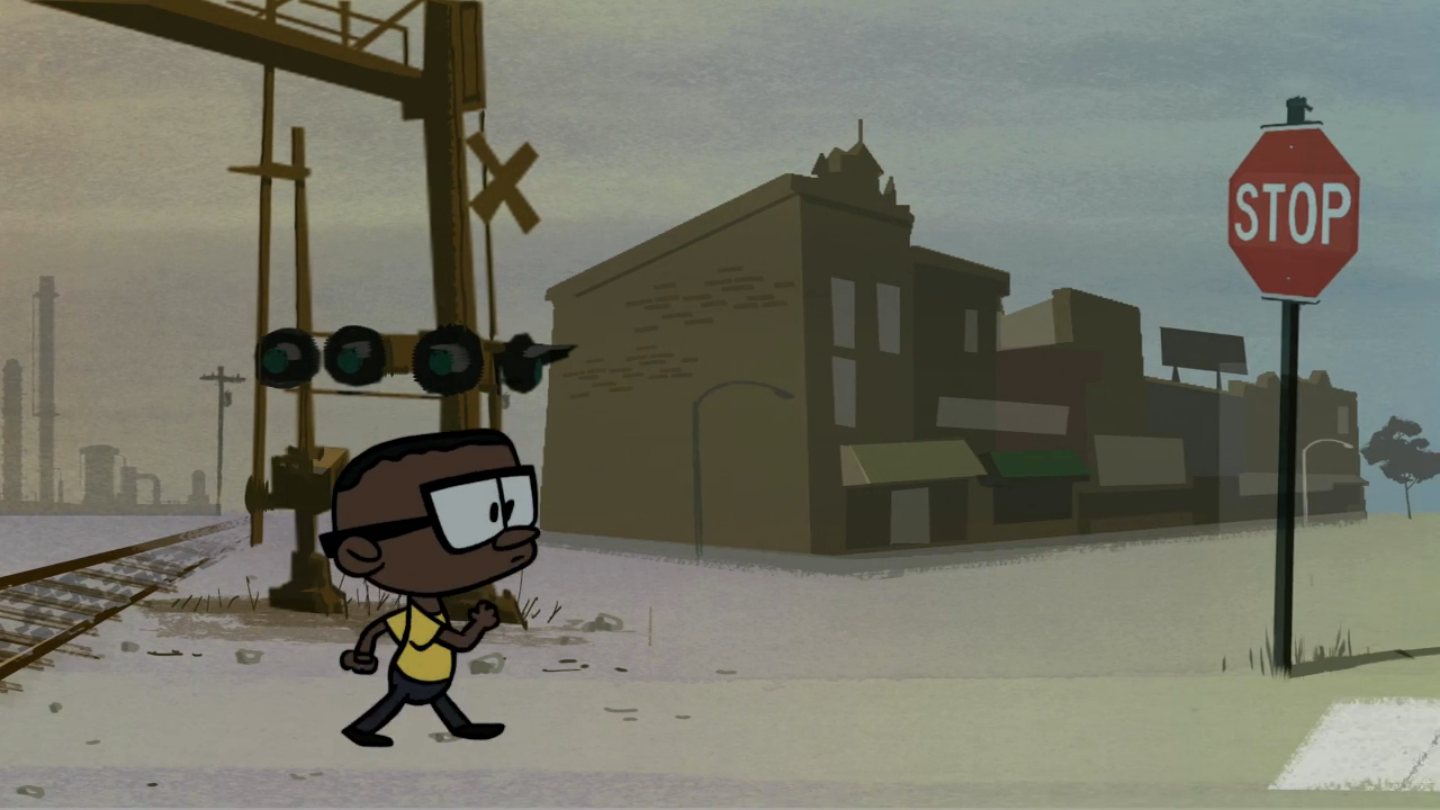
The Rauch Brothers co-directed all fifteen of the shorts. The series demonstrates a strong influence from the school of American cartoons; Tim Rauch’s distinctly caricatured personalities inhabit beautifully constructed backgrounds designed by Bill Wray. The off-kilter geometry of the architecture and pastel colour palette is reminiscent of the 1960s-era ‘Pink Panther Show’, while the thick outlined digital character animation has a stronger connection to contemporary Nickelodeon and Cartoon Network kids animations.
Many of the StoryCorps recordings selected for animation deal with themes of mortality. ‘John and Joe’, ‘Always a Family’ and ‘She Was the One’ commemorate individuals lost in the 9/11 attacks on the World Trade Center, where family members recall their last conversations with loved ones. Meanwhile ‘Danny and Annie’, ‘Germans in the Woods’, ‘A Family Man’ and ‘No More Questions!’ deal with natural deaths. In some instances recordings were made with an elderly family member not long before their passing. Every reference to mortality is a celebration of that individual’s life, highlighting their idiosyncrasies and honouring memories of them.
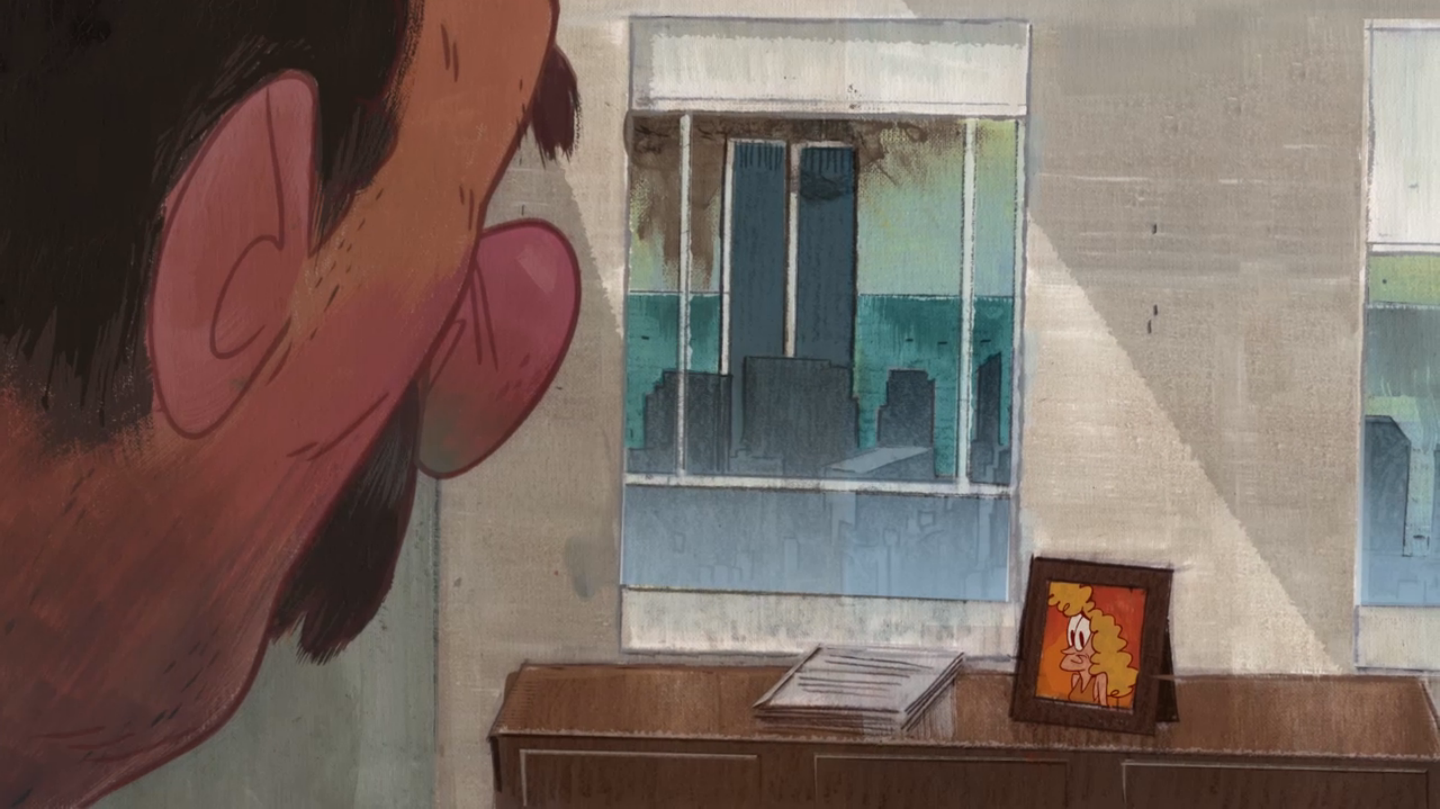
Films like ‘Eyes on the Stars’, ‘Facundo the Great’ and ‘Icing on the Cake’ refer to the experiences of racial minorities, including stories of inequality and immigration. They are however told with a stereotypical American optimism and sentimentality. The people involved look back from improved circumstances, mocking the absurdity of racism or displaying awe and wonder for the struggles of their parents’ generation.
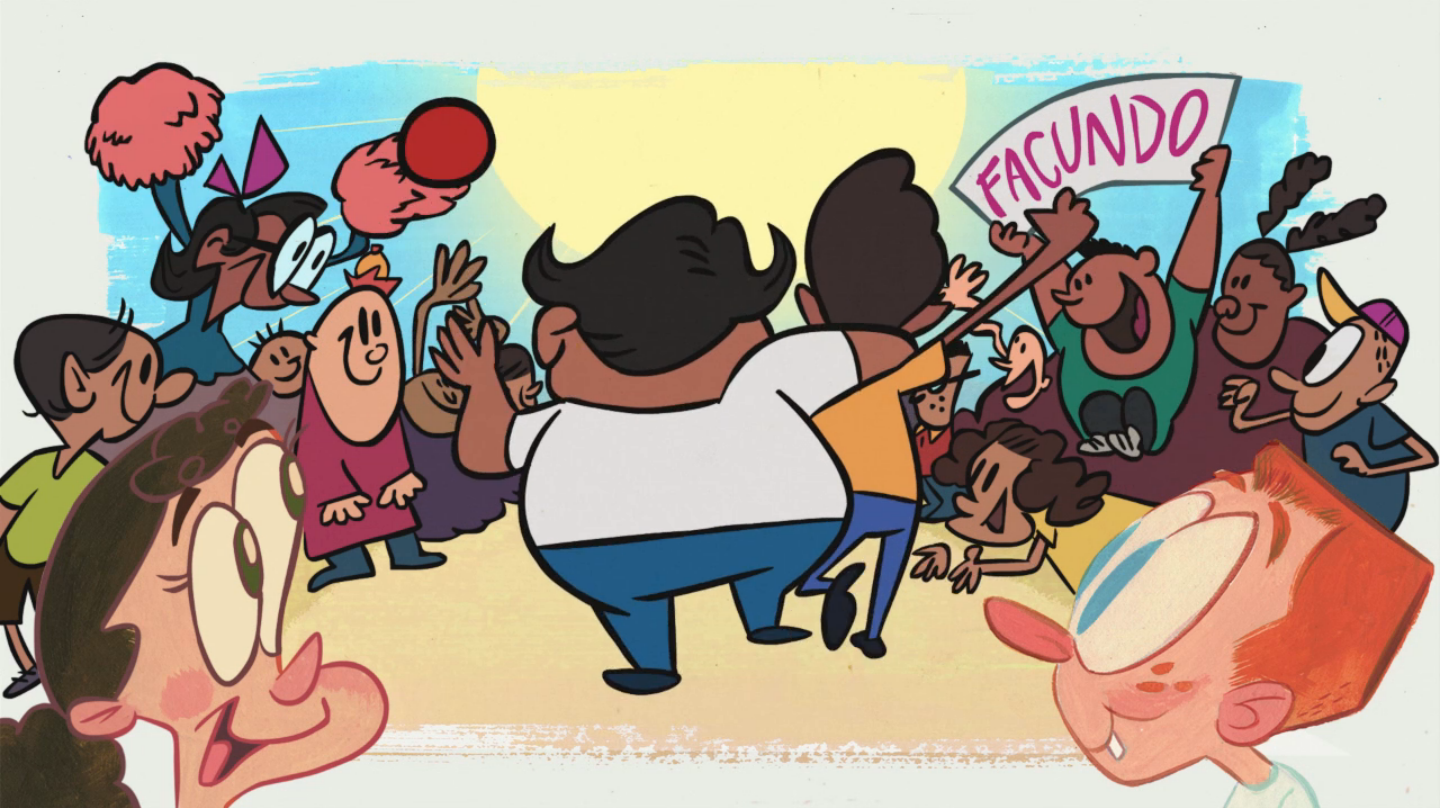
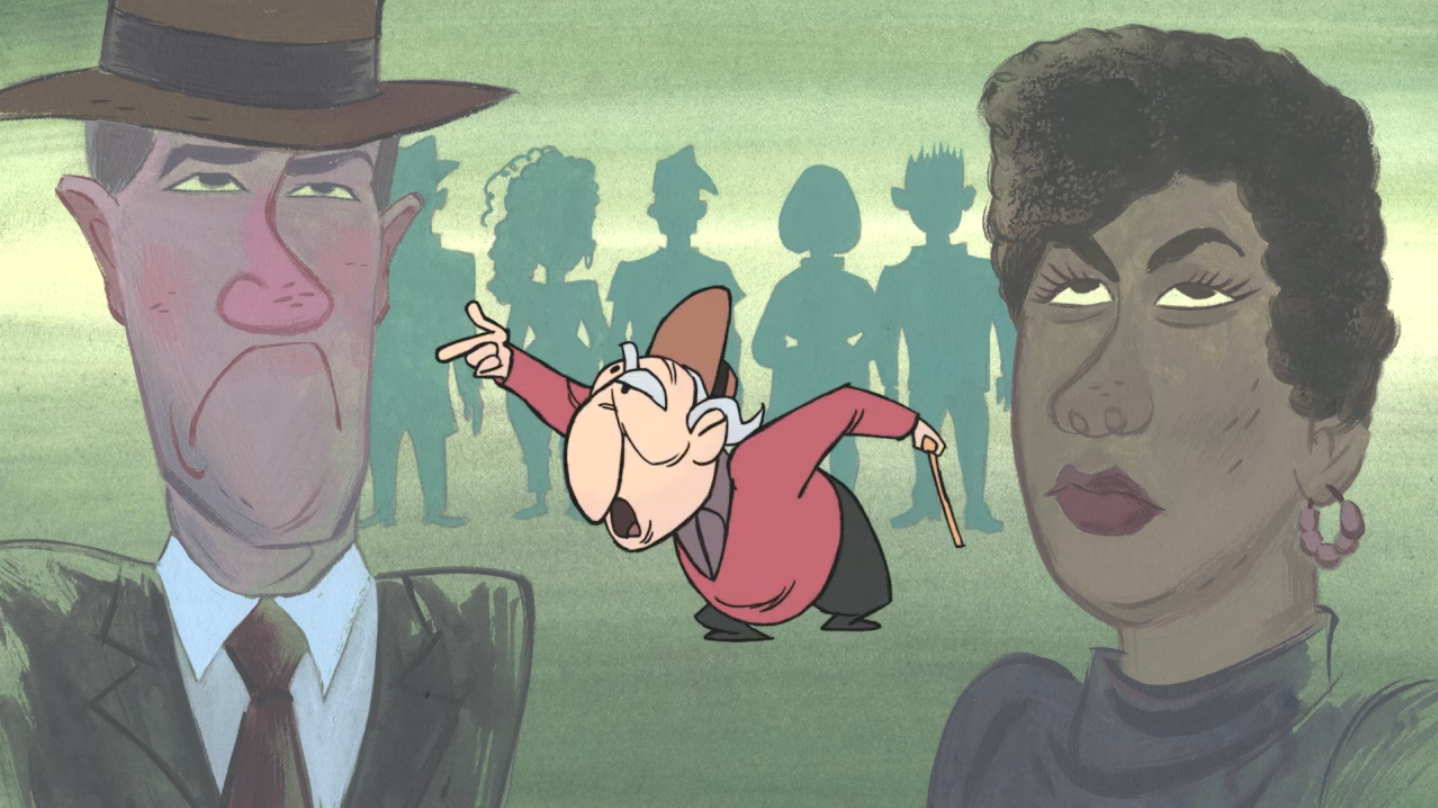
Eccentric personalities seems to be another theme which pops up in these films. ‘Sundays at Rocco’s’, ‘Q&A’, ‘The Human Voice’, ‘No More Questions!’ and ‘Miss Devine’ all feature domineering or uncongenial characters. These stories celebrate diversity and highlight the importance of individuality.
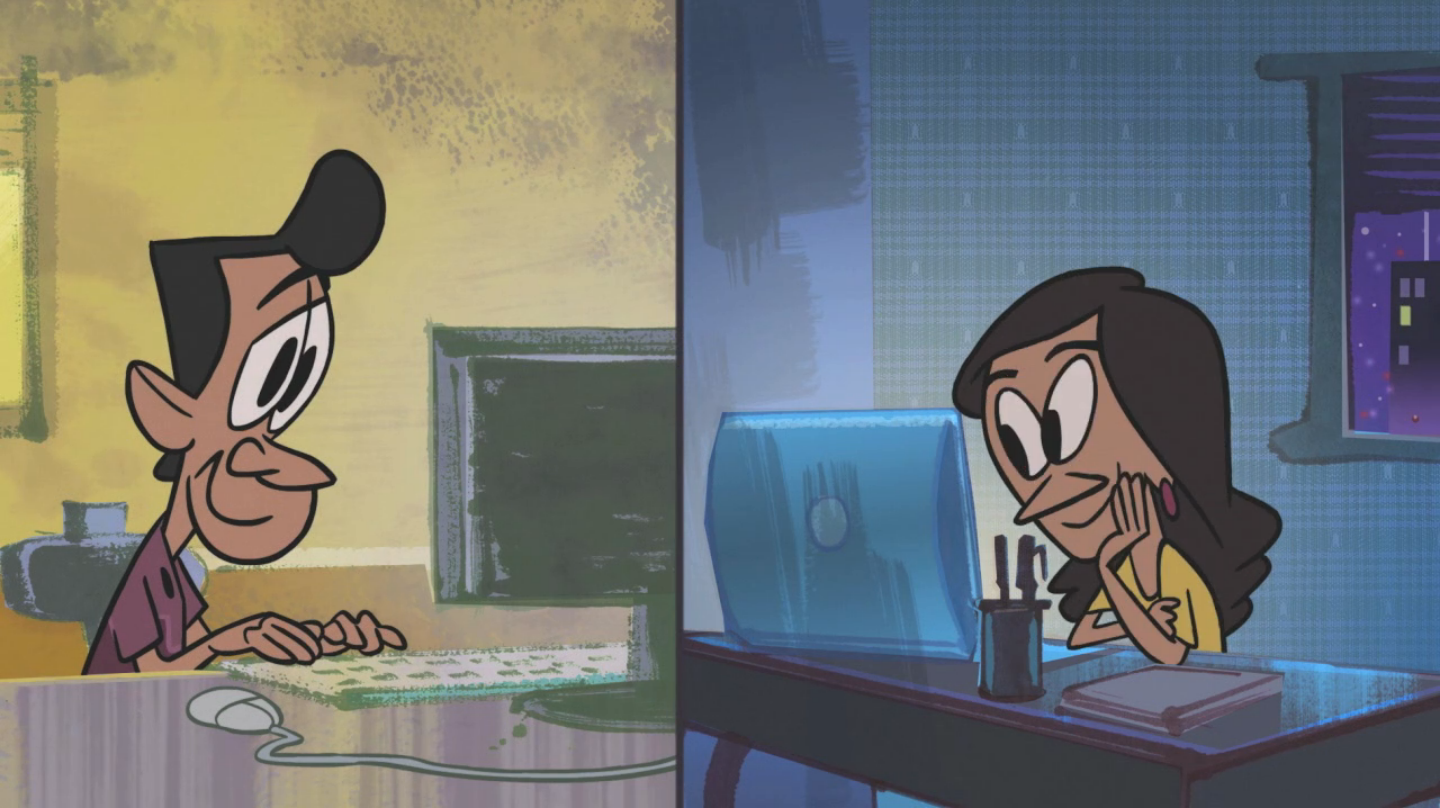
While many of the animations make reference to romantic or family love, ‘To RP Salazar, with Love’ concerns an extraordinary circumstance that leads to a digital age fairytale ending.
Occasionally the animation is noticeably clunky, in particular lip-synching feels a little rough. However the character designs are marvellous. The Rauch Brothers have sensitively depicted a variety of ethnic groups without leaning on illustrative clichés. Family members are designed with an appropriate level of genetic resemblance while managing to avoid looking identical and the exaggerated use of body language and posture helps bring the individuality of each character to life.
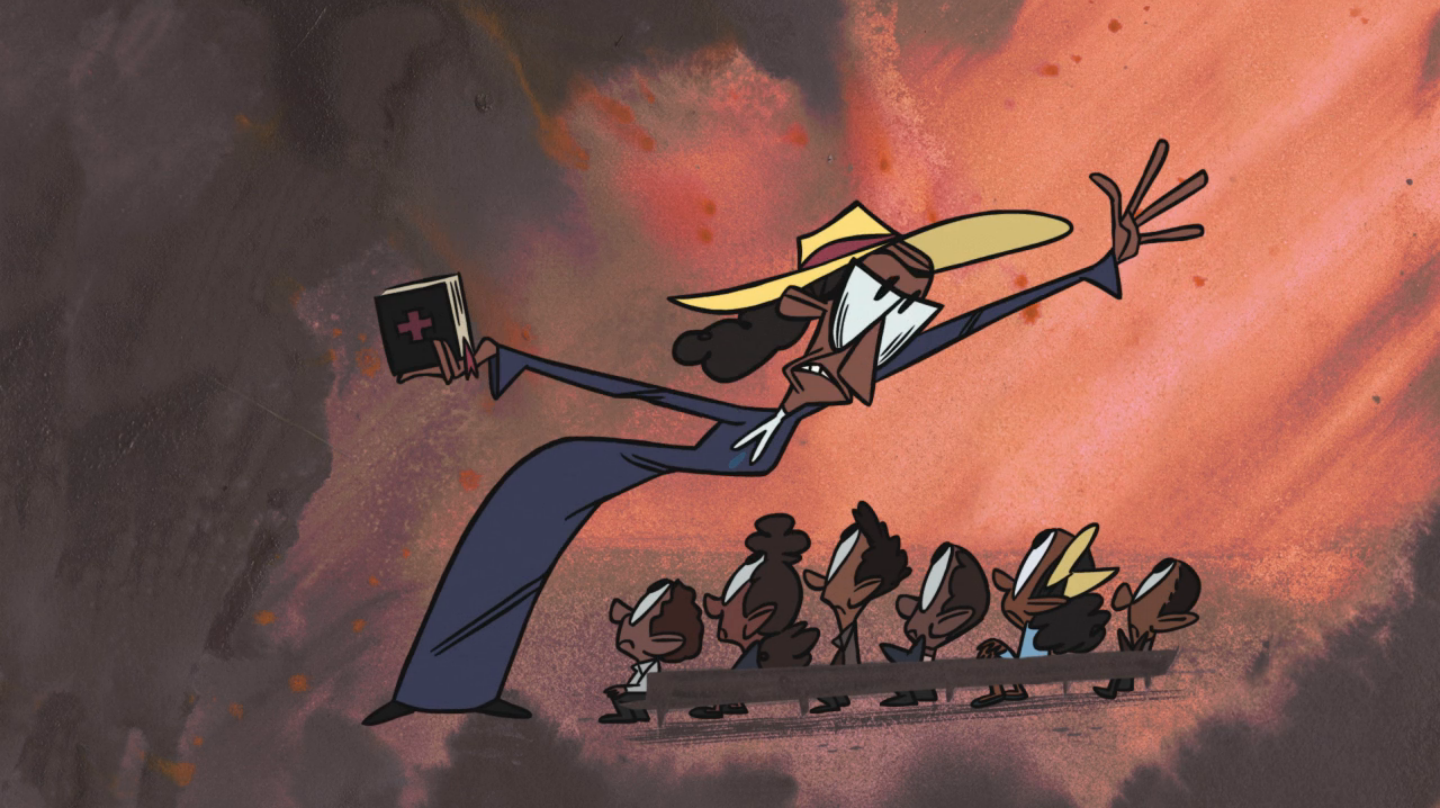
The StoryCorps project has now been running for ten years. An archive of the recordings is being collected at the American Folklife Centre at the Library of Congress. Although we couldn’t embed all the ‘StoryCorps Animated Shorts’ here, I recommend taking time to flick through them on the StoryCorp website.
The Chaperone 3D Trailer from Thoroughbread Pictures on Vimeo.
Something new here – I’m fairly certain this is the first animated documentary made in stereoscopic 3D that we’ve featured! Is this a new movement in animadoc film-making? It’s definitely one that I didn’t see coming.
Just the trailer available to view on Vimeo at present. The film has recently been premiered at the Toronto International Film Festival. We look forward to reading reviews. It sounds intriguing…
“When told that bikers once invaded a middle school dance in a Montreal church basement, Neil Rathbone couldn’t believe it.
I said ‘No way that’s true. That’s the most outrageous thing I’ve ever heard,’ he recalled.
The story is told by Ralph Whims and Stefan Czernatowicz, who were the teacher/chaperone and DJ at the dance.
Rathbone said the film includes live action Kung Fu segments, puppets and exploding piñatas.
“It has a strong comedic flavour,” he said.
More from the interview with Rathbone here:
http://www.thespec.com/news-story/4070910-burlington-grad-s-animated-short-premieres-at-tiff/
We are hotly anticipating the results of this years Animadoc Award at Dok Leipzig, the winner will be announced on Saturday 2nd November.
If anyone is there at the festival on Saturday night and finds out the winner, please do let us know by either leaving a comment here or posting on our facebook wall!
Good luck everyone!
Christoph Steger directs a mixed-media, live-action and animated documentary centred on the cinematic aspirations of Jeffery H. Marzi, an outsider science fiction screenwriter. Steger and Meghana Bisineer adopt the visual language of Marzi’s illustrations, bringing a selection of his fantasy scenes to life. The animated sequences are interwoven with an observational documentary style that dominates the film.

Jeffery was born with brain damage. Although he exceeded doctors predictions concerning his learning ability, the 42 year old recognises his limitations and harbours anxiety about ending up homeless. Despite his preference for reliable work, as a mailman or mechanic, consistent rejection in the job market has led Jeffery to write and illustrate concepts for Hollywood blockbusters. For the past 15 years these have been photocopied and mailed to movie producers all around the world.
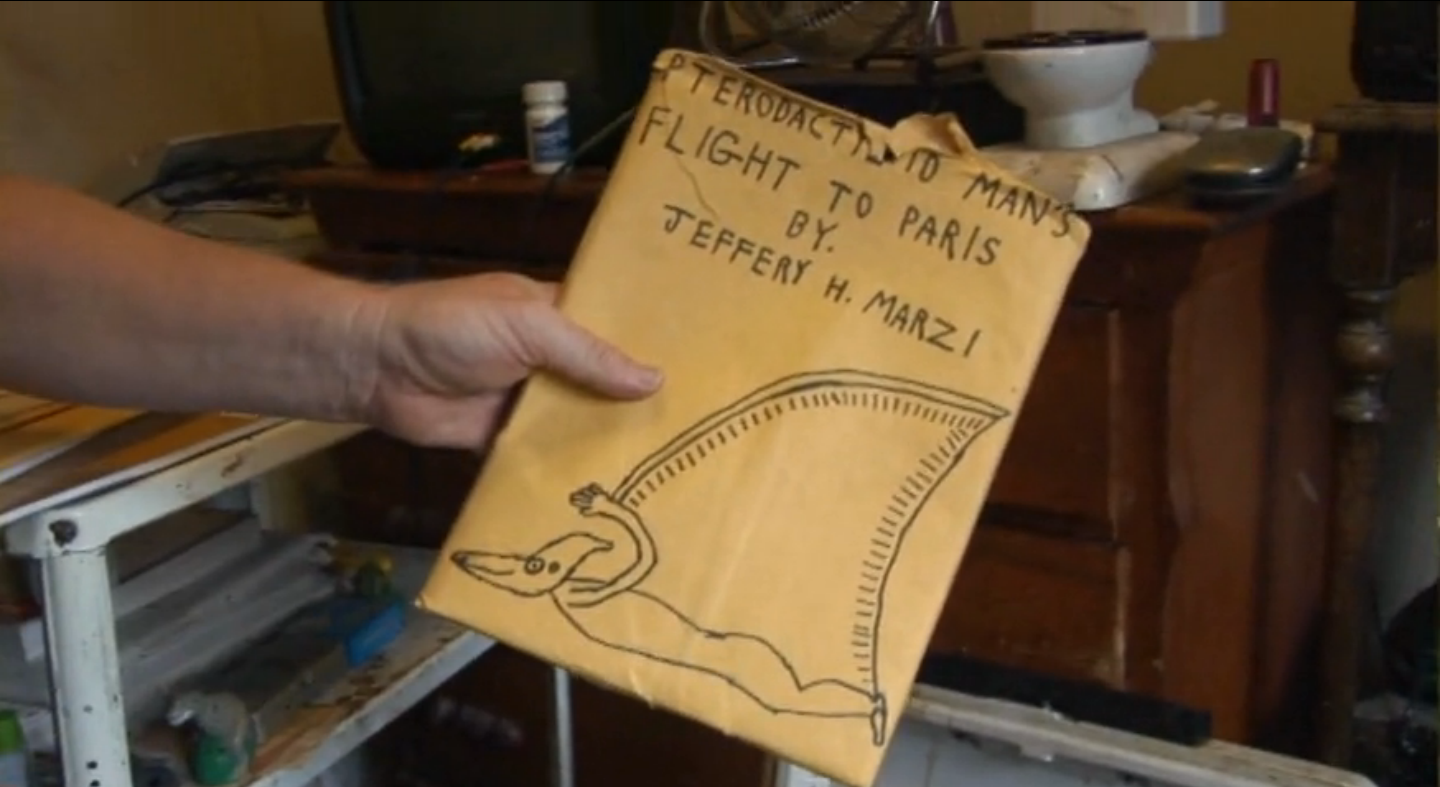
Channel 4’s Animate Projects scheme funded this documentary in 2008. Christopher Steger offered his insight in a video interview which is hosted on their website. “In lack of a better term…” Steger places Jeffery’s practice in the field of Outsider Art. Paraphrasing the sentiments of Jean Dubuffet and Rodger Cardinal, Steger describes the raw authenticity of emotion in Jeffery’s work, which is lacking in the self-aware, contextualised practices of trained artists.

Steger continues: “I like life, and animation is almost the opposite, it’s all about fantasy. So I felt a relief to be able to have Jeffery take care of all that. He does all the imaginary work of the visuals and it’s down to me to bring them to life…. The real film for me and the artistic challenge is in the structure of the poetry, and trying to bring out those poetic moments of a story like Jeffery’s.”

Steger’s film ‘Mother’ was featured on the blog in January 2013. He as recently made much of his work available on Vimeo.
The Dole Animators are a group of first time animation film makers living in Leeds UK. Together, they have made a film about their experiences of the coalition government recent welfare reforms and the impact of the changes on their lives.
The film challenges a mainstream media rhetoric, which states that people choose a life on benefits and that this ‘choice’ is an easy lifestyle choice.
The film has been made with support from a researcher Ruth Patrick and film maker Ellie Land. You can read more about the project at the website below:
“If they’re not doing time for this, then surely for something else.”
The new film from US director Sheila Sofian, follows inmates on life sentences in the US prison system. Sofian “conjures up an inferno of expressive animations painted on glass, abstract re-enactments, and surrealist details, which condenses into a passionate appeal to politicians to abolish prejudgements and racial discrimination.”
The films world premier will be at Dok Leipzig this November and has been nominated for the Animadoc Award.
We have featured Sheila’s work on the blog before, most notably her writing on animated documentary.
We wish Sheila the best of luck with her new film and also her nomination for the Animadoc award!
http://films2013.dok-leipzig.de/de/film.aspx?ID=6096&title=Truth+Has+Fallen

http://www.injunuity.org/#!/about
Four episodes of this series about Native American identity are available to watch online. I found the episode ‘Two Spirit’ of particular interest. It’s about gender, sexuality and identity
“Injunuity is a collage of reflections on the Native American world, our shared past, our turbulent present, and our undiscovered future. From Columbus to the western expansion to tribal casinos, we are taught that the Native way, while at times glorious, is something of the past, something that needed to be replaced by a manifest destiny from across the ocean. But in a world increasingly short of real answers, it is time we looked to Native wisdom for guidance. It is time for some Injunuity.
Injunuity is a mix of animation, music, and real thoughts from real people exploring our world from the Native American perspective. Every word spoken is verbatim, every thought and opinion is real, told in nine short pieces and covering such topics as language preservation, sacred sites, and the environment. But rather than simply revisit our history, the goal of Injunuity is to help define our future, to try and figure out the path that lies before us, to focus on where we are going as well as where we have been.”
An Interview with the director can be found here: http://injunuity-discussion.tumblr.com/

Unfortunately we cannot embed the film ‘No-One is Illegal’. It can however be watched via George Sander-Jackson’s blog.
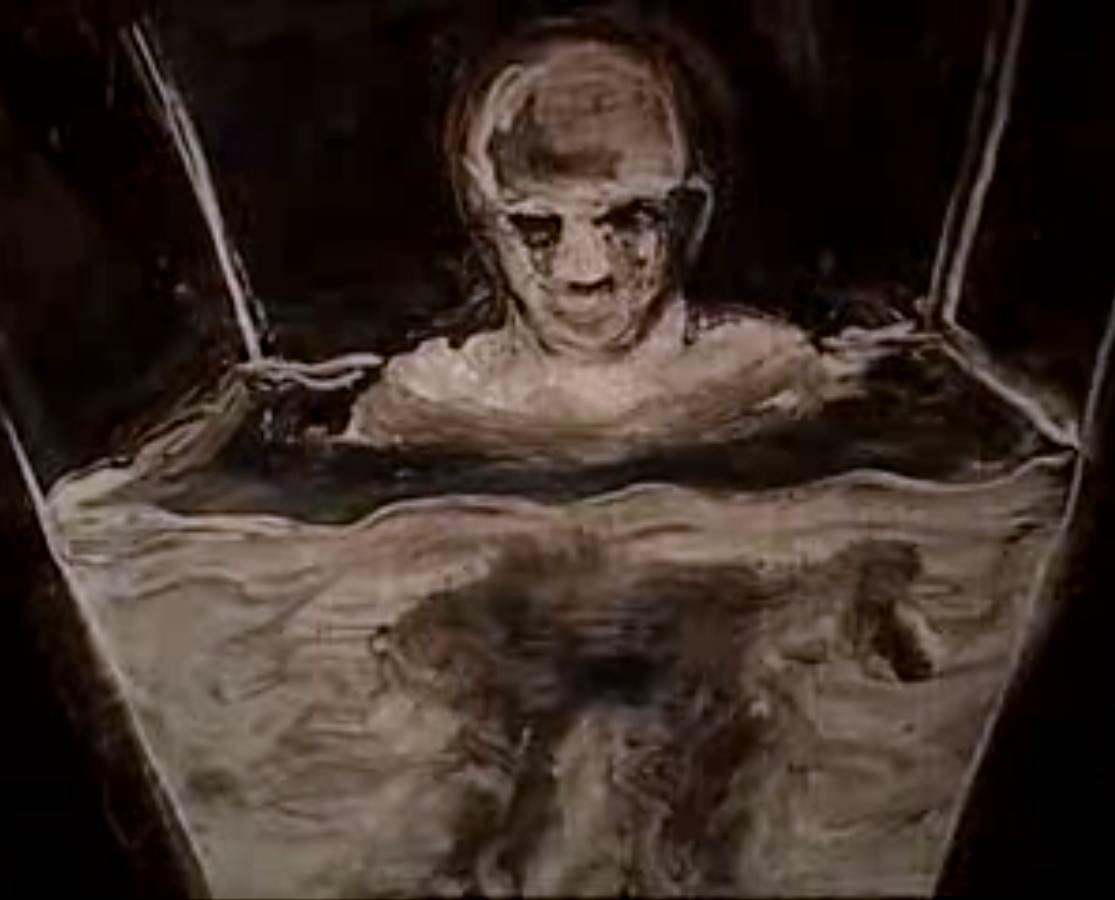
Inspired by a performance of the ‘Asylum Monologues’, Sander-Jackson approached the writers for permission to adapt the play into a shot animated film. The narrative addresses mental anguish, firstly in regards to the atrocities that motivated the narrator to flee their homeland and secondly in regards to their experience of detention while seeking asylum in the UK. Forward Maisokwadzo, a Zimbabwean resident of Bristol, provided the voiceover while Sander-Jackson constructed the animated visuals through an ink-on-board technique.

Possibly due to similarities in their process, parallels can be drawn between this film and the charcoal animations of William Kentridge. In addition to the dank grey-scale palette that both artists adopt, the style of visual storytelling is metamorphic; a stream of pictorial references merging from one to the next. The sequential blurring of nightmarish scenes evokes the haunting and intangible nature of traumatic memory.

The film seems to exist in two forms; three minutes (available on George’s blog) and a one-minute-thirty version which can be found in DepicT!’s 2008 archive. This is the Watershed’s super-short filmmaking competition that operates as a part of Bristol’s Encounters Short Film & Animation Festival.
Sander-Jackson continued to develop the technique he used in ‘No-One is Illegal’ for a section of the feature film ‘A Liar’s Autobiography’, which I reviewed for this blog back in March 2013. George Sander-Jackson works as a director at Arthur Cox and teaches part time at the University of the West of England, Bristol.

