• Alex Bland conjures the atmosphere of wartime Britain in this nostalgic exploration of the R.A.F.’s Bomber Command, a battalion charged with the treacherous task of attacking German targets at the dead of night. Set out in a roughly chronological narrative, archive recordings and contemporary interviews with ex-crew members narrate the early stages of excitement during enlisting, followed by the eventual reality of the mission.

    IDOF1

    A great strength of this film is its ability to adjust tone by changing medium.  Alex Bland begins by adopting the aesthetic of wartime enrolment poster design. Using this style as a starting point he continues to masterfully employ a multitude of techniques; combining rotoscoped hand painted animation, laid over textured backgrounds and combined with elements of archive footage. CGI, 2D digital, collage and hand painted components support the diverse imagery in this accomplished animated documentary. Bland presents a particularly beautiful archive description of a raid that took place through a wall of searchlights. This stimulated a distinctively pleasing scene that is almost abstract in its formal arrangement barring the silhouette of the plane.

    IDOF2

    In another scene that is set to the visuals of a comic scrip, an American pilot gives an account of an effective raid over Berlin, which is almost flippant. His account is detached entirely from the deadly result of the mission, instead he includes phrases like; “I could see the bombs going down very nicely… I enjoyed it very much”. This film does not address the more contentious nature of the task these pilots were charged with. Essentially they were enforcing the British equivalent of the Blitz, dropping bombs that would inevitably cause civilian casualties. I was left speculating whether this issue was not dealt with because it was not a problem for the airmen interviewed. They may have felt it was their duty and possibly even a fair one in the context of war. However I also wondered if the filmmaker’s nostalgia for the subject matter pushed the narrative away from such controversy. Bland explains in concluding titles that the film is dedicated to his Grandfather along with the other men from the Bomber Command killed in the Second World War. An additional puzzling note states that none of the airmen set with this duty were ever commemorated with a medal for their bravery.

    IDOF3

    This film manages to capture effectively the naïve feeling of excitement at the beginning of the war, a sense of camaraderie felt between the airmen along with the drama and the formal beauty found in such destruction. The film addresses the tragedy associated with loss of life in the Bomber Command whilst maintaining a traditional lack of emotion associated with the British spirit’s stiff upper lip. As the narrative was constructed from half a dozen different accounts a sort of cross chattering effect distracts from an otherwise clear narrative.  This is however an acceptable side effect when collating such a multitude of sources. ‘I Dreamt of Flying’ has collected an award from the Imperial War Museum  and received the staff pick from Vimeo. Animated Documentary found this film on the vimeo channel Doco-anim.
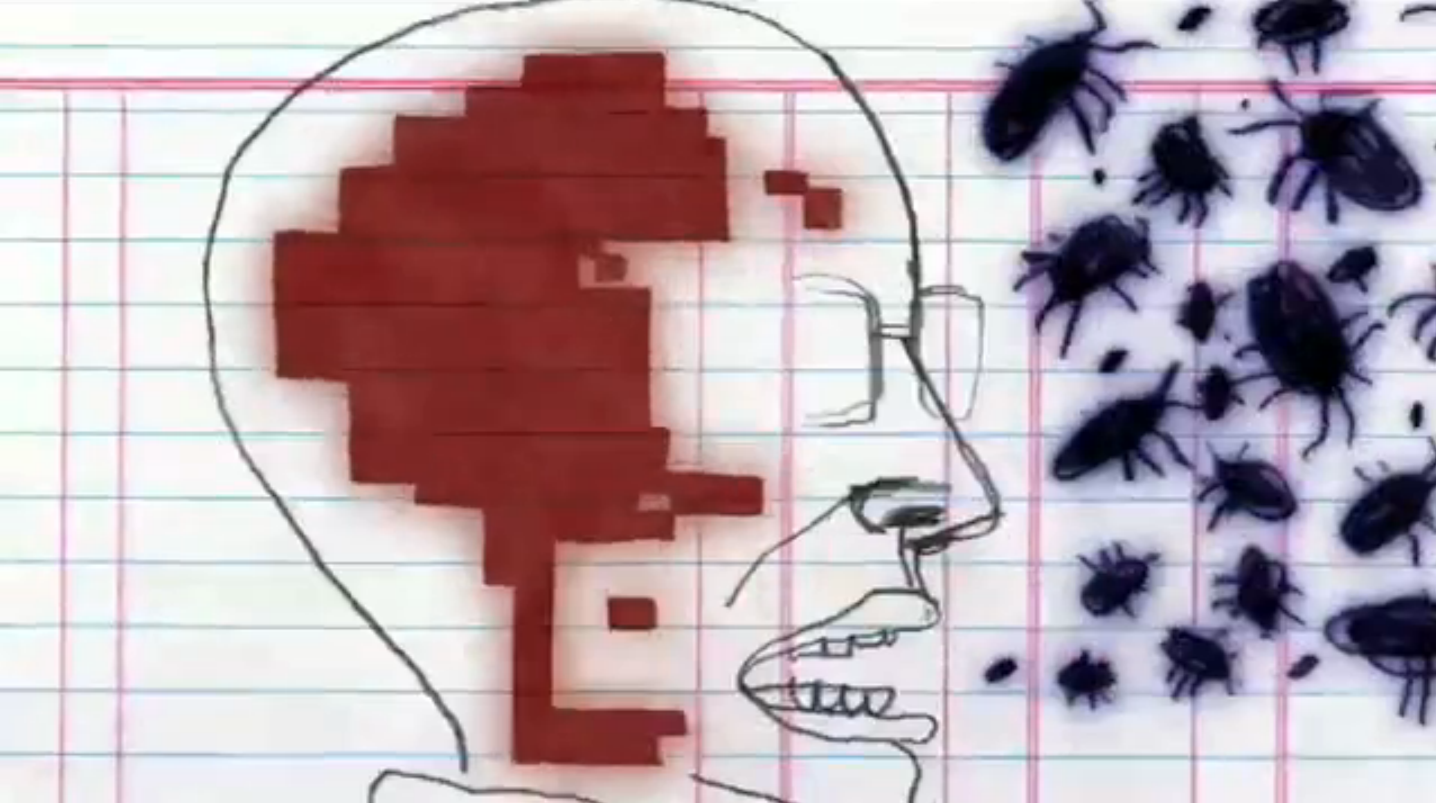
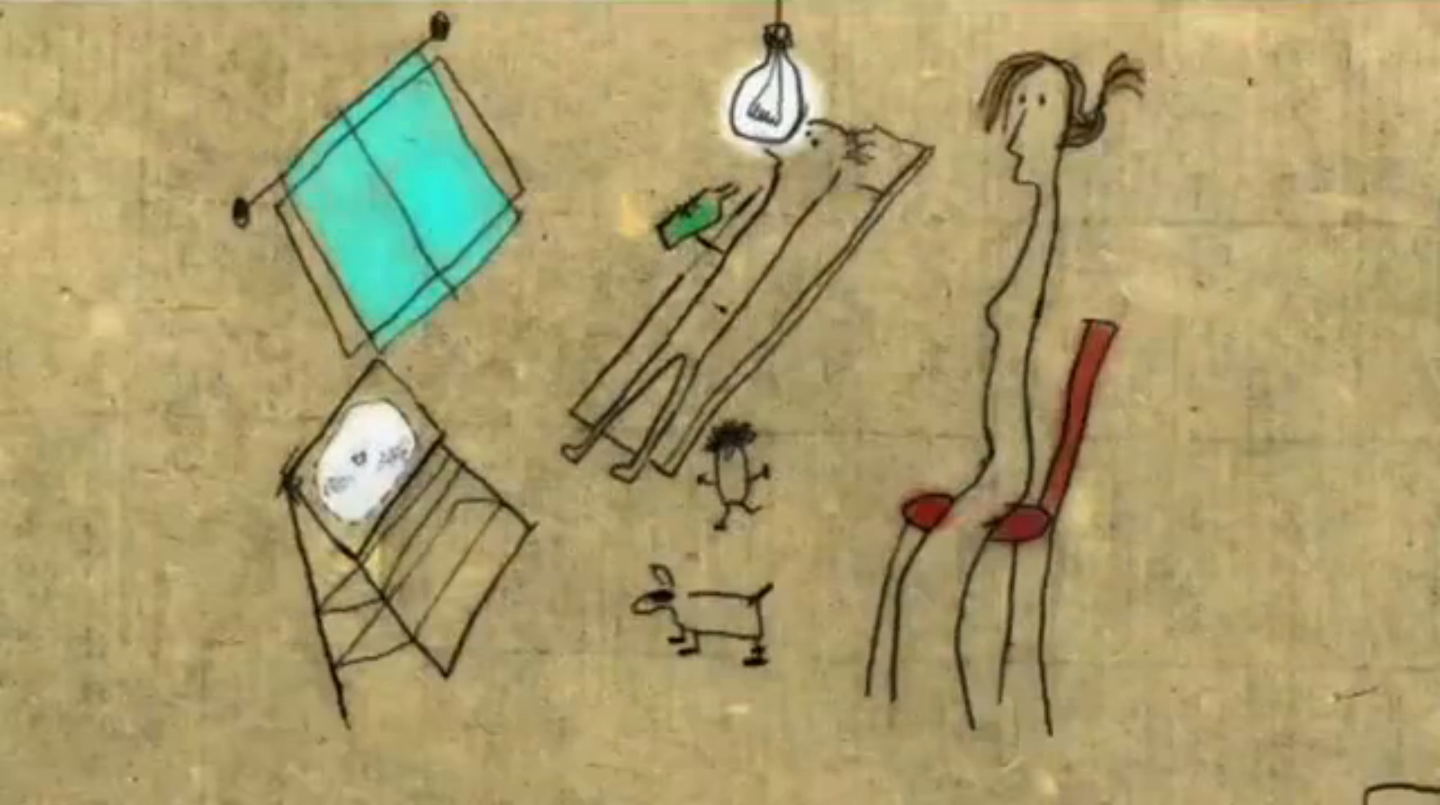
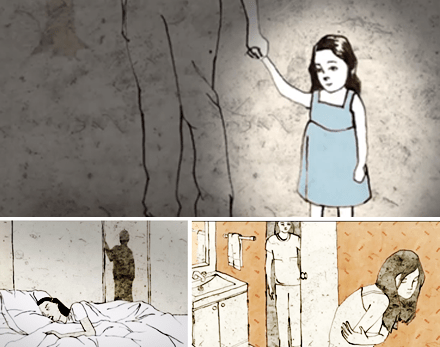
  • This animated documentary, directed by Jonathan Hodgson, opens with the statement, ‘Most people’s mums are mad. Mine’s got schizophrenia’. This text crafts the perspective of a child by adopting adolescent rhetoric. The tone of such a statement is carried through an extraordinary series of parallel narratives in which adults recount their experiences in childhood dealing with parents suffering from paranoid delusions. A varied set of richly textured and naïve illustrative styles assist the visualisation of a number of accounts where children doubt the natural authority granted to a parent.

    cam2

    A particularly fascinating aspect of the subject matter is revealed when the interviewees recall their beliefs that a parents delusions may have been real. When we are developing it is very easy to take anything a guardian tells us literally. It must be a slow process of realisation for a child to learn not to trust their first teacher in this world. A kid would start to decipher for themselves that their parent’s fantastical notions may be being generated by the distortions of mental illness; splitting reality into tangled delusions which are disengaged from rational analysis, but rather supported by a complex web of symbolic meaning and tenuous evidence.  One would hope that such a disruption to natural authority does not have a long lasting affect on an individual’s development.

    cam3

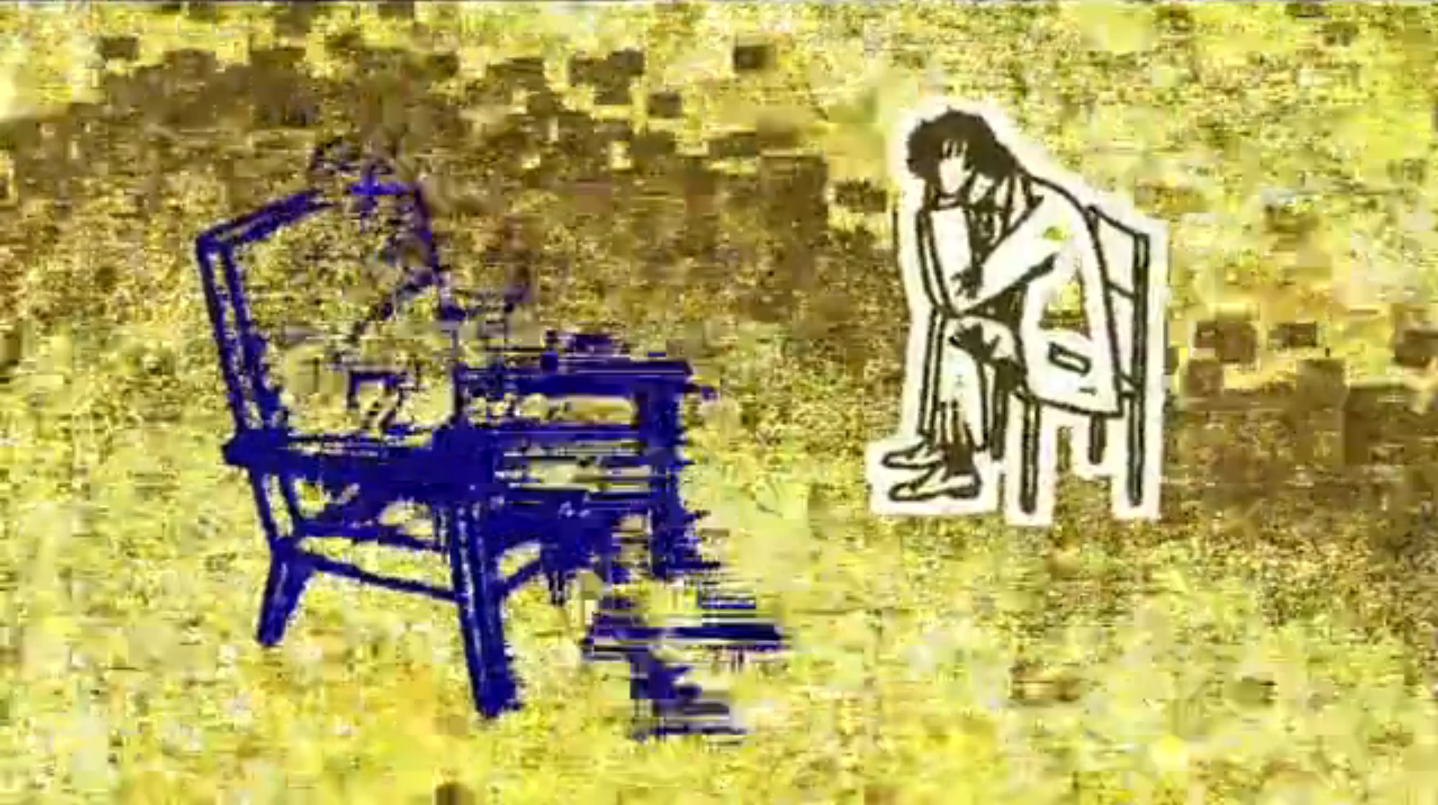
    Siri Mechior and Tim Webb’s contribution to the animated portion of the film is invaluable. Something engaging is sparked when distinctively two-dimensional drawings skid into three-dimensions. Lines shift, scattering our understanding of space as the viewpoint rotates around the modernist imagery, causing the destruction of the flat plane. Occasionally these moving pictures are digitally encrusted to great effect in undulating binary distortions. At other points one can feel the materiality of physical mark making, the rippling paper jostles to create surface boil. In addition Hodgson’s sound design is gripping. The disembodied eyes that swing to the sound of creaking wood conjures surrealist notions of juxtaposition.

    cam1

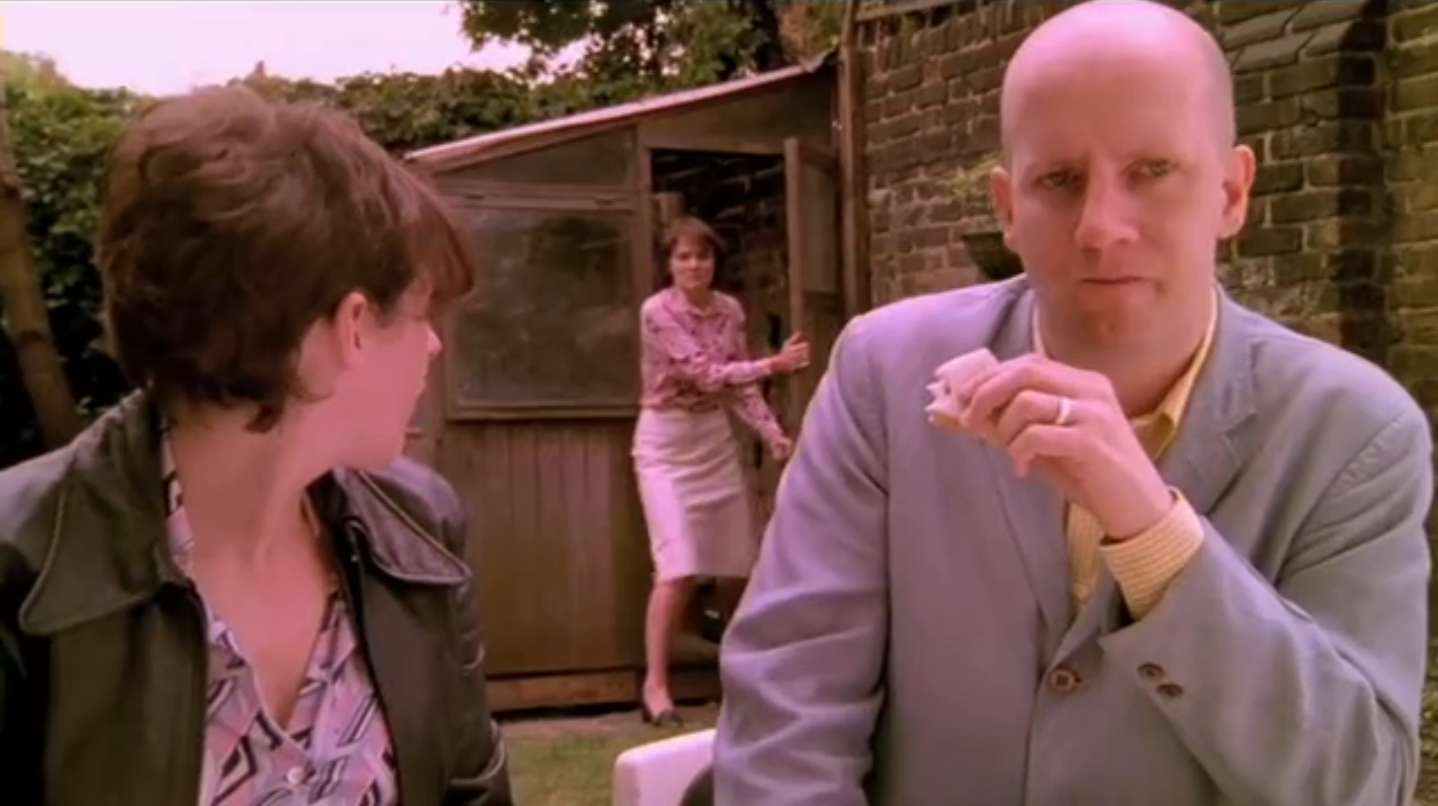
    The live action scenes do not maintain the standard of excellence I attribute to the animated sequences. Certainly the over dubbing of the actors voices was a formal choice, one designed to unnerve and disrupt the default expectation of an audience. However such disharmony is so corrupting that the gathering in the garden scene feels like something out of a continental soap opera.

    cam5

    As a whole the film is fascinating both visually and in terms of subject. The Arts Council of England and Channel 4 funded this Sherbet film back in 2001. Currently the short has just under a thousand plays on Vimeo. Lets hope it’s audience continues to expand online.

  • download

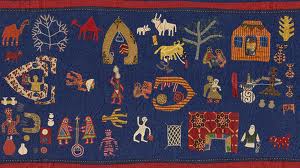
    I saw this beautifully crafted film at the Animated Realities conference in Edinburgh in 2011. The film animates a traditional sewing and textiles technique developed by the Kutch community, who are from a coastal region in Ahmedabad, India and has for a long time inspired fashion and textiles all over the world.

    Here is a link to a review of the film following the latest in a long line of awards the film has received  We will keep an out out for an online release of the film and if anyone knows where we can link to the film online, please do get in touch.

    http://articles.timesofindia.indiatimes.com/2013-05-10/ahmedabad/39168012_1_sundance-film-festival-world-heritage-week-heritage-textiles

  • A whistle-blowing story, which lends itself to the animated documentary genre, mostly because of the ethical considerations in protecting peoples’ identity. The following synopsis is taken from the films entry on YouTube:

    “In August 2006, caregivers at the Sonoma Developmental Center found dark blue bruises shaped like handprints covering the breasts of a patient named Jennifer. She accused a staff member of molestation, court records show. Jennifer’s injuries appeared to be evidence of sexual abuse, indicating that someone had violently grabbed her.

    The Office of Protective Services opened an investigation. But detectives took no action because the case relied heavily on the word of a woman with severe intellectual disabilities. A few months later, court records show, officials at the center had indisputable evidence that a crime had occurred.

    ‘In Jennifer’s Room’ is part of a reporting package that recently won a George Polk and an IRE award, and was named a finalist in the Pulitzer Prize’s Public Service category.”

  • Well, I was very pleased this morning to find this review, and eager to watch the brand new trailer for the latest animated feature from the director of award winning animated documentary – Waltz with Bashir – Ari Folman.

    However the trailer has already been removed for copyright reasons! So if anyone out there knows of a link to the trailer still online, please do let us know. Otherwise we will re-blog when the trailer is re – released!

    In the meantime here is a short review to whet your appetite:

    http://screenrant.com/the-congress-trailer-2013-movie/

  • It is not often one comes across a CGI film with such a consistently rich sense of artistry. With his film ‘Caldera’, Evan Viera and a substantial team of supporting artists demonstrate a brilliant sense of composition, lighting design and mastery of the 3D medium.

    Caldera_1

    This animated short attempts to represent a series of visual hallucinations that take place during a psychotic episode experienced by the female protagonist. Viera is not interpreting his own experiences, but those of his father, a long-term sufferer of schizoaffective disorder. The title refers to the self-destructive process of collapse when a volcanic crater is formed after a major eruption.

    As there is no attempt by the film-maker to claim this to be a documentary it may be unfair to criticise this short on the grounds of accuracy when depicting an unstable mental state. The psychological phenomenon is by its very nature subjective, however the lack of discord present in the character’s demeanour was striking. The protagonist spends most of ‘Caldera’ looking calm and concentrated in the context of the fantastical happenings she experiences. When depicting a gross thought disorder such as this it might be be fair to suggest that the subject would likely be considerably less composed during such events.

    Caldera_2

    Evan Viera writes that his father has “danced on the rings of Saturn, spoken with angels, and fled from his demons”. The traces of these delusions are quite literally interpreted in ‘Caldera’ yet the feeling is very much second hand in tone. Watching this glistening film gives one the impression of a challenging CGI exercise more than that of a depiction of pathological imbalance.

    When viewing this film on Vimeo we are confronted in the blurb by Viera’s statement about his father. The film-maker wants us to be aware of the direct link between the protagonist’s vision and his father’s experiences of mental illness.  For that reason I propose this is a documentary of sorts. Although it is based on second-hand observations, the film makes an effort to interpret a subjective experience that most of us could never fathom. Viera repackages it as a digestible image sequence granting the audience insight into a fascinating and difficult topic.

    However, the story telling is carried on the back of the film’s aesthetic. The synopsis, for instance, is minimal. In essence a sad-looking woman decides to not comply with her medication (an enormously contentious point in its own right which is not really addressed), leaves the city and goes for a swim. Within the ensuing visualisations good and evil are represented through the colours blue and red, as well as by an animal sprit guide and a telekinetic daemon. Such simplistic symbols are surprisingly successful as narrative features and indicators of tonal change. The absence of dialogue inhibits our expectation of further explanation leaving the imagery to speak for itself. (Spoiler Alert) A lack of resolution is apparent at the end of the film; the screen fades to white during an unjustified moment of mortality. This sequence is treated with such casual romantic vagueness one can only hope, for the protagonist’s sake, that drowning is an extension of her delusion; if not then we are left with a quizzically cynical finale.

    ‘Caldera’ left me nourished visually but a little under-fed intellectually. A sumptuous film with an elegant air of visual poetry which sadly was not complimented by the reductive narrative.

  • Acts of Terror’ portrays the U.K Police force as an intimidating manifestation of growing state control. The 2005 Terrorism Act comes under scrutiny in this real life account of one woman’s careful navigation of the murky waters of police regulation and the U.K. legal system.

    The film is commendable for the incredibly clear construction of its narrative. We are led through what must have been a complex set of legal procedures with a crisp sense of simplistic clarity. The animation follows, possibly less successfully, a similarly minimal motif. On occasion one is left with the feeling that a few extra frames were needed or wondering if the thuggery of police officers may have been better expressed than by giving them homogenised slanting closed eyes. However the court battle, where the style of an early 90’s close combat game is adopted, is where the writing, animation and sound design most successfully harmonise. This simple witty metaphor illustrates the ultimately futile struggle the protagonist felt in seeking justice.

    acts of terror

    ‘Acts of Terror’ is an engaging campaign-based animated documentary that is charming and informative. It left me with the great hope that if, one day I found myself in the specific circumstances of the protagonist armed with the knowledge this film imparts, thus allowing me to personally triumph over a police officer when exercising my civil right to film them.  I will just need to make sure there is no way they can suspect me of terrorism.

    I first watched this film at the London Animation Club where the organiser, Martin Pickles, proudly stated the club’s role in connecting the film’s makers. Gemma Atkinson, Adam Ay and Fred Grace of Fat Rat Films gave a presentation at LAC proposing that an animator come on board. Following this they met Una Marzorati, who animated the entire film, and Tom Lowe who designed the soundtrack. Collaboration forums are exciting environments to observe and participate in. We wish the film-makers the best of success in spreading their message and hope for many more years of networking at the London Animation Club.

  • SAS article 29apr13

    An article about this very blog, which I was invited to write for the the Society for Animation Studies blog. Blogging about blogging!

    Well in this case it’s reviewing films we’ve looked at on the blog so far, in order to assess the animadoc landscape; as something of a follow-up to other articles on the site’s current theme of animated documentary.

    If you haven’t checked them out already have a look at:

    Bella Honess Roe on Animated Memories

    Sheila Sofian on The Camera and “Structuring Reality”

    Who said that? The dispensability of original sound in animated documentary, by Samantha Moore

    Paul Ward’s “To document differently”: random thoughts on a taxonomy of animated documentary.

    And do leave comments – there are some fascinating points and debates to be had…

  • This animated oil-on-glass and live action documentary is centered on the campaign in Sierra Leone to get a 30% quota of women in parliament. Titles in the film explain that women took a key role in negotiating the peace process at the end of an 11 year civil war, however since then female politicians have had to deal with intimidation and misogyny as they navigate the political sidelines.

    Animated Documentary reported on ‘30%’ in the early stages of production back in February 2012 and again once the film was finished and publicised by The Guardian in January 2013. And we liked it so much we felt it was worth reviewing too.

    The animated sequences possess a luscious mixture of figurative and abstract imagery found most commonly in impressionism. Paint swims across the screen, smudging and slipping its sensual gloopy material around our vision with all the vibrancy of the region it refers to.

    The metamorphic nature of the animated medium lends itself to turbulent tonal changes that take place in the opening sequence. The viewer zips though a busy Sierra Leone street into a viscous black void where we pass burning cars, violent gestures and feel the echoes of civil war. These melting edits are brought to great effect when combined with snappy sound design.

    Following visual and audio darkness the screen literally swirls into the shape of Dr. Bernadette Lahai, one of the key political figures pushing forward the 30% quota bill. The rotoscoped image dissolves into live action. My feeling is that several of the video sequences possess considerably less flair than their animated counterparts. Such an uneven aesthetic could be said to threaten the impact of the short; but here it might be worth considering how disorientating an entirely rotoscoped 10 minute short could have been. Instead animation is reserved for storytelling and live action covers the communication of important details.

    This film is fruitful both in its visuals and content. As a documentary the short conveys an under-reported theme in an engaging manor, while the animated sections are sumptuous in their appeal. At Animated Documentary we are always pleased to see such formal beauty and journalistic professionalism combined harmoniously!

  • Animated public information film ‘The Story of Cholera’ explicitly depicts methods of transmission, prevention and treatment of the bacterial disease in a simple and informative manner. The commissioning body, Global Health Media, explains the film ‘follows evidence-based guidelines, has been field-tested, and reviewed for accuracy and content’.

    The entire sequence is strikingly utilitarian, breaking the conventional codes of pace found in mainstream film and television in order to emphasise the crucial learning points; for instance twice the viewer is left lingering on an image of a someone washing their hands properly. This film does not pull any punches; diarrhoea and vomiting is frequently depicted and explained in plain descriptive language.

    Largely in black and white, colour is used to illustrate the presence of the invisible bacteria. As Western viewers we might take for granted how public health campaigns and detergent advertisements have helped us visualise how disease is spread. At the film’s resolution colour seeps into the black and white palette. This visual metaphor, despite it’s incredibly simplistic symbolism, is suitably optimistic.

    The absence of lip-sync indicates one of the crucial functions of this film. Already it has been dubbed into nine languages and there are more in the pipeline. Global Health Media claim the film has been screened in 175 countries around the world. Animated Documentary wishes the campaign further success.