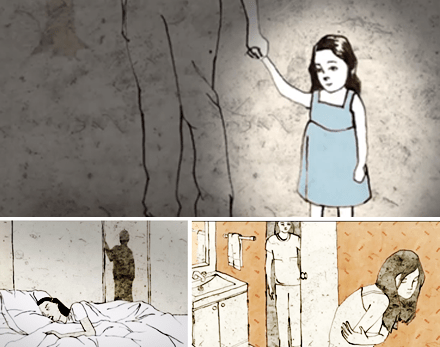
• BBC Knowledge & Learning commissioned Territory Studio to create an animated explanation of the structures, processes and purposes of DNA.  The result is an exquisitely mesmeric graphic exploration of the mysterious structure.
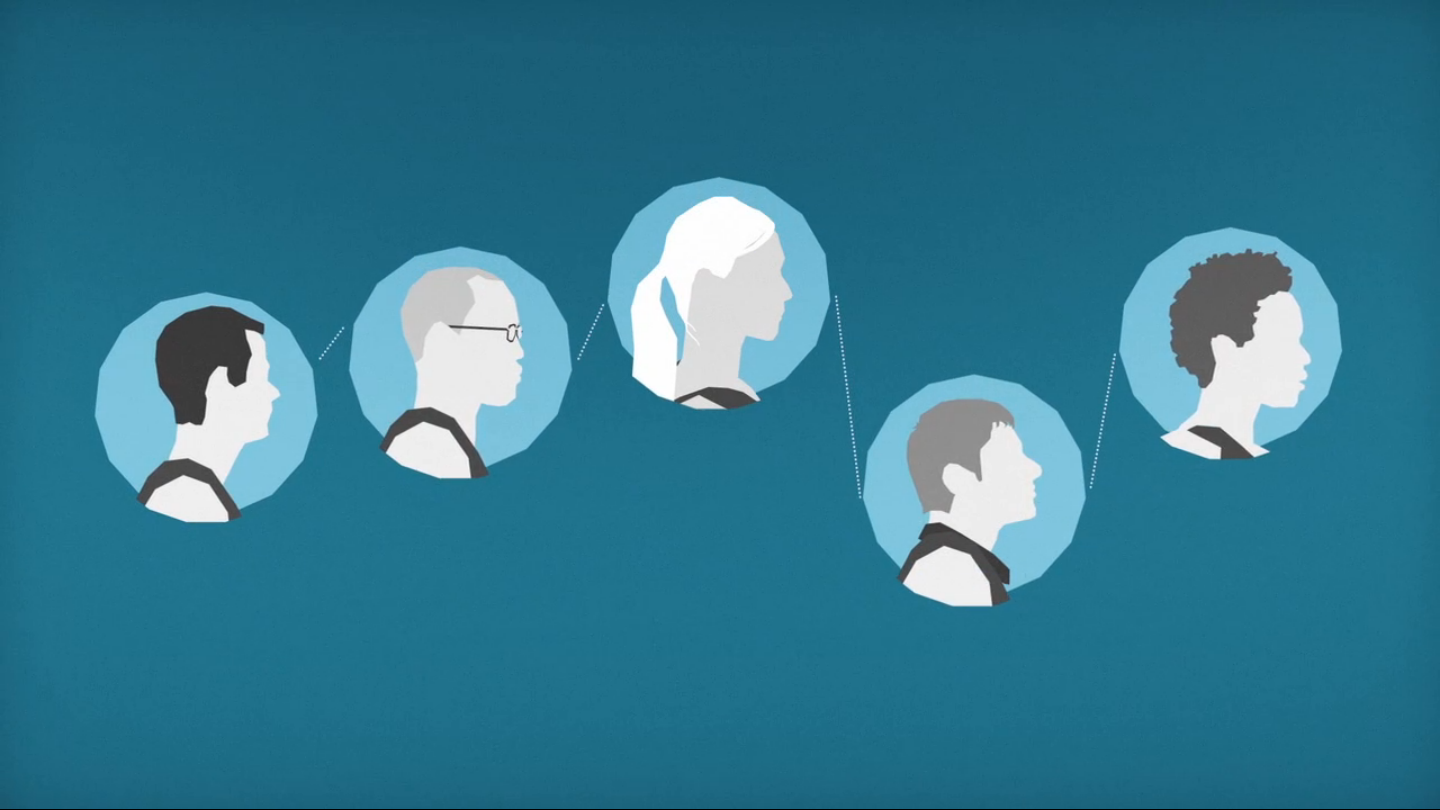
    DNA1

    With only three minutes to work with, and an incredibly rich topic to explore, the challenge for this film was to gage the appropriate level of information to cram in. A less well-crafted film could have resulted in the sequence becoming indecipherably dense, or worse not informative enough to have any value. The producer, Sam Hart, and creative director, David Sheldon-Hicks have overseen a project that is meticulous in its development and final outcome.

    DNA2

    For many of us the structure of DNA inspires memories of stale classrooms, stuffy teachers and lifeless textbook graphics. However the ‘Explainer DNA’ does not suffer from such negative associations. Rather than trying desperately to modernise this documentary Will Samuel, the art and animation director, develops the aesthetics of schoolbook biological imagery, revelling in its nostalgic triggers while snapping the sequence sharply into the 21st Century. When the pre digital print texture and colour pallet is applied to pristine motion and 3D modelling a retro feel is crafted.
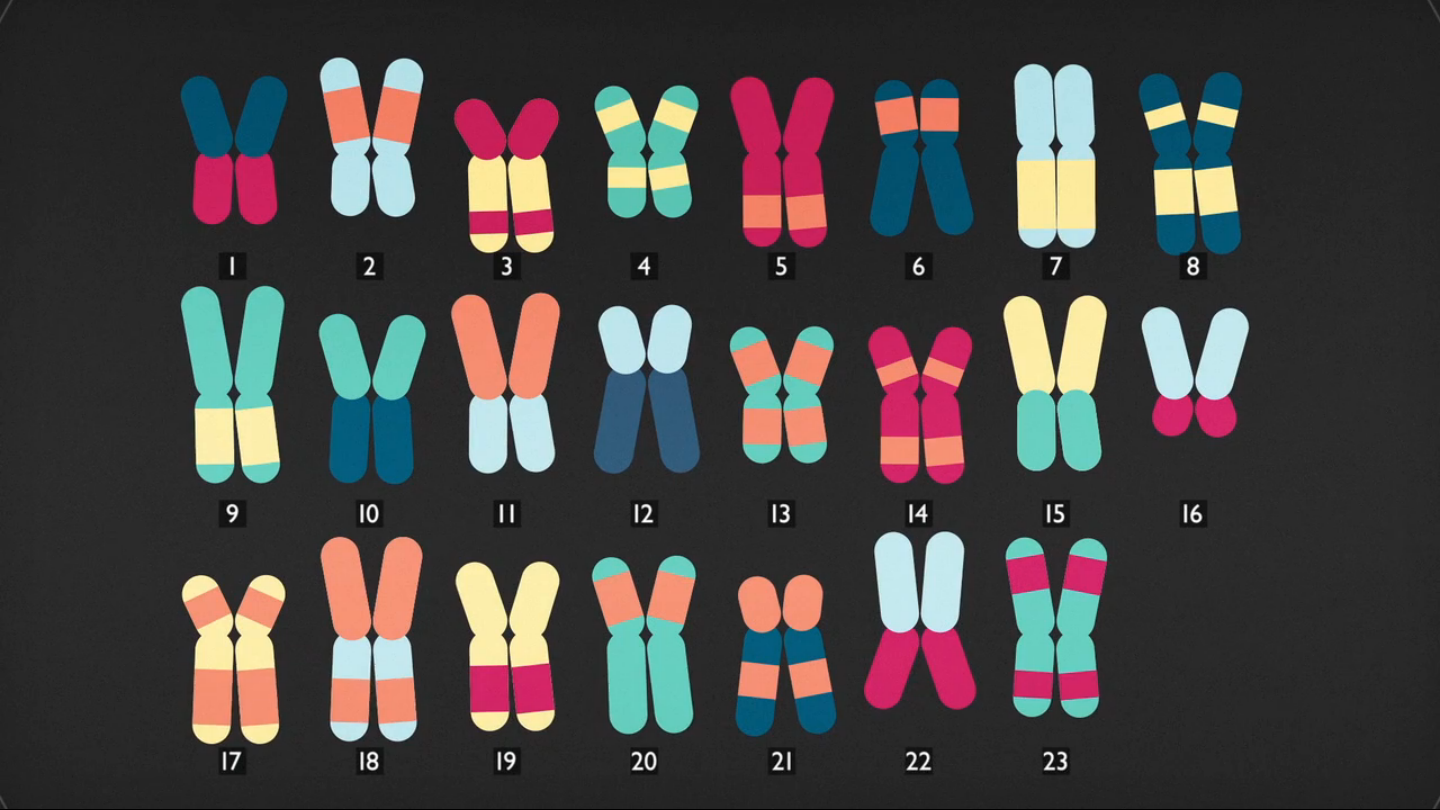
    DNA3

    The attention to detail is extraordinary. When the human set of chromosomes are spread out in sequence each of them wave subtly as if held against a gentle current.  Details like this when combined with Room 24’s down played sound design make for a sumptuous audio-visual experience.

    DNA4

    Andrew S Walsh’s script, created in collaboration with the molecular biologist Dr. Matthew Adams, is impressive. When covering aspects of the topic that are common knowledge the subject still feels fresh. I feel this may be due to the authority with which the information is imparted. It was pleasing to see the gaps in our knowledge concerning Junk DNA and genetic modification being explored diligently. I must say however the ending is slightly abrupt.

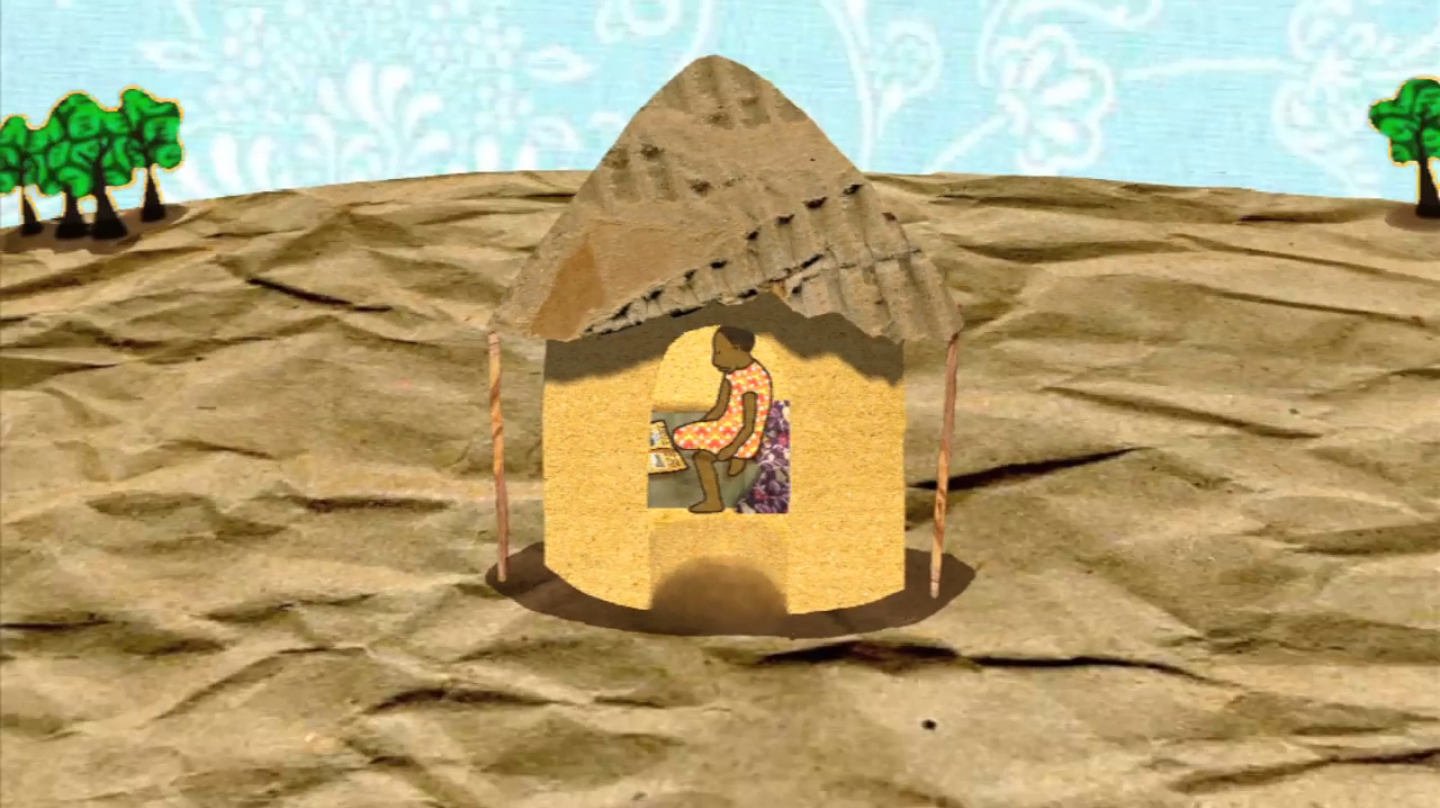
  • Samantha Moore’s 2007 UK Film Council commissioned animated documentary explores problems of stigma and denial in a Ugandan community through the eyes of two women dealing with the effects of HIV/AIDS in their respective families.

    TBO2

    The materiality of this animation technique is charmingly tangible. Two examples are the hut roof fashioned from torn corrugated cardboard and the illusion of perspective constructed through horizontally wrinkled brown paper. Many of the images in this film are complimented by the appearance of textile patterns. They are ever present in the sky, images of water and on the bodies of the chickens we see crossing the screen. I wondered whether this was simply a stylistic choice or did it hold symbolic significance. From an overview the patterns seem to be noticeable in positive contexts, but I feel I might be jumping to conclusions if I was to assert that they represent hope or optimism.

    TBO4

    The most striking moment in this short documentary takes place when we hear Anna recount her husband’s attitude of denial towards HIV/AIDS. ‘He has never taken a blood test, he has lost three girlfriends but still he doesn’t believe.’ As these words are uttered her husband’s body shrivels, metamorphosing into a deathly skeleton. Such imagery is powerful in its simplicity.

    TBO1

    One shot niggled at my animator’s eye; when the memory book is being discussed the camera moves backwards from in the hut and out the door. The cinematic illusion is broken by the visibly pixelated edge of the doorframe. Such a significant loss in resolution is unfortunate.

    TBO3

    In a recent article written for Animation Studies, Samantha Moore discusses audio problems she experienced while filming in Uganda. Moore was forced to use voice actors due to the low quality of the original recordings. Although she had an initial ‘…fear that the documentary status of the film could be compromised by this jettisoning of original sound…’ Moore argues that both the unusable original voice recordings and the audible re-enactment ‘carry the indexical trace of the words’. The choice between the two options was ‘…not aided by an argument about which is more genuine.’

    Samantha Moore’s work has been featured on Animated Documentary several times. We look forward to many more films from her.

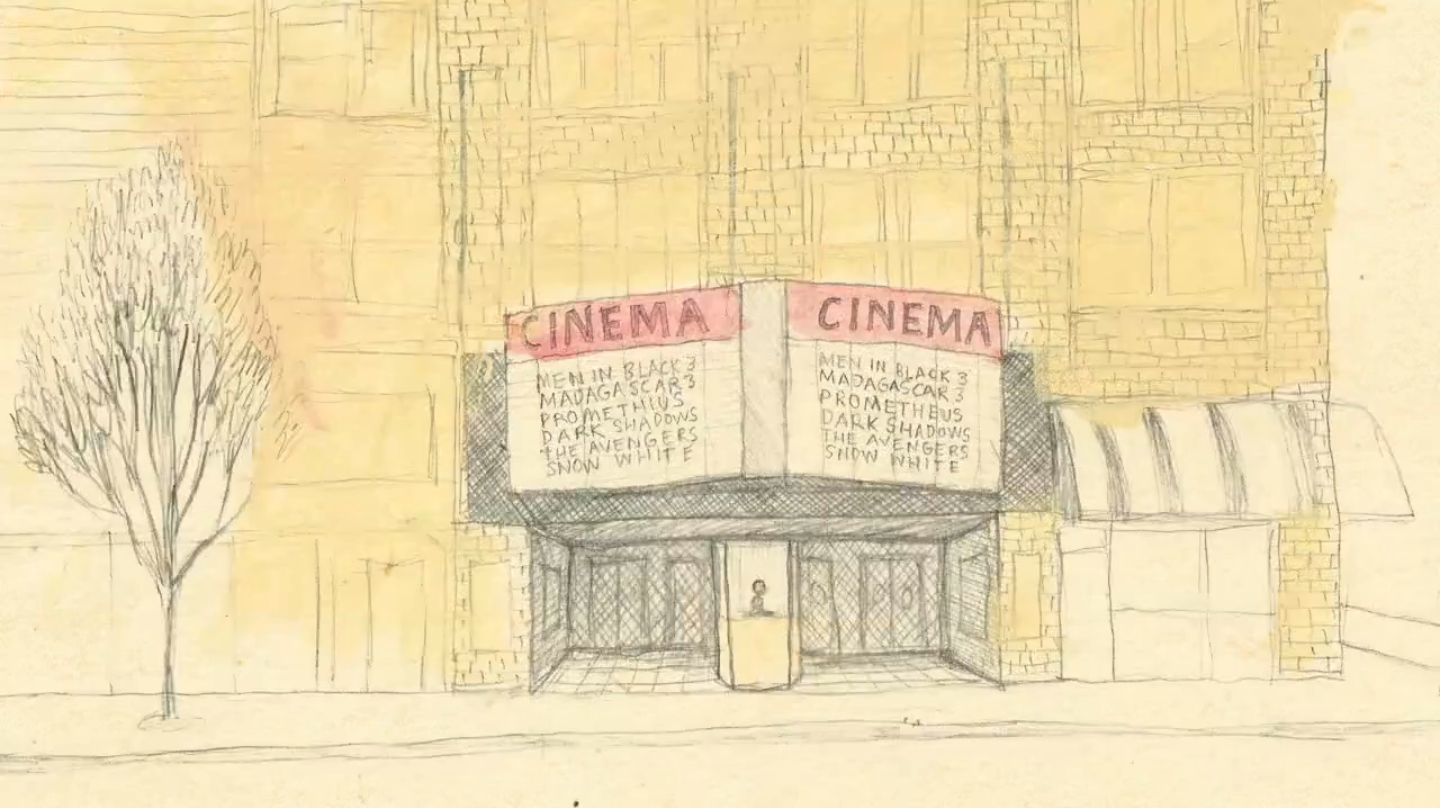
  • Drew Christie’s animation explores notions of originality through the vehicle of an uncannily informative conversation between a cinema box office attendant and an inquisitive patron.

    The animated sequence was commissioned by The New York Times’ Op-Doc forum, an online sub-section of the editorial department. This initiative hosts ‘short, opinionated documentaries, produced with wide creative latitude and a range of artistic styles, covering current affairs, contemporary life and historical subjects.’

    A1

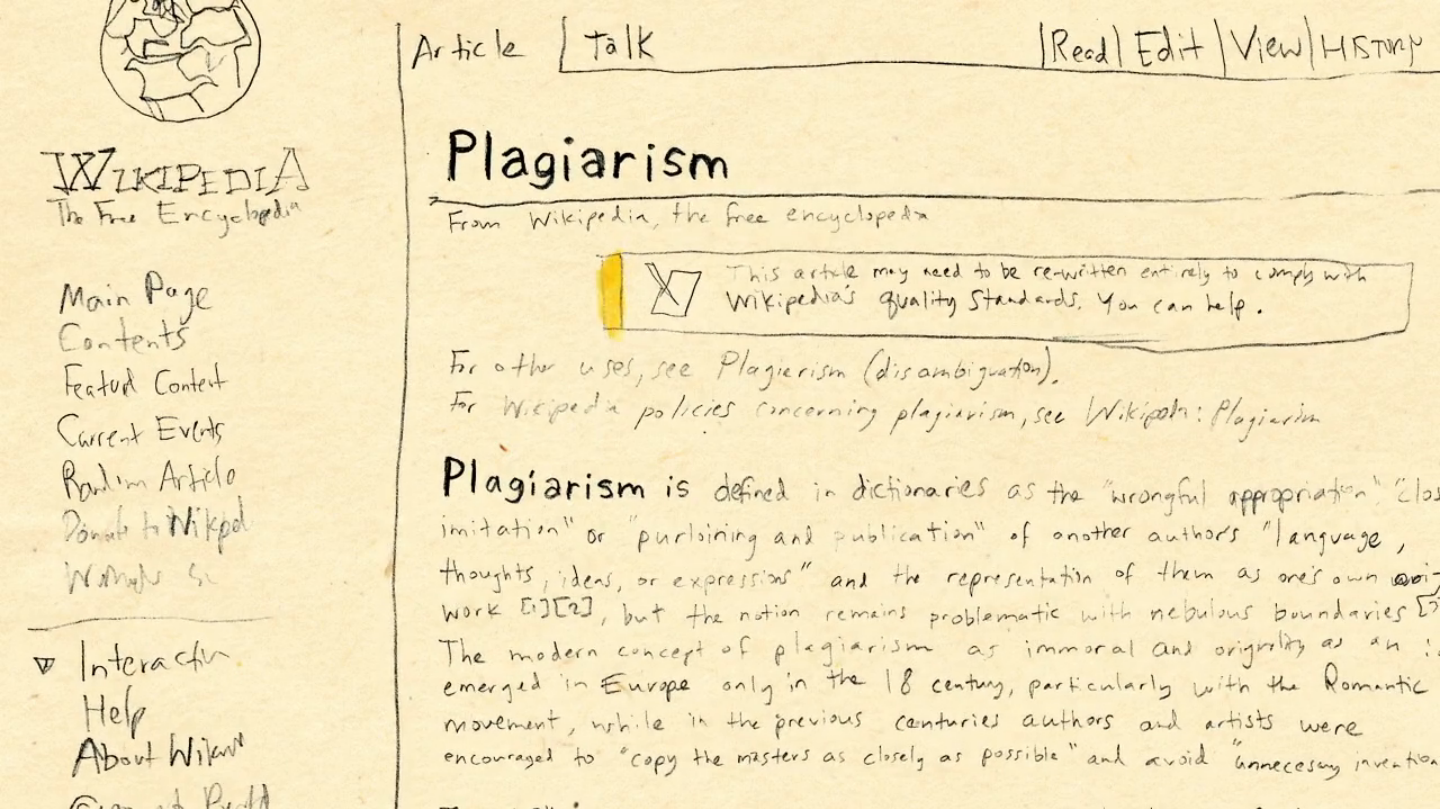
    The pencil drawn short takes it’s visual cues from a rich assortment of internet imagery. These drawings are adjacent references which snap to the dialogue in such a quick succession that the viewing experience reaches the fringes of an information overload. The scrappy mark making and looseness of the mimetic drawings act as a buffer, slowing our recognition of what is depicted, further inhibiting the intake of information.  Such a process challenges the viewer to identify the visual references and establish their connection to the densely informative dialogue. Although I was not able to spot all the connections I found this an engaging and rewarding viewing experience.

    A2

    The documentary element in this animation can be justified by the casual introduction the film makes to complex ideas such as poststructuralist philosophy. Michel Foucault and Roland Barthes were among the first to articulate the illusion of originality in the arts.  In their respective essays, ‘What is an Author?’ and ‘The Death of the Author’, they proposed originality was scarcely achieved, if ever, while suggesting that creative endeavors, such as writing, are simply the amalgamation of an incalculable collection of conscious and unconscious influences. By referencing Wikipedia content this film exquisitely crafts sweeping summaries of such notions while tying them irrefutably to contemporary popular culture, specifically Hollywood cinema.

    A3

    The comedic value in this short animation is found in the juxtaposition of encyclopedic rhetoric in the context of every day conversation. Further tension is crafted as an element of one-up-man ship creeps into the dialogue. However I find this animation’s purest social commentary is found in the implausibly informed box office attendant. This character embodies a contemporary world where anyone is a few clicks away from appearing to be an expert.

  • Alex Bland conjures the atmosphere of wartime Britain in this nostalgic exploration of the R.A.F.’s Bomber Command, a battalion charged with the treacherous task of attacking German targets at the dead of night. Set out in a roughly chronological narrative, archive recordings and contemporary interviews with ex-crew members narrate the early stages of excitement during enlisting, followed by the eventual reality of the mission.

    IDOF1

    A great strength of this film is its ability to adjust tone by changing medium.  Alex Bland begins by adopting the aesthetic of wartime enrolment poster design. Using this style as a starting point he continues to masterfully employ a multitude of techniques; combining rotoscoped hand painted animation, laid over textured backgrounds and combined with elements of archive footage. CGI, 2D digital, collage and hand painted components support the diverse imagery in this accomplished animated documentary. Bland presents a particularly beautiful archive description of a raid that took place through a wall of searchlights. This stimulated a distinctively pleasing scene that is almost abstract in its formal arrangement barring the silhouette of the plane.

    IDOF2

    In another scene that is set to the visuals of a comic scrip, an American pilot gives an account of an effective raid over Berlin, which is almost flippant. His account is detached entirely from the deadly result of the mission, instead he includes phrases like; “I could see the bombs going down very nicely… I enjoyed it very much”. This film does not address the more contentious nature of the task these pilots were charged with. Essentially they were enforcing the British equivalent of the Blitz, dropping bombs that would inevitably cause civilian casualties. I was left speculating whether this issue was not dealt with because it was not a problem for the airmen interviewed. They may have felt it was their duty and possibly even a fair one in the context of war. However I also wondered if the filmmaker’s nostalgia for the subject matter pushed the narrative away from such controversy. Bland explains in concluding titles that the film is dedicated to his Grandfather along with the other men from the Bomber Command killed in the Second World War. An additional puzzling note states that none of the airmen set with this duty were ever commemorated with a medal for their bravery.

    IDOF3

    This film manages to capture effectively the naïve feeling of excitement at the beginning of the war, a sense of camaraderie felt between the airmen along with the drama and the formal beauty found in such destruction. The film addresses the tragedy associated with loss of life in the Bomber Command whilst maintaining a traditional lack of emotion associated with the British spirit’s stiff upper lip. As the narrative was constructed from half a dozen different accounts a sort of cross chattering effect distracts from an otherwise clear narrative.  This is however an acceptable side effect when collating such a multitude of sources. ‘I Dreamt of Flying’ has collected an award from the Imperial War Museum  and received the staff pick from Vimeo. Animated Documentary found this film on the vimeo channel Doco-anim.

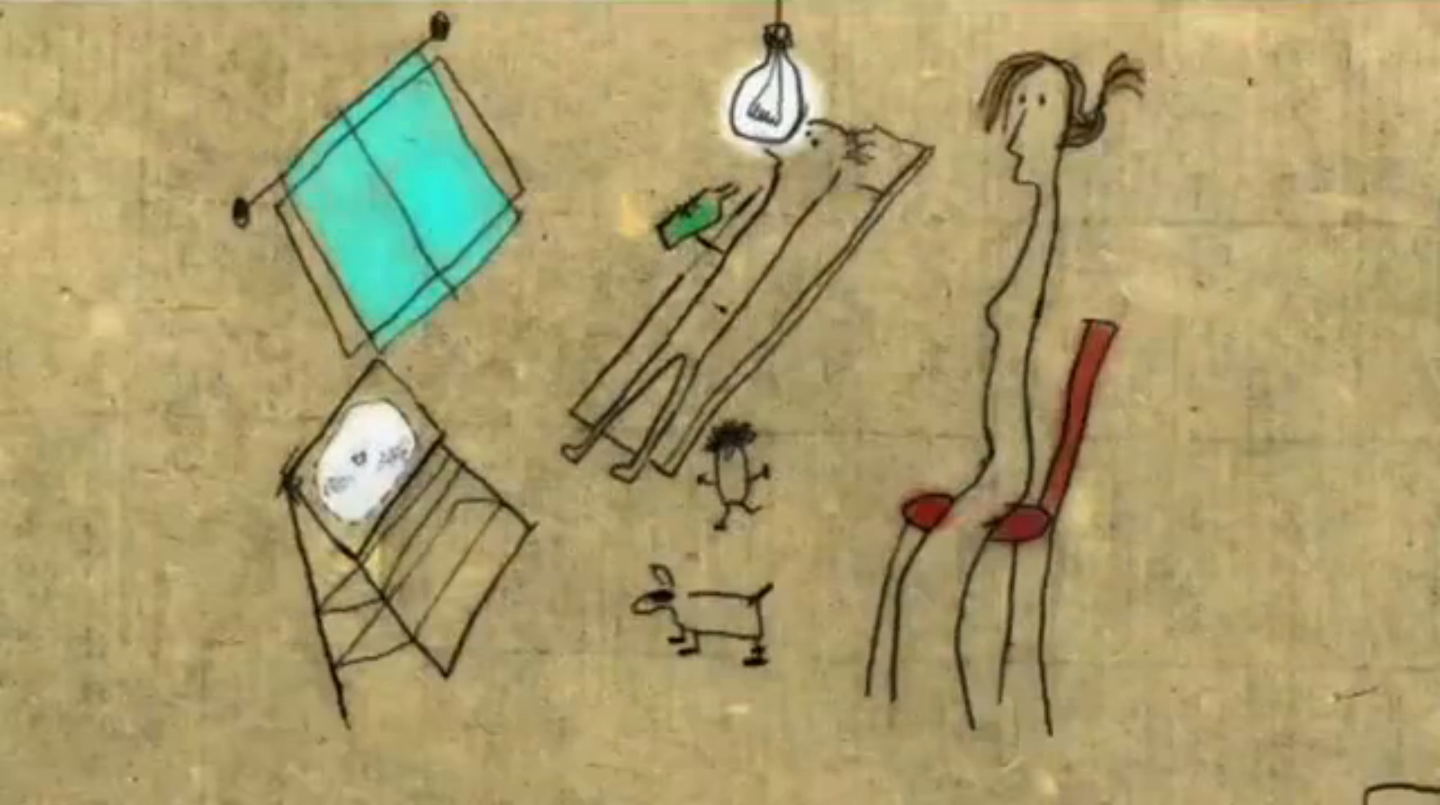
  • This animated documentary, directed by Jonathan Hodgson, opens with the statement, ‘Most people’s mums are mad. Mine’s got schizophrenia’. This text crafts the perspective of a child by adopting adolescent rhetoric. The tone of such a statement is carried through an extraordinary series of parallel narratives in which adults recount their experiences in childhood dealing with parents suffering from paranoid delusions. A varied set of richly textured and naïve illustrative styles assist the visualisation of a number of accounts where children doubt the natural authority granted to a parent.

    cam2

    A particularly fascinating aspect of the subject matter is revealed when the interviewees recall their beliefs that a parents delusions may have been real. When we are developing it is very easy to take anything a guardian tells us literally. It must be a slow process of realisation for a child to learn not to trust their first teacher in this world. A kid would start to decipher for themselves that their parent’s fantastical notions may be being generated by the distortions of mental illness; splitting reality into tangled delusions which are disengaged from rational analysis, but rather supported by a complex web of symbolic meaning and tenuous evidence.  One would hope that such a disruption to natural authority does not have a long lasting affect on an individual’s development.

    cam3

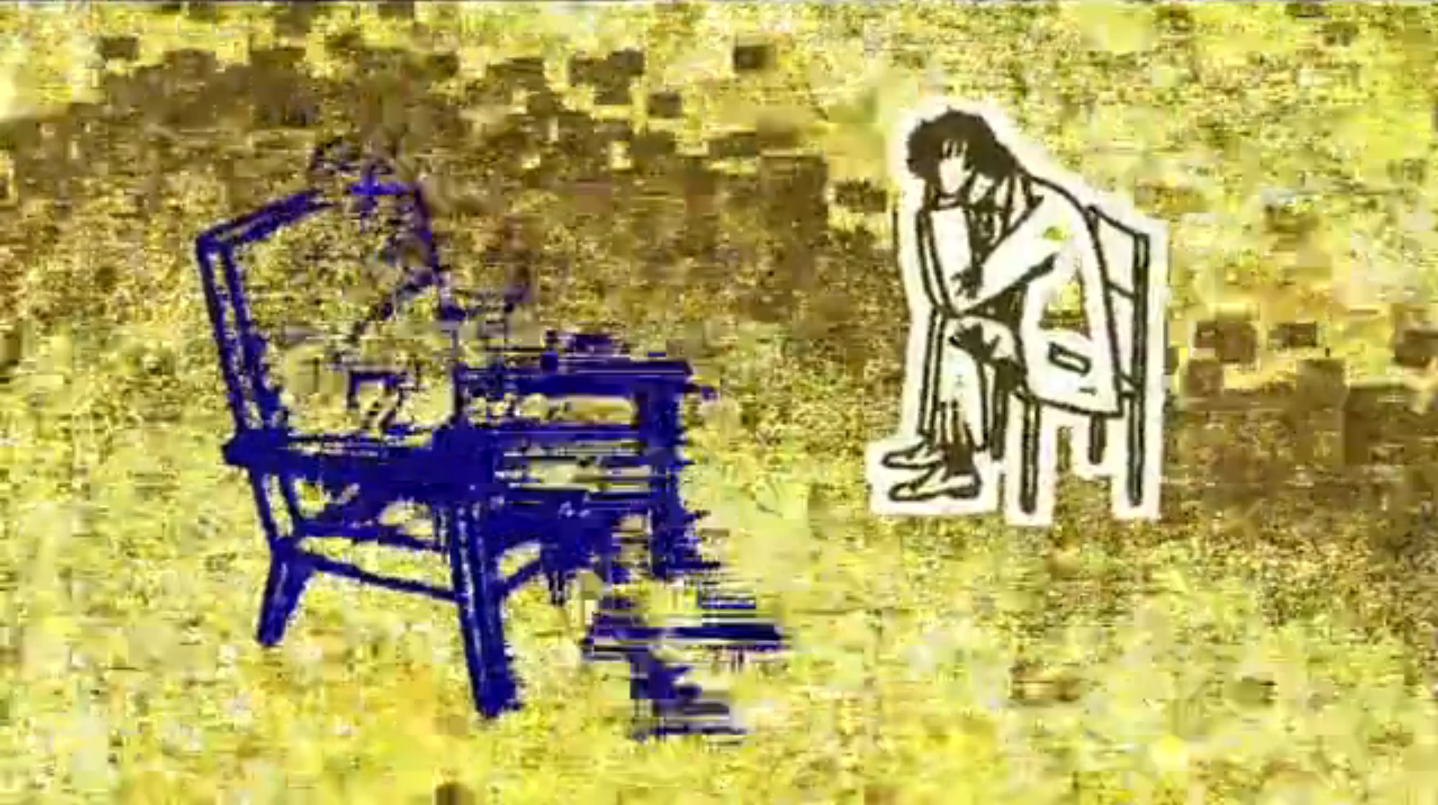
    Siri Mechior and Tim Webb’s contribution to the animated portion of the film is invaluable. Something engaging is sparked when distinctively two-dimensional drawings skid into three-dimensions. Lines shift, scattering our understanding of space as the viewpoint rotates around the modernist imagery, causing the destruction of the flat plane. Occasionally these moving pictures are digitally encrusted to great effect in undulating binary distortions. At other points one can feel the materiality of physical mark making, the rippling paper jostles to create surface boil. In addition Hodgson’s sound design is gripping. The disembodied eyes that swing to the sound of creaking wood conjures surrealist notions of juxtaposition.

    cam1

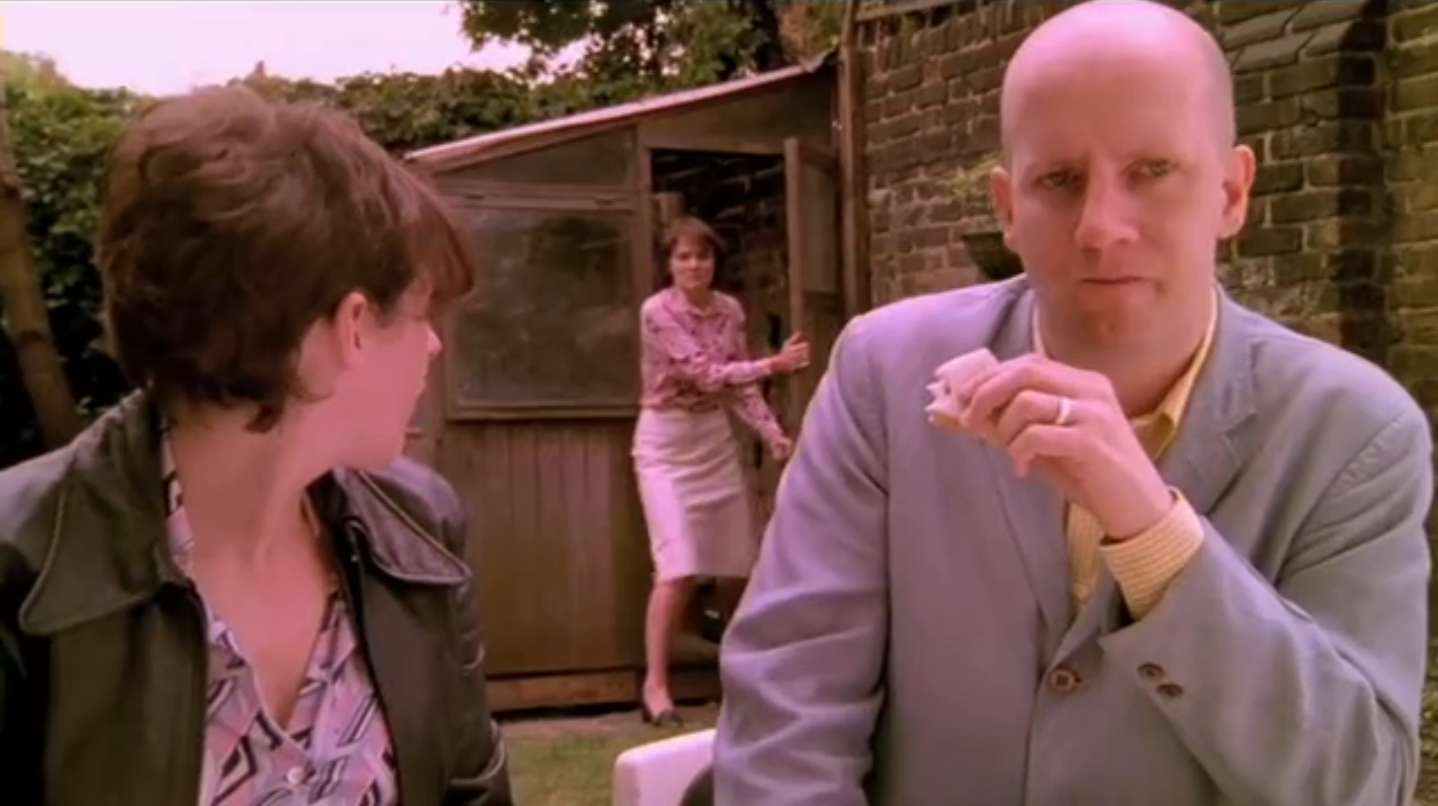
    The live action scenes do not maintain the standard of excellence I attribute to the animated sequences. Certainly the over dubbing of the actors voices was a formal choice, one designed to unnerve and disrupt the default expectation of an audience. However such disharmony is so corrupting that the gathering in the garden scene feels like something out of a continental soap opera.

    cam5

    As a whole the film is fascinating both visually and in terms of subject. The Arts Council of England and Channel 4 funded this Sherbet film back in 2001. Currently the short has just under a thousand plays on Vimeo. Lets hope it’s audience continues to expand online.

  • download

    I saw this beautifully crafted film at the Animated Realities conference in Edinburgh in 2011. The film animates a traditional sewing and textiles technique developed by the Kutch community, who are from a coastal region in Ahmedabad, India and has for a long time inspired fashion and textiles all over the world.

    Here is a link to a review of the film following the latest in a long line of awards the film has received  We will keep an out out for an online release of the film and if anyone knows where we can link to the film online, please do get in touch.

    http://articles.timesofindia.indiatimes.com/2013-05-10/ahmedabad/39168012_1_sundance-film-festival-world-heritage-week-heritage-textiles

  • A whistle-blowing story, which lends itself to the animated documentary genre, mostly because of the ethical considerations in protecting peoples’ identity. The following synopsis is taken from the films entry on YouTube:

    “In August 2006, caregivers at the Sonoma Developmental Center found dark blue bruises shaped like handprints covering the breasts of a patient named Jennifer. She accused a staff member of molestation, court records show. Jennifer’s injuries appeared to be evidence of sexual abuse, indicating that someone had violently grabbed her.

    The Office of Protective Services opened an investigation. But detectives took no action because the case relied heavily on the word of a woman with severe intellectual disabilities. A few months later, court records show, officials at the center had indisputable evidence that a crime had occurred.

    ‘In Jennifer’s Room’ is part of a reporting package that recently won a George Polk and an IRE award, and was named a finalist in the Pulitzer Prize’s Public Service category.”

  • Well, I was very pleased this morning to find this review, and eager to watch the brand new trailer for the latest animated feature from the director of award winning animated documentary – Waltz with Bashir – Ari Folman.

    However the trailer has already been removed for copyright reasons! So if anyone out there knows of a link to the trailer still online, please do let us know. Otherwise we will re-blog when the trailer is re – released!

    In the meantime here is a short review to whet your appetite:

    http://screenrant.com/the-congress-trailer-2013-movie/

  • It is not often one comes across a CGI film with such a consistently rich sense of artistry. With his film ‘Caldera’, Evan Viera and a substantial team of supporting artists demonstrate a brilliant sense of composition, lighting design and mastery of the 3D medium.

    Caldera_1

    This animated short attempts to represent a series of visual hallucinations that take place during a psychotic episode experienced by the female protagonist. Viera is not interpreting his own experiences, but those of his father, a long-term sufferer of schizoaffective disorder. The title refers to the self-destructive process of collapse when a volcanic crater is formed after a major eruption.

    As there is no attempt by the film-maker to claim this to be a documentary it may be unfair to criticise this short on the grounds of accuracy when depicting an unstable mental state. The psychological phenomenon is by its very nature subjective, however the lack of discord present in the character’s demeanour was striking. The protagonist spends most of ‘Caldera’ looking calm and concentrated in the context of the fantastical happenings she experiences. When depicting a gross thought disorder such as this it might be be fair to suggest that the subject would likely be considerably less composed during such events.

    Caldera_2

    Evan Viera writes that his father has “danced on the rings of Saturn, spoken with angels, and fled from his demons”. The traces of these delusions are quite literally interpreted in ‘Caldera’ yet the feeling is very much second hand in tone. Watching this glistening film gives one the impression of a challenging CGI exercise more than that of a depiction of pathological imbalance.

    When viewing this film on Vimeo we are confronted in the blurb by Viera’s statement about his father. The film-maker wants us to be aware of the direct link between the protagonist’s vision and his father’s experiences of mental illness.  For that reason I propose this is a documentary of sorts. Although it is based on second-hand observations, the film makes an effort to interpret a subjective experience that most of us could never fathom. Viera repackages it as a digestible image sequence granting the audience insight into a fascinating and difficult topic.

    However, the story telling is carried on the back of the film’s aesthetic. The synopsis, for instance, is minimal. In essence a sad-looking woman decides to not comply with her medication (an enormously contentious point in its own right which is not really addressed), leaves the city and goes for a swim. Within the ensuing visualisations good and evil are represented through the colours blue and red, as well as by an animal sprit guide and a telekinetic daemon. Such simplistic symbols are surprisingly successful as narrative features and indicators of tonal change. The absence of dialogue inhibits our expectation of further explanation leaving the imagery to speak for itself. (Spoiler Alert) A lack of resolution is apparent at the end of the film; the screen fades to white during an unjustified moment of mortality. This sequence is treated with such casual romantic vagueness one can only hope, for the protagonist’s sake, that drowning is an extension of her delusion; if not then we are left with a quizzically cynical finale.

    ‘Caldera’ left me nourished visually but a little under-fed intellectually. A sumptuous film with an elegant air of visual poetry which sadly was not complimented by the reductive narrative.

  • ‘Acts of Terror’ portrays the U.K Police force as an intimidating manifestation of growing state control. The 2005 Terrorism Act comes under scrutiny in this real life account of one woman’s careful navigation of the murky waters of police regulation and the U.K. legal system.

    The film is commendable for the incredibly clear construction of its narrative. We are led through what must have been a complex set of legal procedures with a crisp sense of simplistic clarity. The animation follows, possibly less successfully, a similarly minimal motif. On occasion one is left with the feeling that a few extra frames were needed or wondering if the thuggery of police officers may have been better expressed than by giving them homogenised slanting closed eyes. However the court battle, where the style of an early 90’s close combat game is adopted, is where the writing, animation and sound design most successfully harmonise. This simple witty metaphor illustrates the ultimately futile struggle the protagonist felt in seeking justice.

    acts of terror

    ‘Acts of Terror’ is an engaging campaign-based animated documentary that is charming and informative. It left me with the great hope that if, one day I found myself in the specific circumstances of the protagonist armed with the knowledge this film imparts, thus allowing me to personally triumph over a police officer when exercising my civil right to film them.  I will just need to make sure there is no way they can suspect me of terrorism.

    I first watched this film at the London Animation Club where the organiser, Martin Pickles, proudly stated the club’s role in connecting the film’s makers. Gemma Atkinson, Adam Ay and Fred Grace of Fat Rat Films gave a presentation at LAC proposing that an animator come on board. Following this they met Una Marzorati, who animated the entire film, and Tom Lowe who designed the soundtrack. Collaboration forums are exciting environments to observe and participate in. We wish the film-makers the best of success in spreading their message and hope for many more years of networking at the London Animation Club.